Table of Contents
In interior design, people often jump straight to color palettes, furniture shopping, or eye-catching décor. But the truth is, none of those elements matter if the layout isn’t right. A beautiful sofa in the wrong spot becomes an obstacle. A stunning piece of art feels lost if it isn’t properly anchoring the space. A room with great pieces but poor flow still feels uncomfortable, no matter how stylish it looks. The layout determines how a living room functions, how it feels, and how people use it—long before fabrics, finishes, or accessories are even considered. A successful living room layout creates harmony, encourages connection, and allows every piece to serve a purpose. It’s the invisible design element that separates casually decorated spaces from truly well-designed interiors.
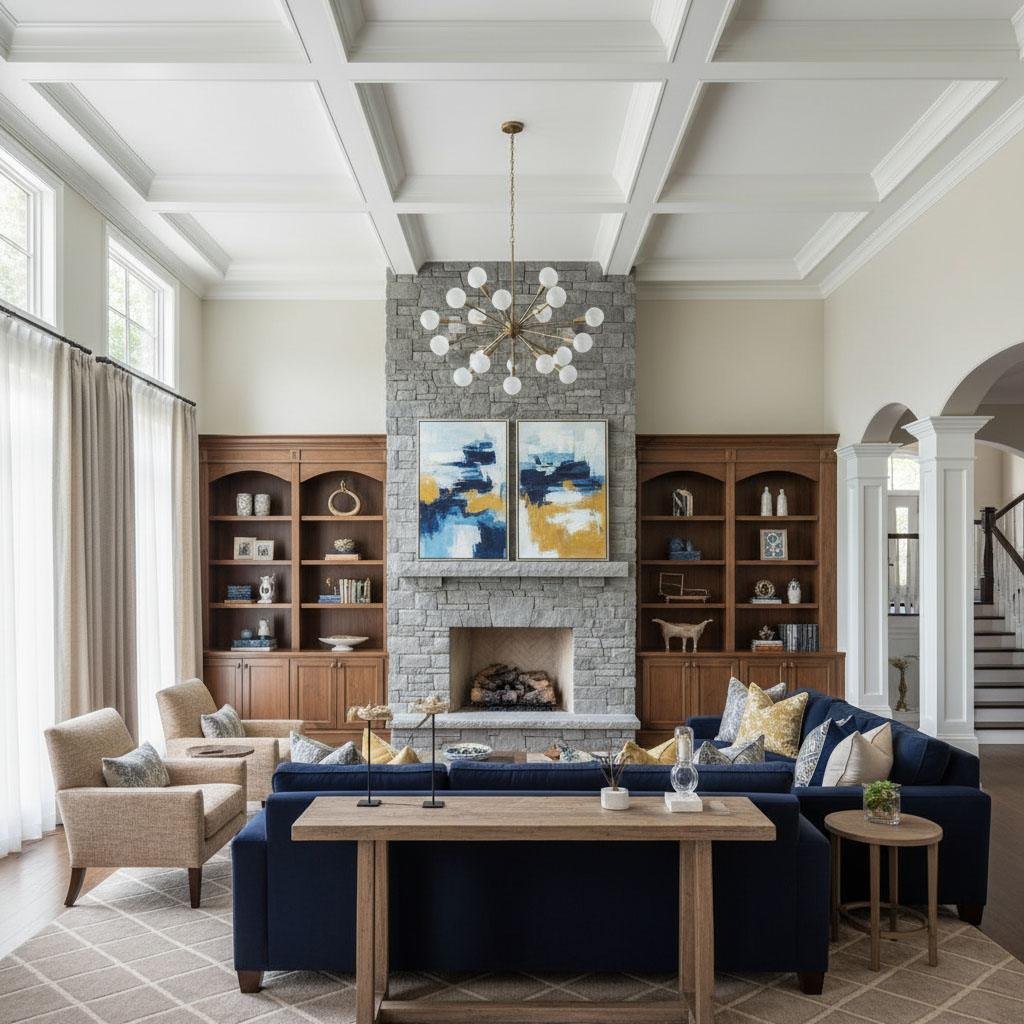
The foundations of a brilliant living room layout are universal across all styles and room sizes. Whether you’re working with a compact apartment sitting room, a spacious open-plan lounge, or a classic family gathering space, the principles of balance, movement, proportion, and visual anchoring remain the same. Designers always start with the same core questions: Where does the eye land first? How will people walk through the room? How close should the seating be for natural conversation? How can the furniture support both everyday living and special moments? In this guide, we break down the golden rules interior designers use to plan beautiful, effortless layouts that look polished and feel inviting.
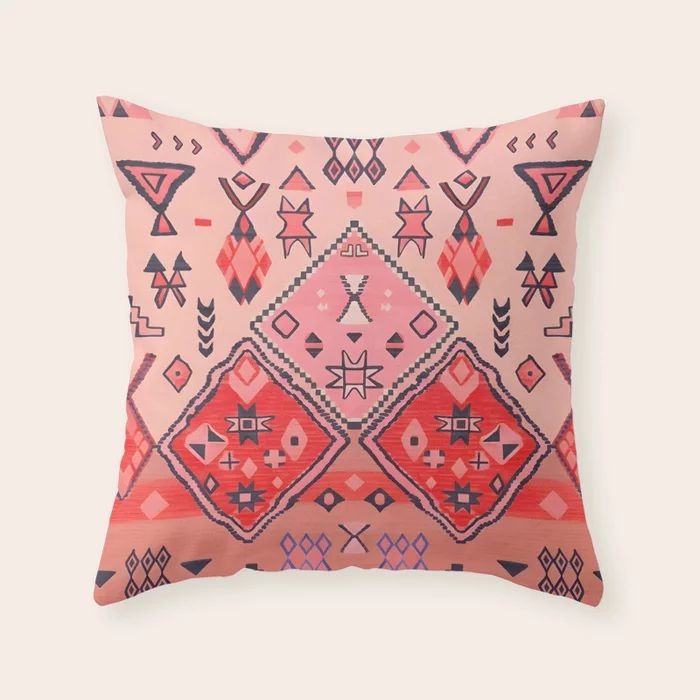
Elevate your decor with unique designs by independent artists on comfortable throw pillows, available in both indoor and outdoor fabrics.

1. Begin with a Focal Point — and Build the Room Around It
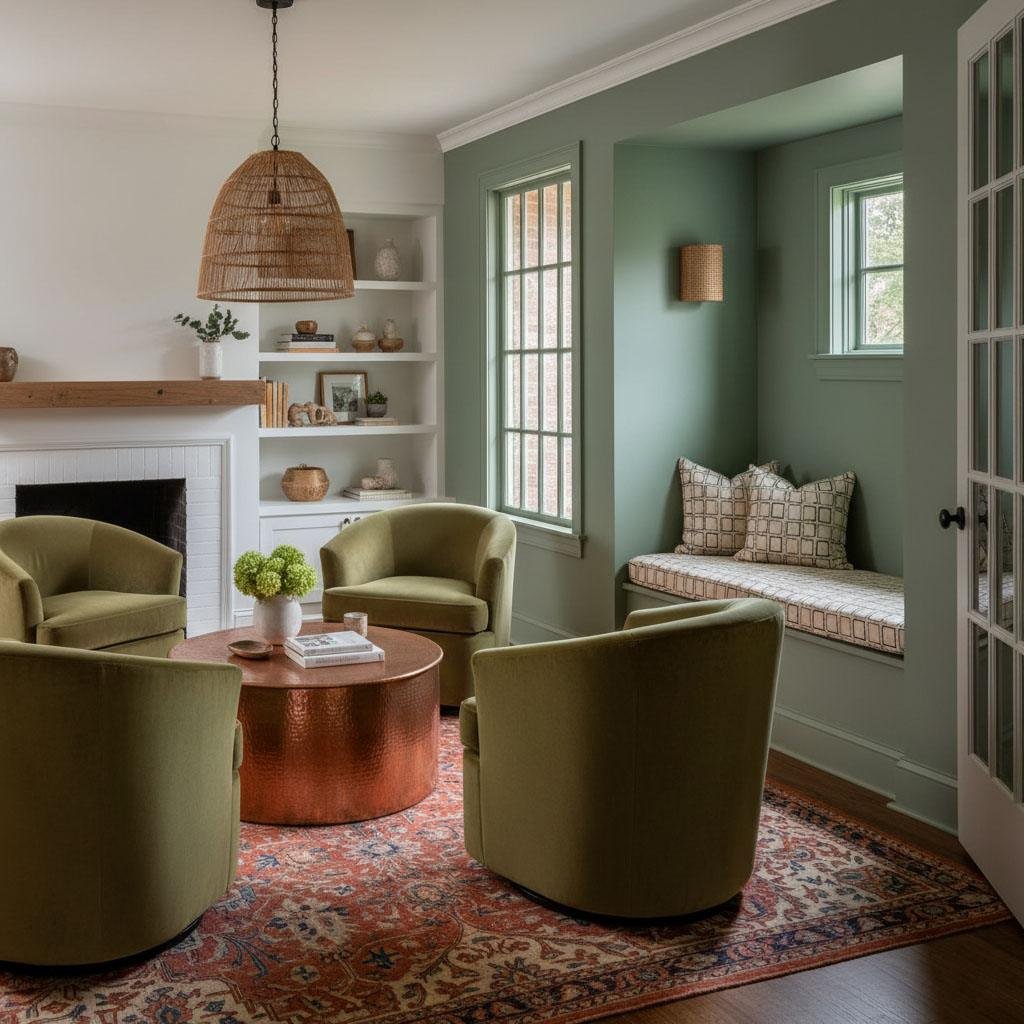
Every great living room starts with a focal point. This is the visual anchor that grounds the room and gives every other element a reason to be where it is. For many homes, the focal point is already in place: a fireplace, a sweeping window, an architectural detail, or a dramatic ceiling height. But when a room lacks that ready-made feature, designers create one. A commanding piece of art, an oversized mirror, a sculptural light fixture, or a beautifully styled console can instantly become the visual heart of the space.
Interior designers explain that a “focal point” isn’t simply about aesthetics—it’s an emotional anchor. It’s the spot your eye lands instinctively when you walk in. Once this point is chosen, every piece of furniture supports it rather than competes with it. A sofa might be placed opposite it to frame the view; a gallery wall might help elevate it; or a console arrangement might become the subtle centerpiece in a minimalist space.
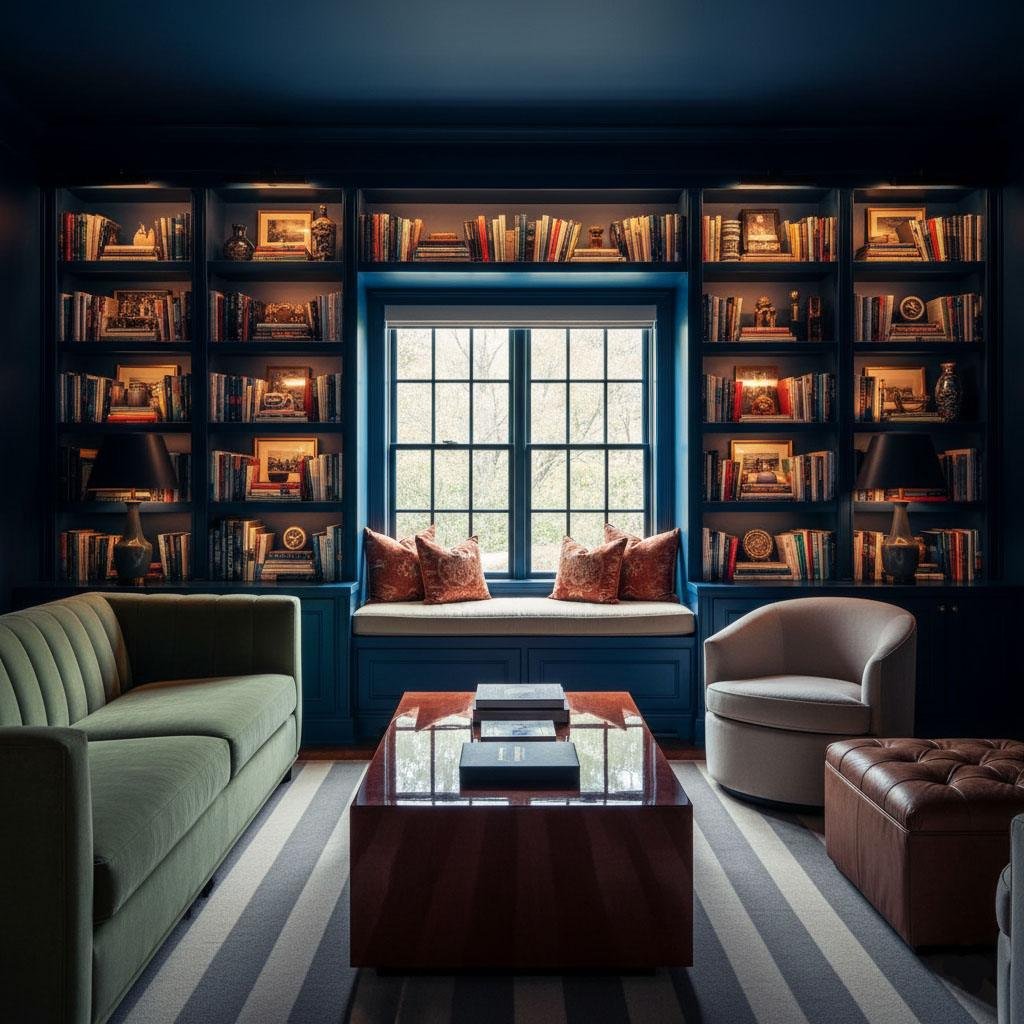
However, a mistake many homeowners make is sacrificing the comfort of the seating arrangement to point everything strictly toward the focal point. Designers emphasize balance: the focal point should guide the layout, but the room should still function as a comfortable gathering space. Sightlines, conversational ease, and the emotional feel of the room should all complement—not overshadow—the focal point.
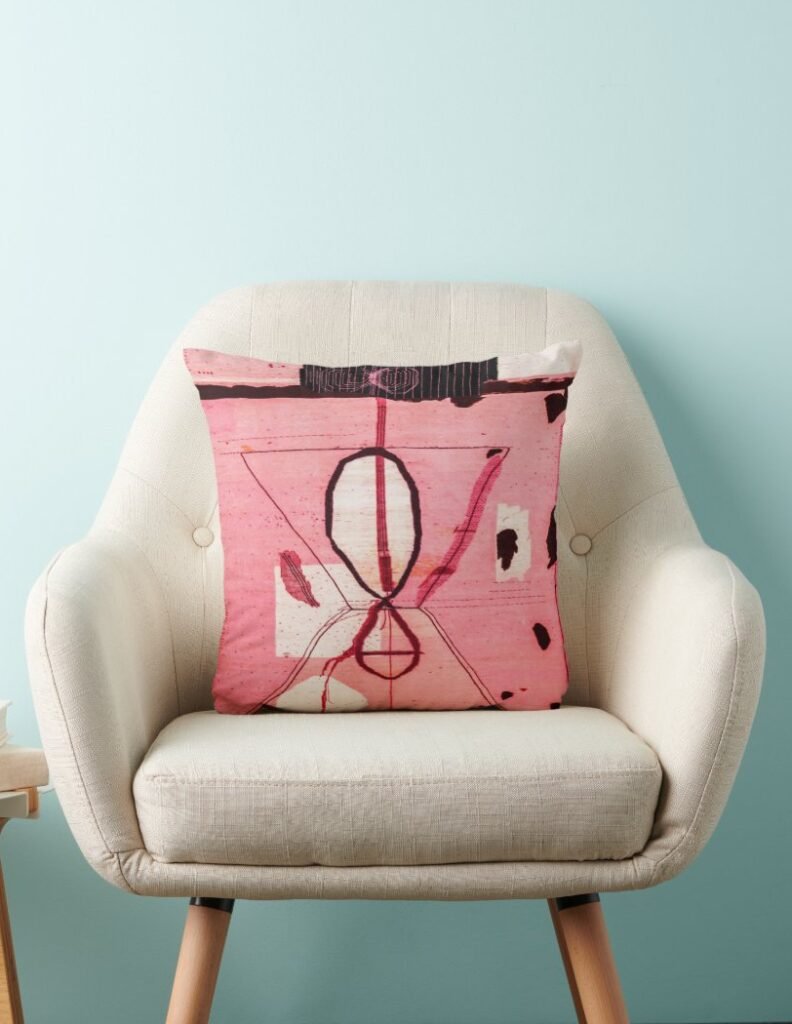
Accent your home with custom pillows from Zazzle and make yourself the envy of the neighborhood. Made from high-quality Simplex knit fabric, these 100% polyester pillows are soft and wrinkle-free.
2. Plan for Flow, Movement & Clear Walkways
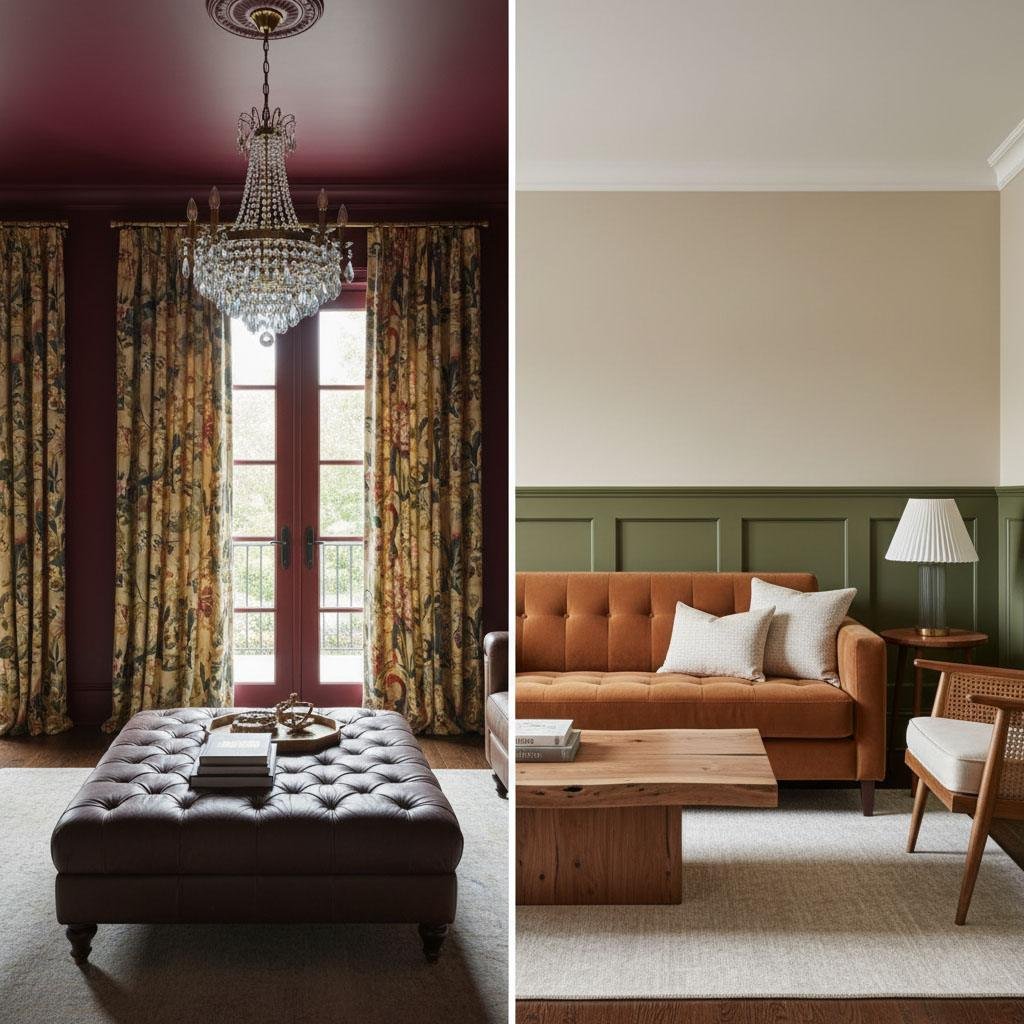
Designers often say that “flow” is the hidden secret of a successful room. It determines how naturally people move through the space, how accessible each area feels, and how harmonious the room is overall. A well-planned living room layout gives every zone space to breathe and prevents congestion or awkward traffic paths. It also allows visitors to intuitively navigate the room without being told.
The rules of spacing are surprisingly precise. Main walkways should have at least 36 inches of clearance, allowing two people to comfortably pass one another. Between the sofa and coffee table, 18 to 20 inches is ideal—close enough for convenience, yet far enough to stretch your legs. Side tables should sit just a few inches from seating so they feel like a natural extension without crowding.
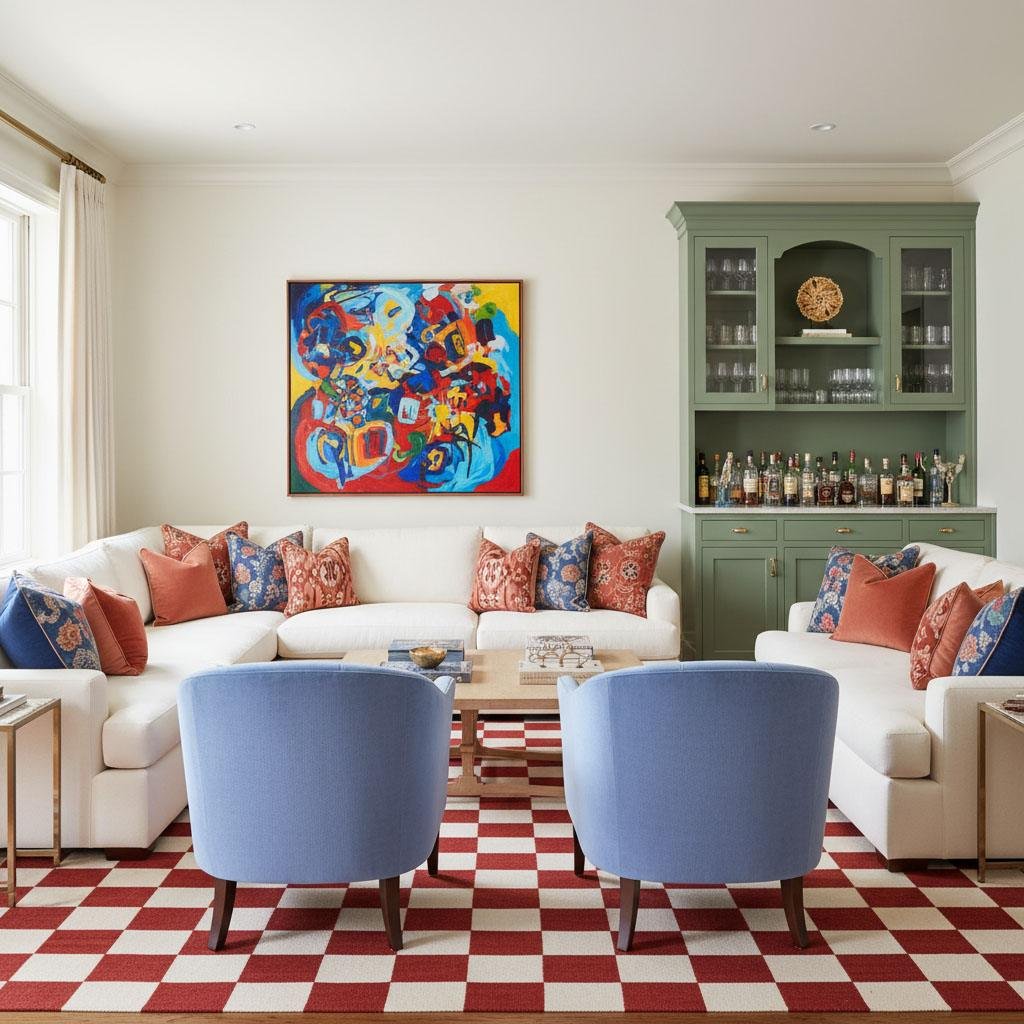
Another principle many designers swear by: you should never enter a room and immediately face the back of a sofa. It disrupts the flow and creates a visual barrier. If unavoidable, a console or sofa table can soften this effect and create a more welcoming transition.
In open-plan rooms, designers also emphasize the importance of “negative space”—the purposeful empty areas that make a room feel calm rather than chaotic. Around 50 inches between zones is ideal in larger spaces, ensuring each area feels defined yet visually connected. Scaled hand drawings or digital mock-ups are invaluable tools to understand how furniture will sit in relation to doors, windows, radiators, and circulation paths.
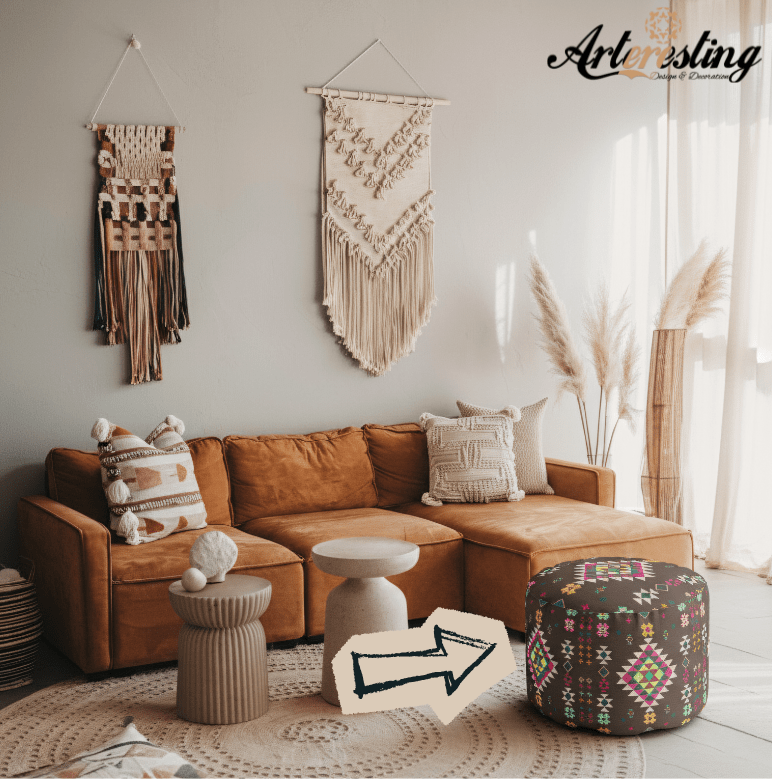
Poufs are an easy way to incorporate more seating into a space that requires flexibility within its usage, without committing to larger furniture pieces.
3. Create Thoughtful Conversation Zones
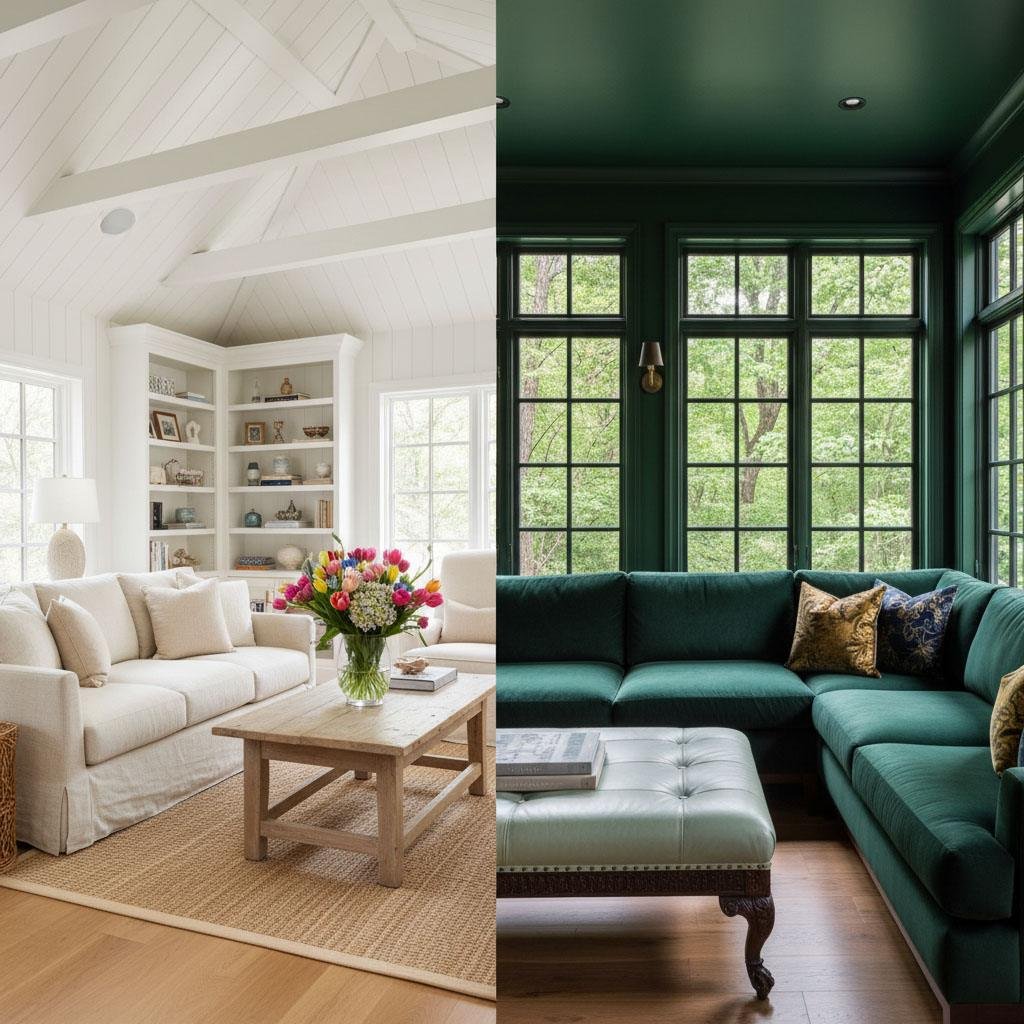
A living room is fundamentally a place for gathering, which makes conversation zones one of the most important elements of the layout. These seating arrangements determine how naturally people engage with each other, whether in intimate moments or larger gatherings. A conversation zone doesn’t need perfect symmetry; instead, it needs thoughtful distances, natural inward angles, and a mix of seating types that feel inviting.
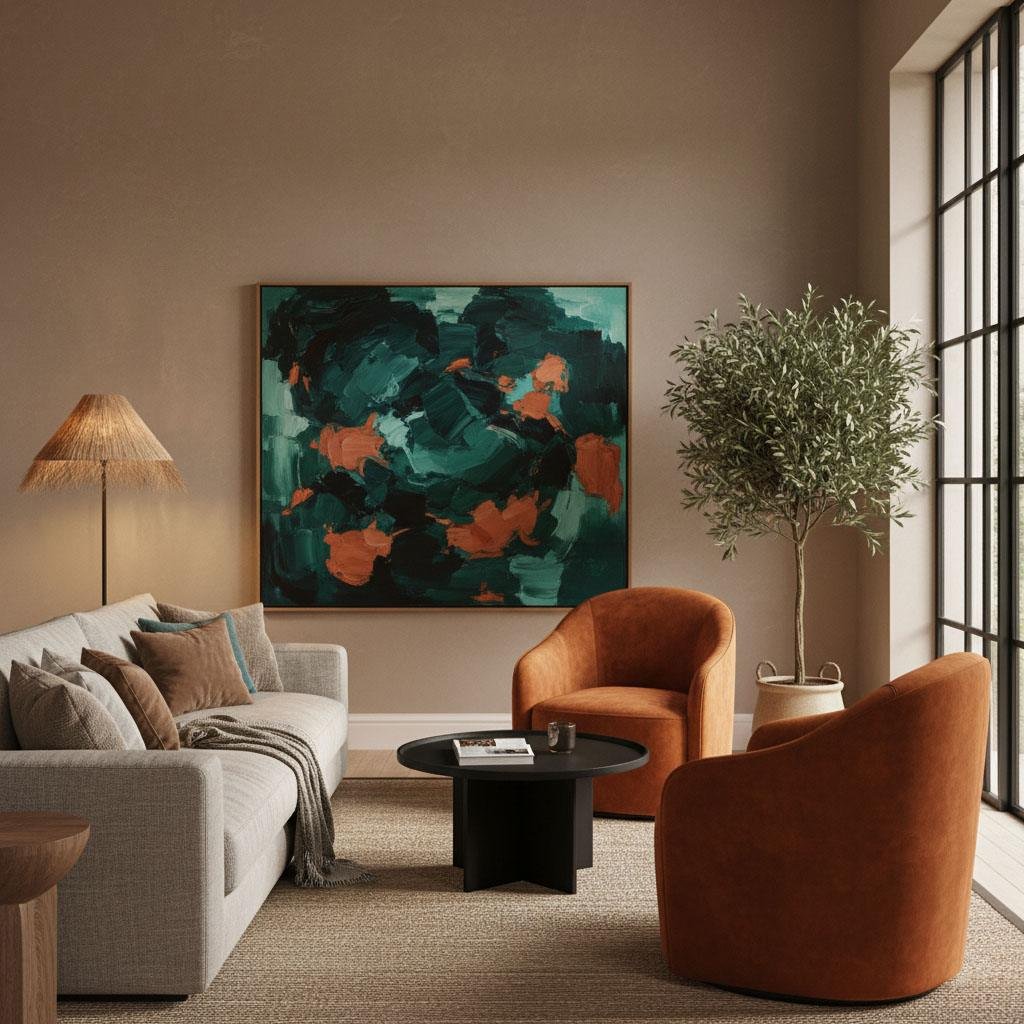
Designers often use the “8-foot rule”: no seat should be more than eight feet from another, ensuring people can speak comfortably without raising their voices. Layering seating heights—such as mixing sofas with accent chairs, ottomans, or stools—adds rhythm and keeps the arrangement from feeling static. For larger rooms, multiple conversation pockets can create a luxurious, multifunctional feel, while smaller rooms benefit from one well-anchored seating cluster.
A variety of seating options encourages movement and flexibility. Swivel chairs allow guests to engage from different angles; ottomans double as extra seating or tables; and accent chairs opposite the sofa naturally promote intimacy. Designers often create subtle enclosures using angled chairs, soft lighting, and a grounding rug to define the space without walls or partitions.
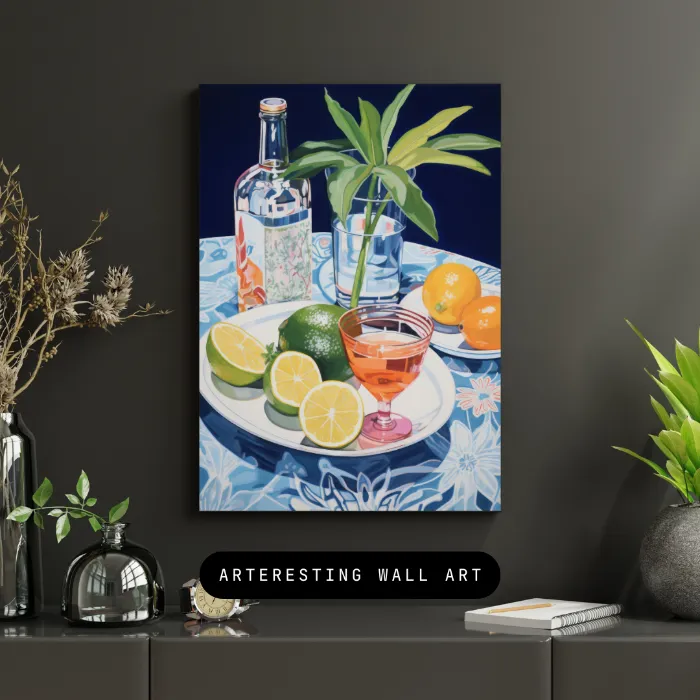
Vintage Citrus Symphony
Step into nostalgia with a vibrant tableau: oranges, limes, and bottles on display, evoking retro charm and citrus zest.
4. Integrate the TV Without Letting It Take Over
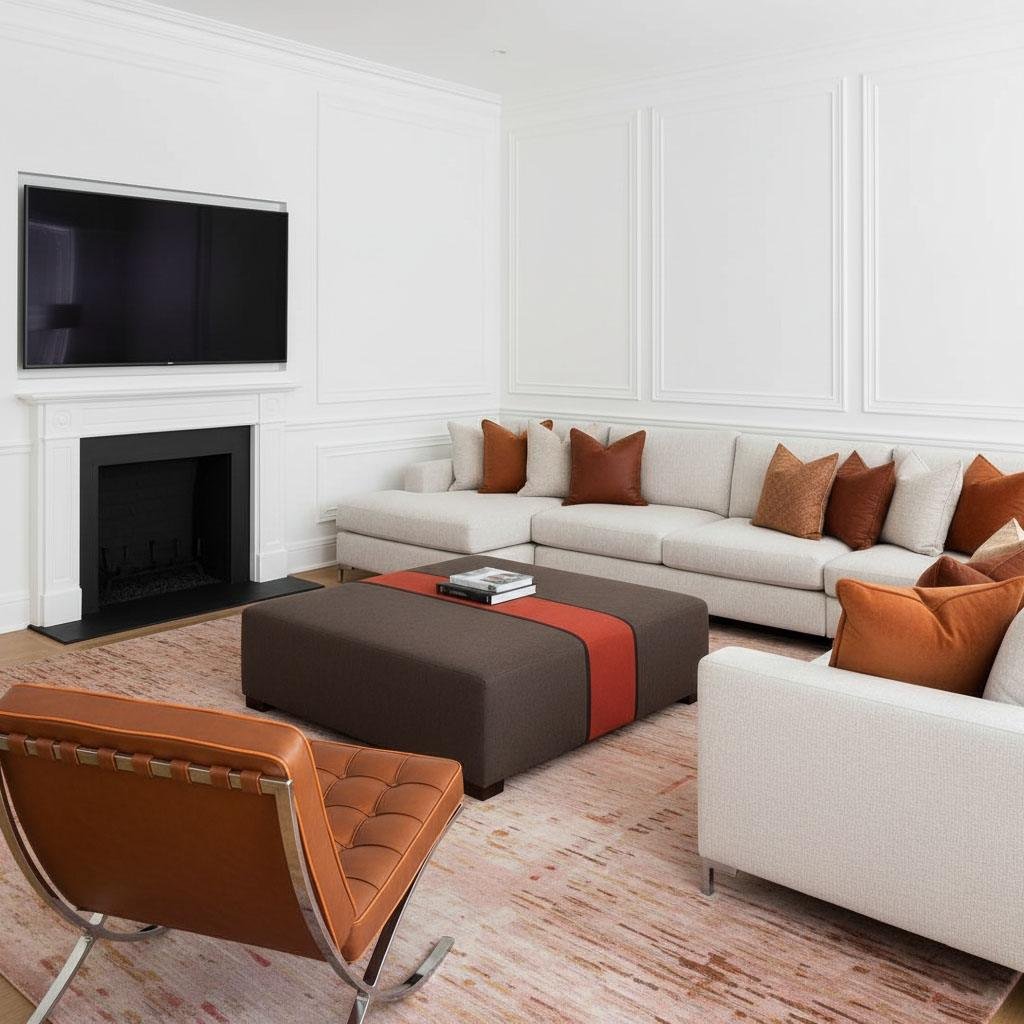
The modern living room almost always needs to accommodate a television, but designers agree it should never dominate the layout. The goal is to create a room that supports entertainment without sacrificing aesthetics or social interaction.
Optimal TV height is around 40–42 inches to the center of the screen, aligning with seated eye level. The ideal viewing distance is 1.5 to 2.5 times the diagonal screen size—meaning a 60-inch TV is most comfortable when viewed from 7–10 feet away. Designers also recommend considering window placement, natural light, and potential glare before deciding where the TV will go.
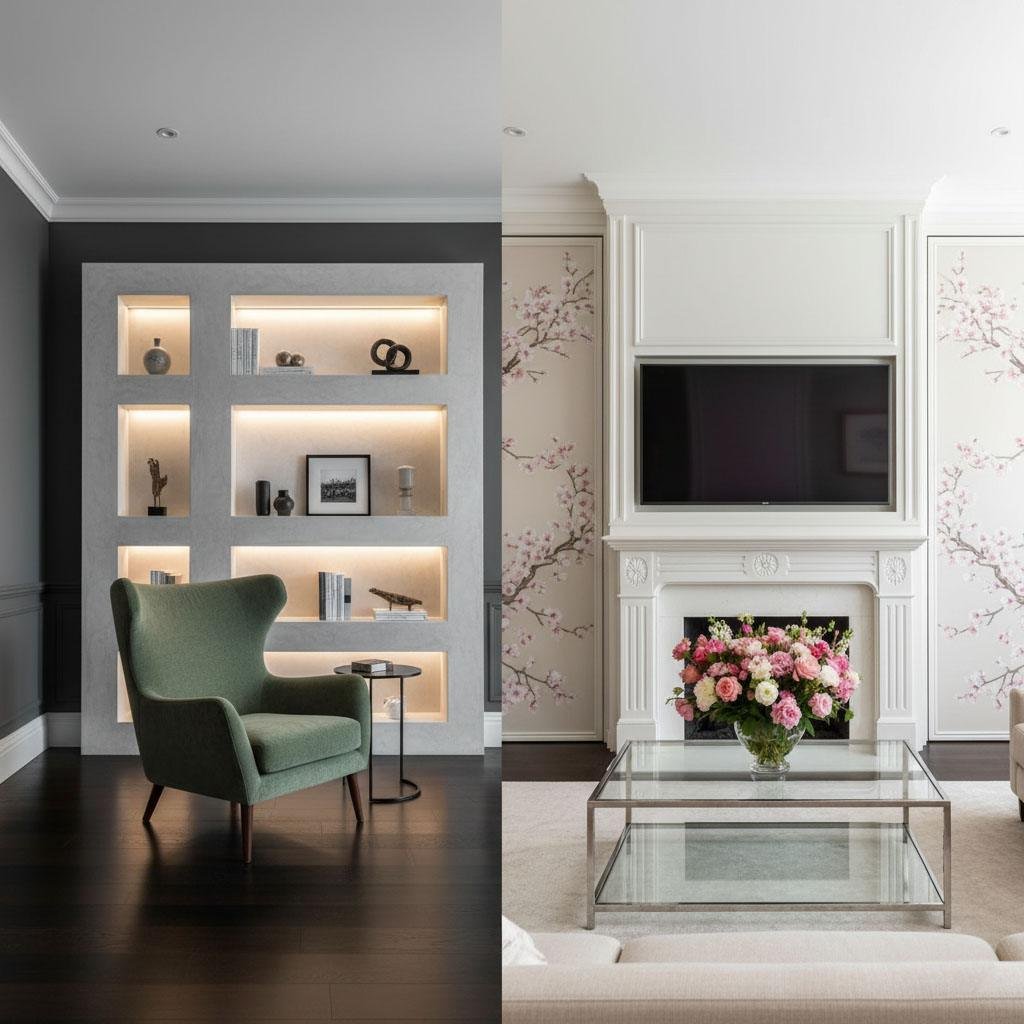
For those who prefer a more discreet approach, bespoke cabinetry, sliding art panels, or built-in shelving can conceal or visually soften the TV. When the room has multiple functions—conversation, reading, TV watching—swivel chairs and modular sectionals allow for effortless transitions between activities.
The trick is ensuring the TV feels intentionally placed rather than squeezed in as an afterthought. Whether on a wall, above a fireplace, or on a movable stand, it should integrate seamlessly with the room’s proportion and style.
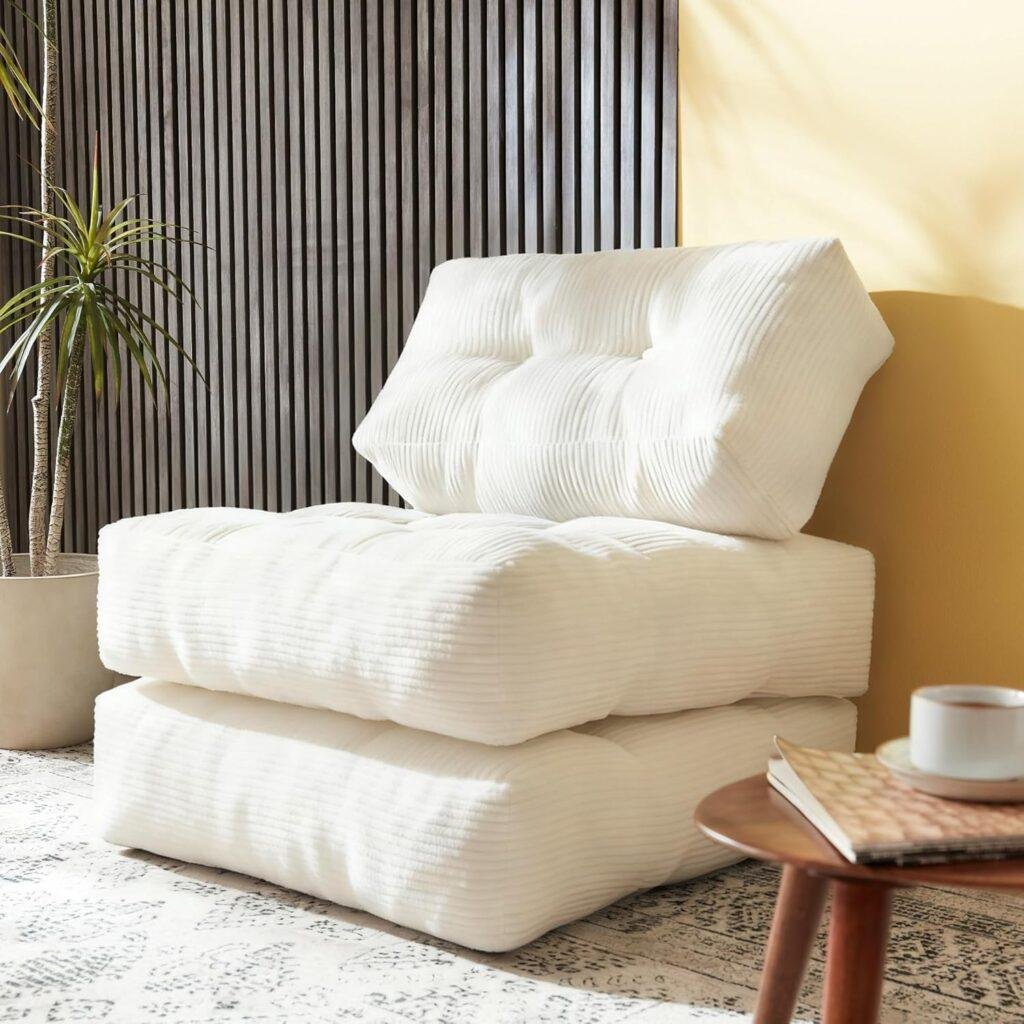
3 in 1 Folding Sofa Bed with Pillow Back Support, Convertible Mattress Floor Cushions, Portable Futon Couch Bed & Sleeper Chair Lounge for Living Room Bedroom,Cream
5. Choose Furniture That Defines the Room’s Character
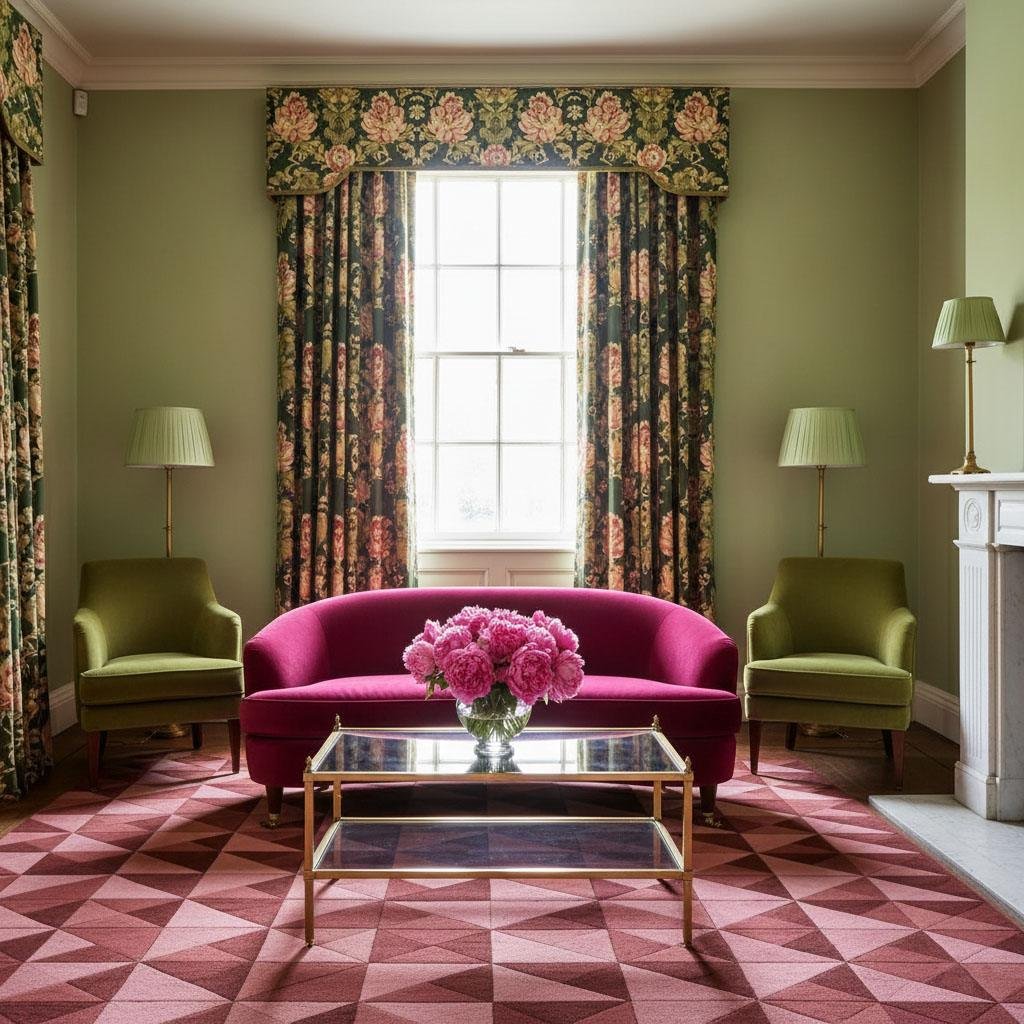
Furniture selection is the backbone of any living room layout. The sofa is typically the hero piece—large enough to anchor the room but not so oversized that it overwhelms it. Designers prefer sofas with clean proportions and encourage pairing them with armchairs, accent seating, and ottomans to create balance.
A thoughtful mix of upholstery textures—linen, velvet, leather, boucle—adds depth and prevents the layout from feeling flat. Vintage or antique pieces bring soul and patina, especially when contrasted with newer designs. Tables play an essential role, too: a coffee table roughly two-thirds the sofa’s length keeps proportions harmonious, while nesting tables and side tables add convenience and versatility.
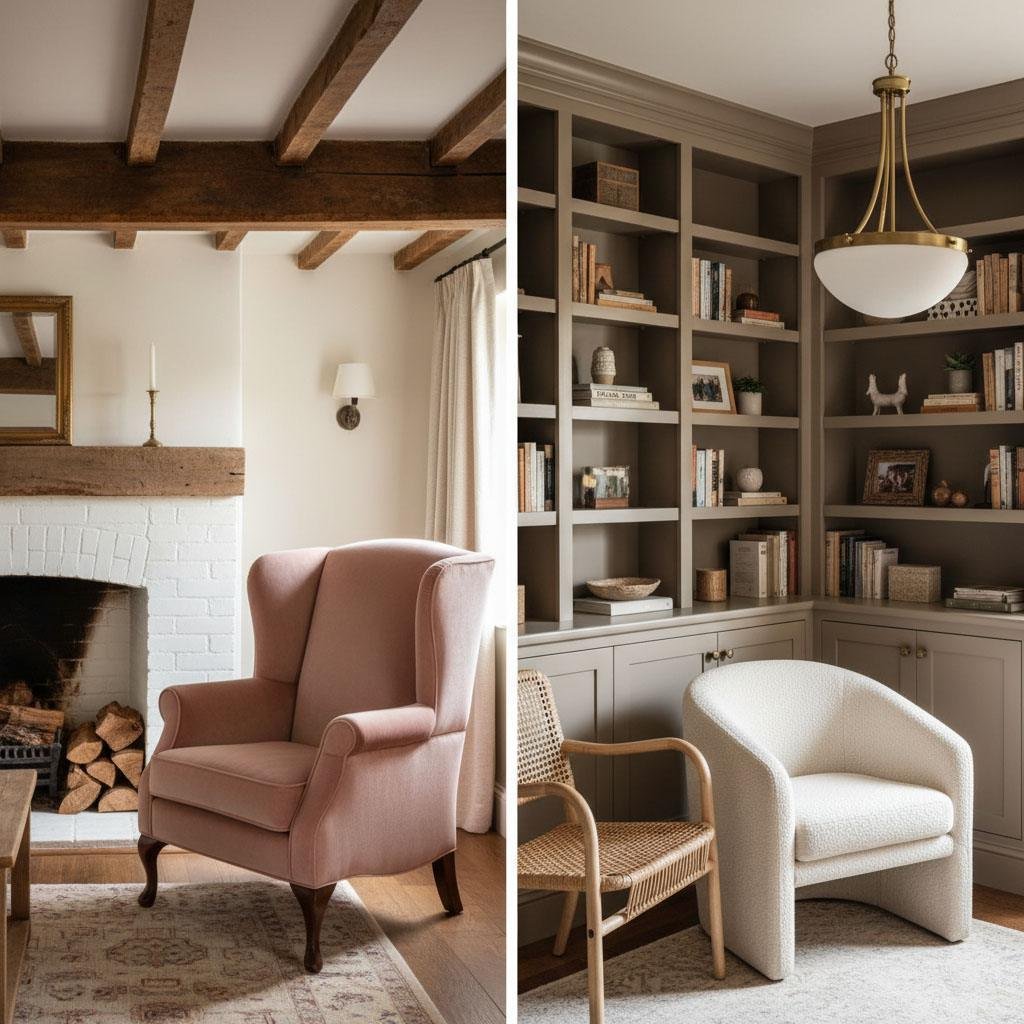
A sofa table behind a floating sofa is a designer-approved trick that adds height, sophistication, and a place for layered lighting. Statement pieces—whether a sculptural chair, an antique chest, or a textural ottoman—act as conversation starters and break up uniformity.
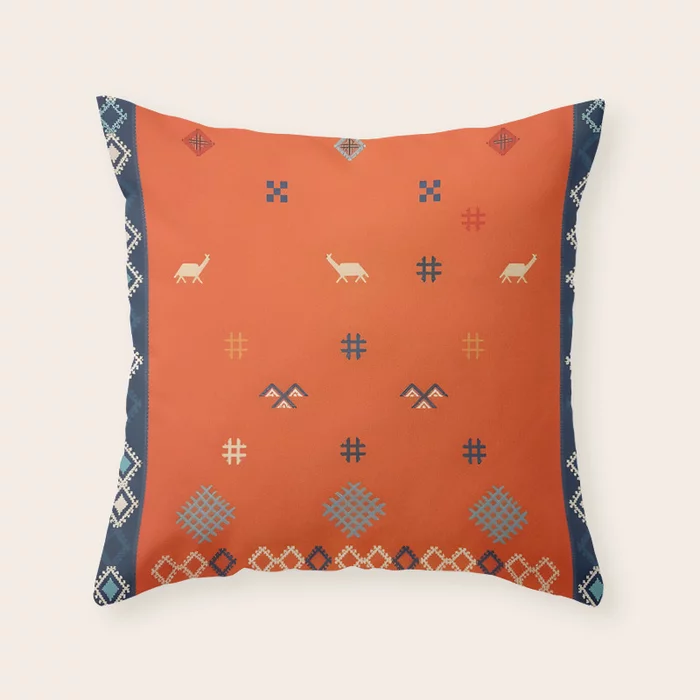
Discover our Latest Products
Elevate your decor with unique designs by independent artists on comfortable throw pillows, available in both indoor and outdoor fabrics…
<< Available only in Arteresting Stores >>
6. Anchor the Layout with Rugs, Lighting & Key Centerpieces
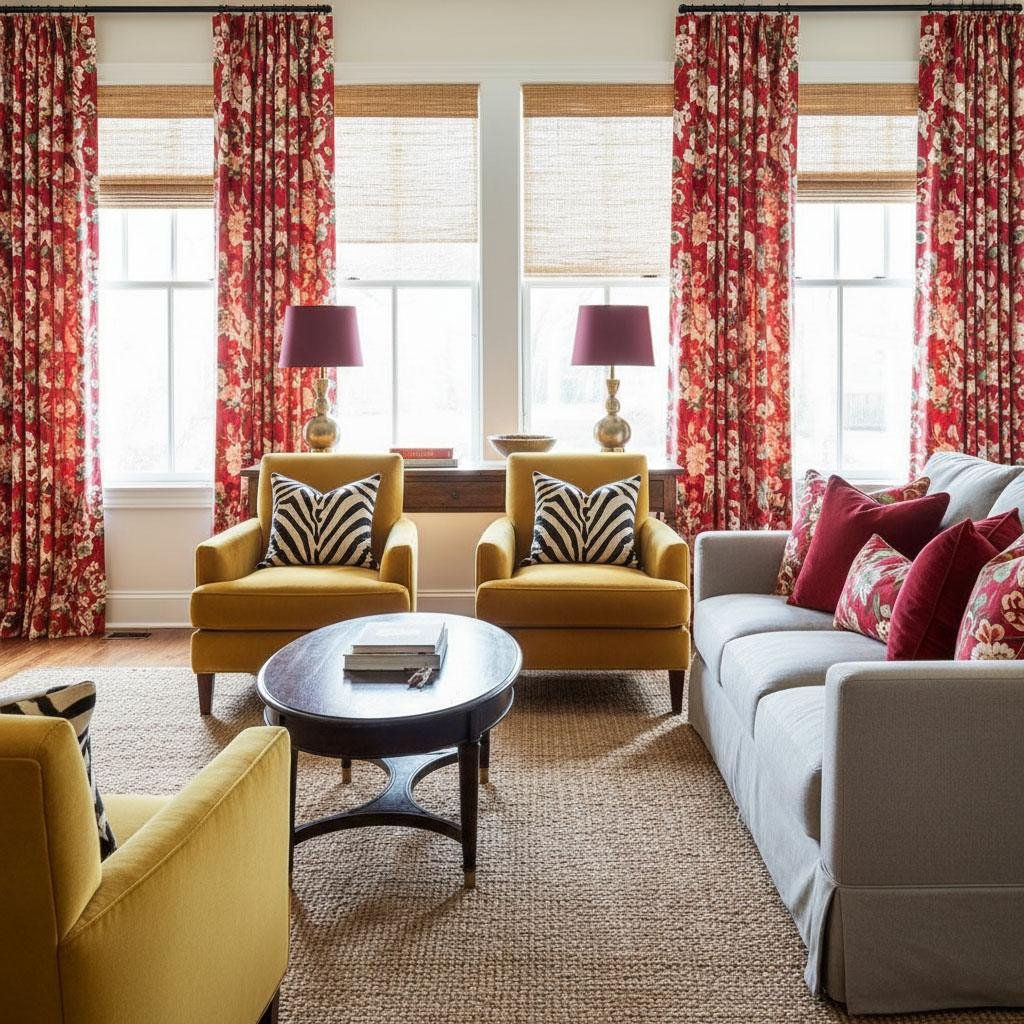
Nothing pulls a living room together more effectively than a properly sized rug. Designers consistently recommend choosing a rug large enough for the front legs of all seating to rest on it. A too-small rug makes the room feel visually disconnected; a generous rug expands the perceived space and adds warmth underfoot.
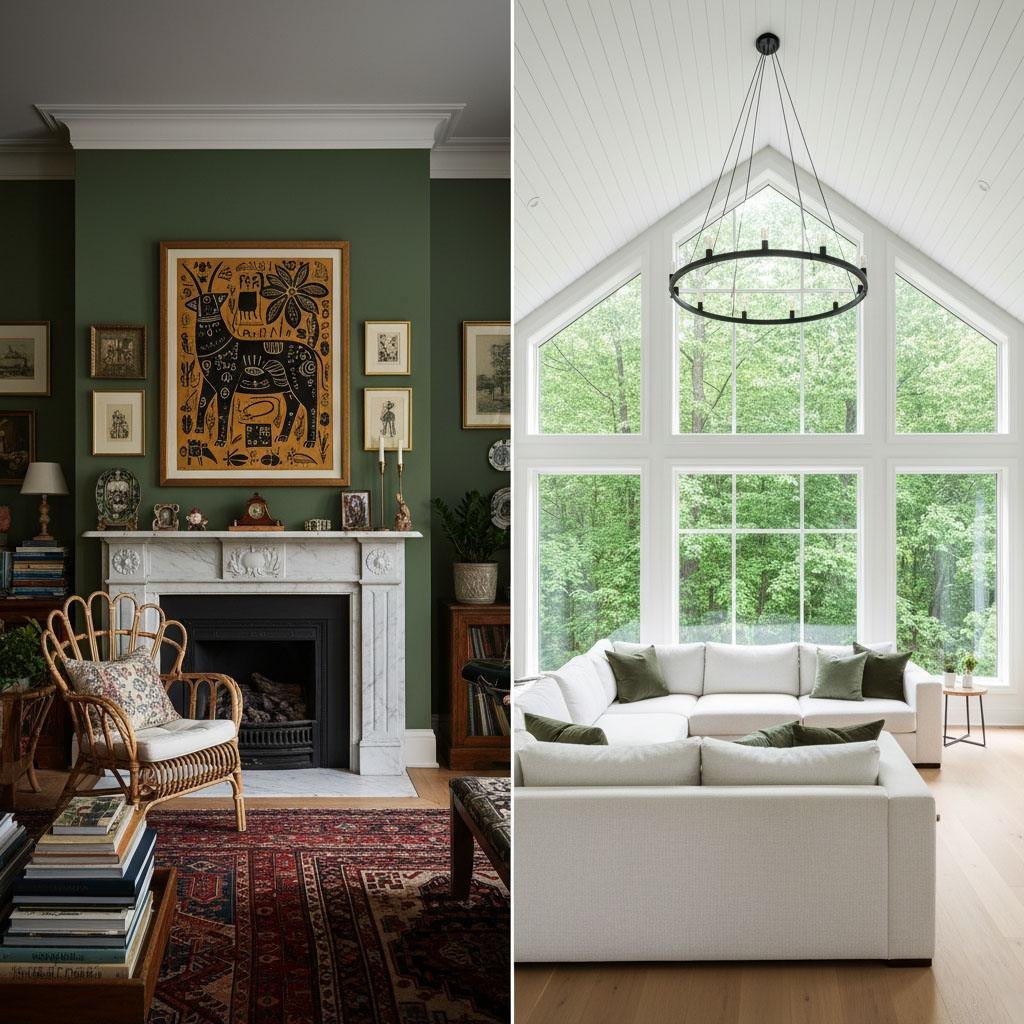
Lighting also plays a vital role in anchoring. A pendant or chandelier centered over the main seating area creates a sense of intention, while layered lighting—floor lamps, table lamps, sconces—adds depth and comfort. The coffee table often serves as a secondary focal point, especially when styled with thoughtful objects that reflect the room’s personality.
In open-plan layouts, rugs help define distinct zones without creating physical barriers. Each zone should have its own lighting anchor—a pendant above a dining table, a floor lamp beside a reading chair—to give clarity and purpose to every corner.
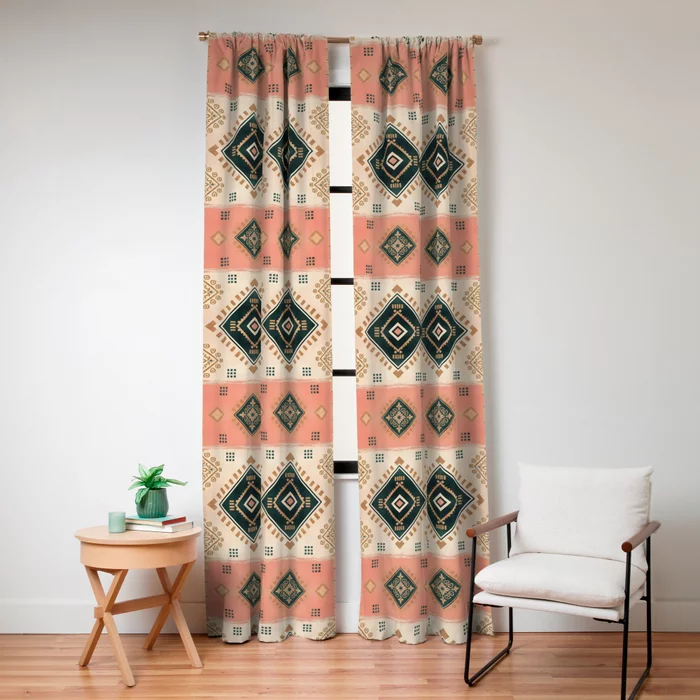
Transform your room’s ambiance with our range of curtains in unique designs by independent artists, available in Blackout, Light-Filtering, and Sheer varieties.
7. Adapt Core Principles to Any Room Shape or Size
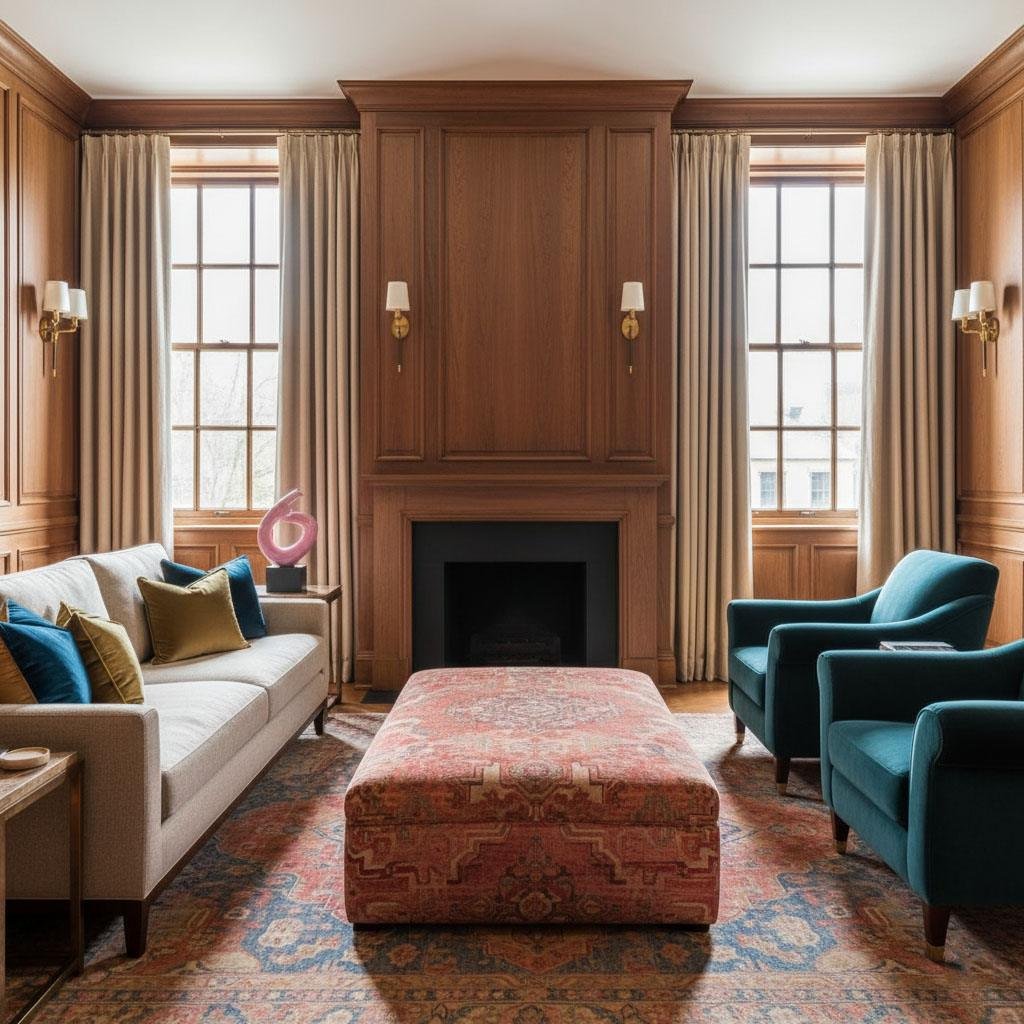
Every living room presents unique challenges and opportunities. The key is adapting designer principles to the architecture at hand.
Small living rooms benefit from:
• Streamlined furniture with visible legs
• Rounded pieces that promote circulation
• Fewer, larger pieces rather than many small ones
• Multi-functional designs like ottomans or nesting tables
• Rugs to visually define the seating area
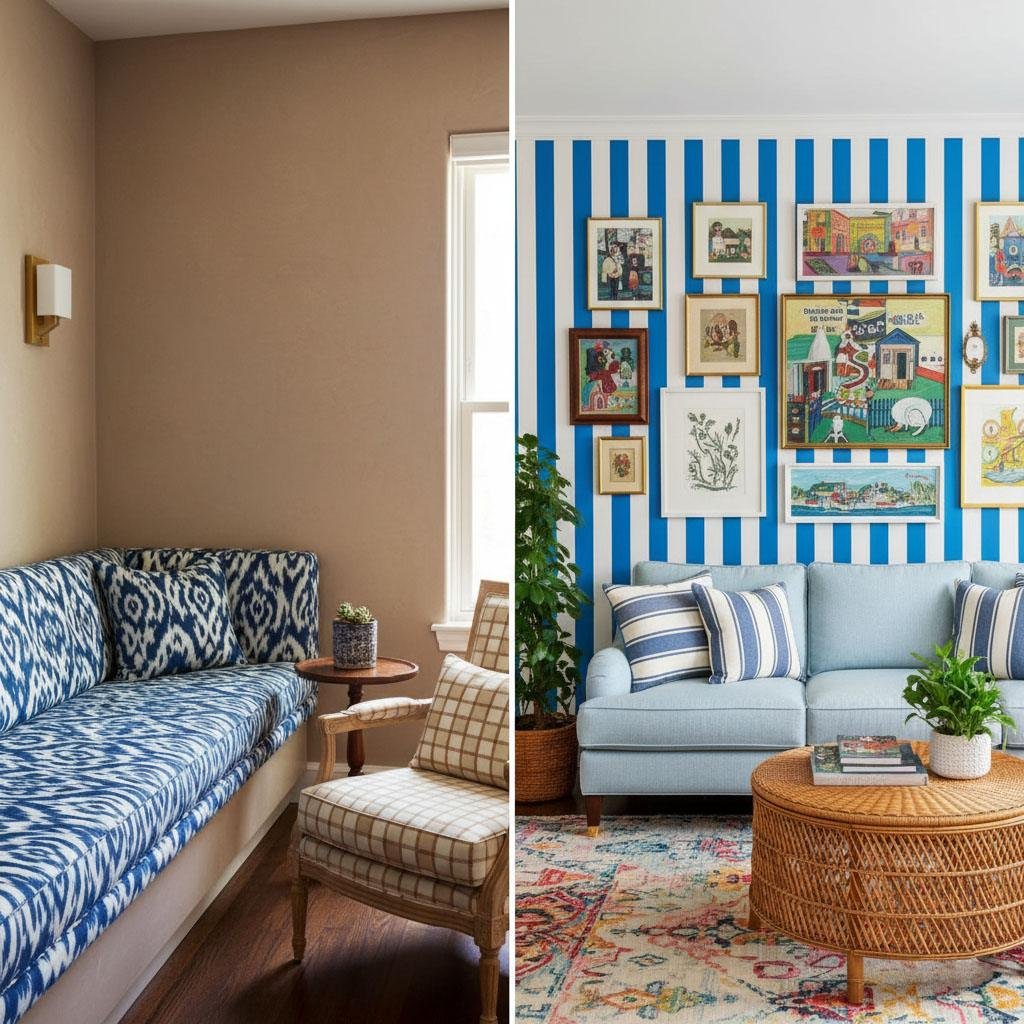
Large open-plan rooms thrive with:
• Clear, layered zoning
• Dual seating groups
• Consoles or sectionals acting as subtle room dividers
• Coordinated palettes to maintain cohesion
Architectural features should be celebrated, not hidden. A bay window can frame a curved sofa or create a gentle reading nook. A fireplace becomes a winter focal point, shifting to the garden view in summer. In shared dining-living spaces, lighting and rug choices define each zone without breaking the visual harmony.
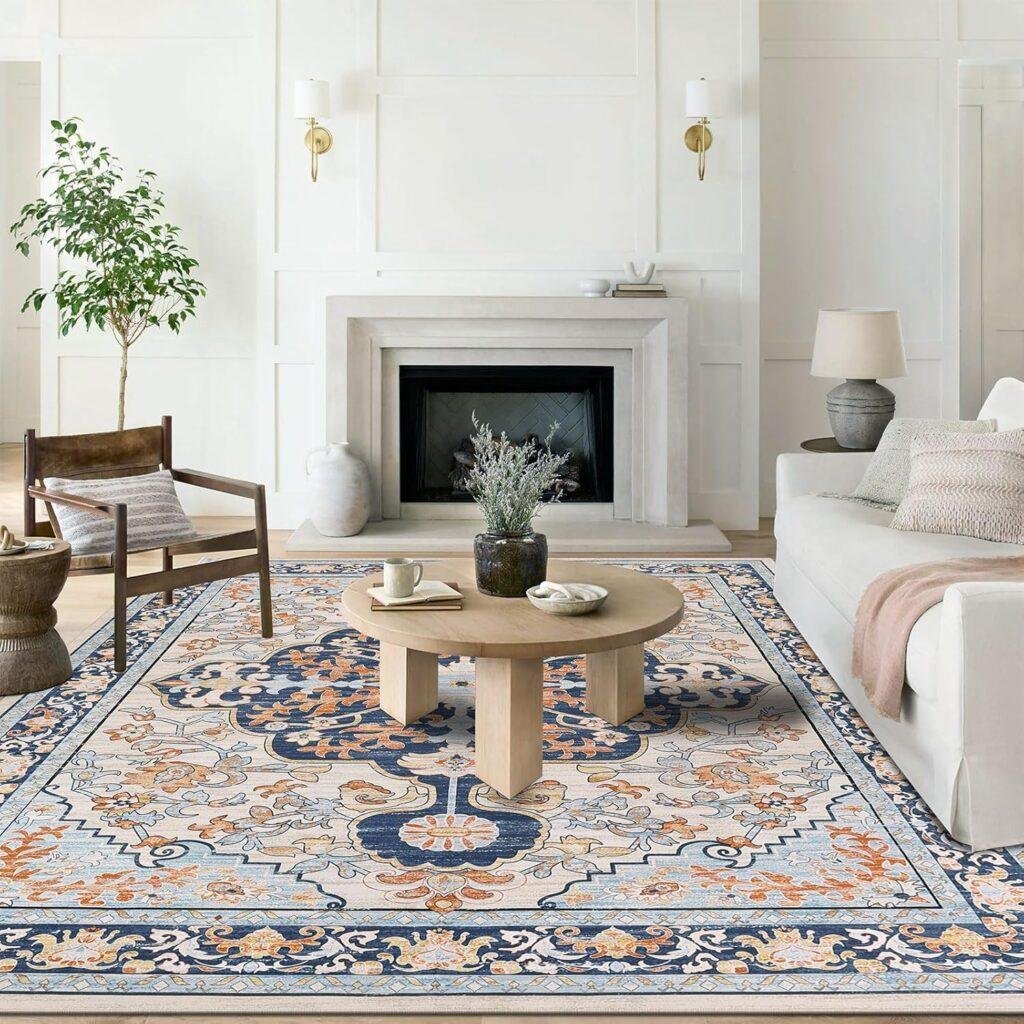
Boho Vintage Area Rug 8×10 Machine Washable Low Pile Soft Floor Carpet Non Slip Non Shedding Accent Rug for Living Room Bedroom Entryway Dining Room Office Orange Blue

Golden Rules to Remember
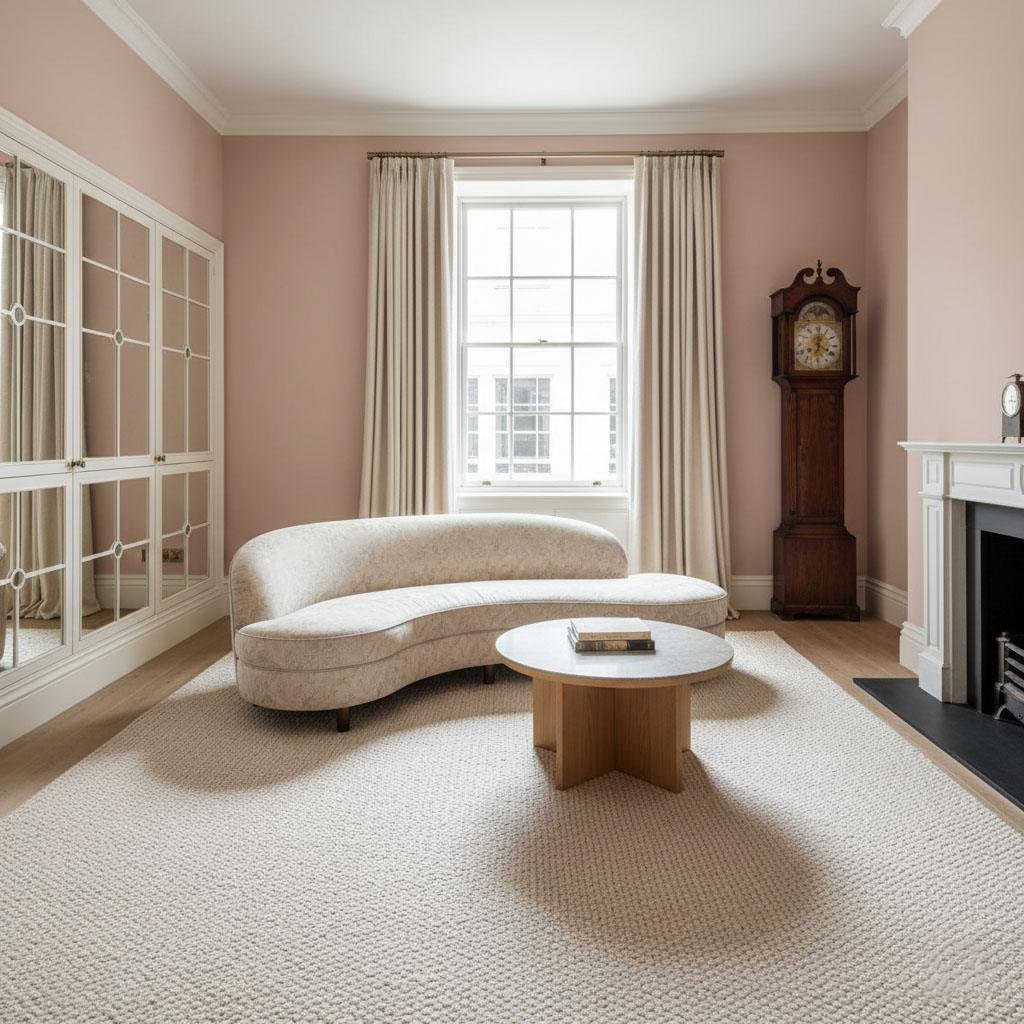
- Tape your layout first.
Designers swear by mapping furniture footprints on the floor to visualize scale. - Avoid entering the room behind a sofa.
If unavoidable, use a console or sofa table as a buffer for a welcoming approach. - Memorize key designer measurements.
• Walkways: 36 inches minimum
• Sofa ↔ coffee table: 18–20 inches
• Artwork height: 57 inches to the center
• Conversation distance: max 8 feet - Leave breathing room.
Negative space is essential in both small and large rooms. - Choose a meaningful focal point.
It should reflect how you actually use the room. - Maintain clear sightlines.
Both to the TV and to other people in the room.
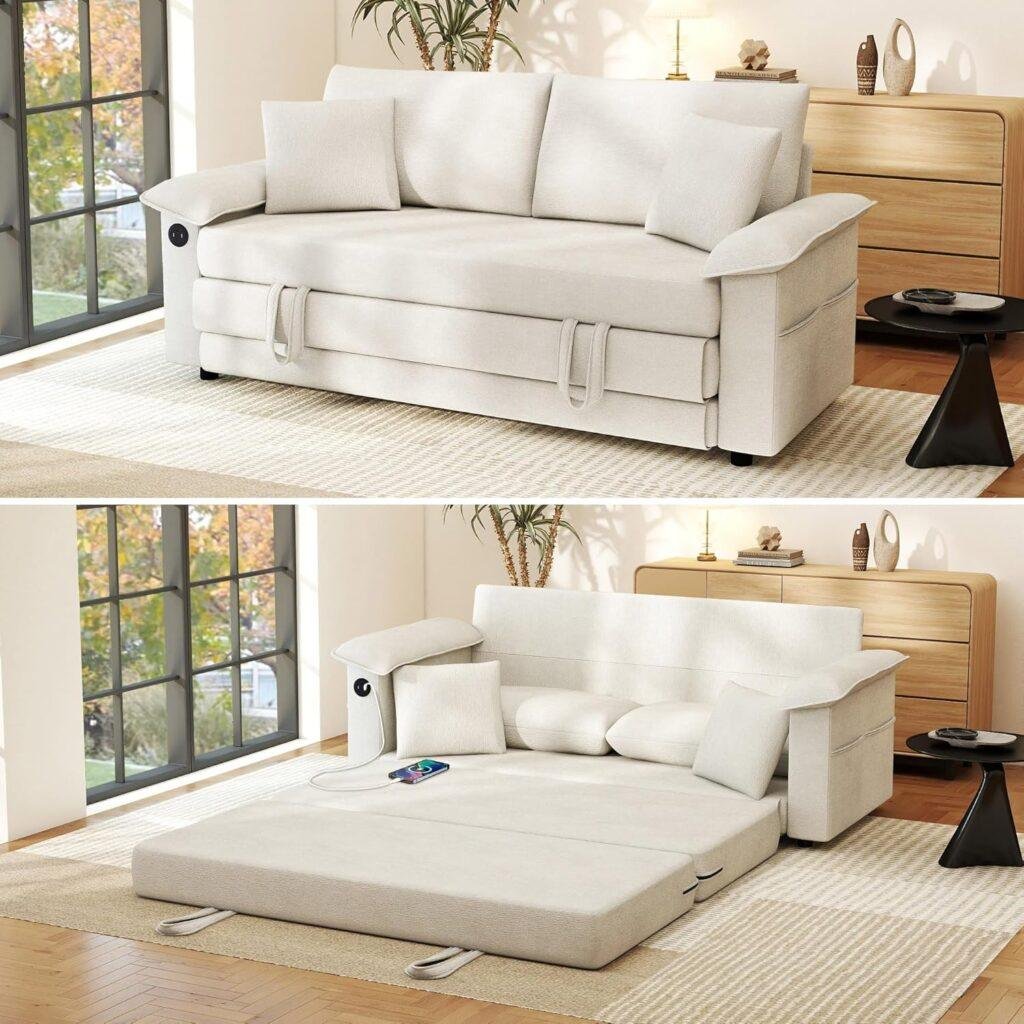
Oversized Loveseat Sleeper Sofa, 77″ Convertible Sofa Bed 2-Seat Pull Out Couch w/USB Chenille Queen Folding Sofa Bed for Living Room Small Spaces Bedroom (Ivory)
FAQs
How do I choose the best sofa placement?
Start by identifying your focal point—whether it’s a fireplace, TV, window, or artwork—then position the sofa to frame rather than compete with it. In smaller rooms, a single primary seating zone works best, while larger rooms can support a main area and a secondary vignette for reading, games, or intimate conversation.
Should the layout be symmetrical or asymmetrical?
Symmetry creates a timeless, balanced look ideal for formal spaces, but asymmetry offers a relaxed, contemporary aesthetic and helps awkward or open-plan rooms feel intentional. Most designers prefer “balanced asymmetry,” where pieces differ but complement one another in scale and weight.
How far should my TV be from the sofa?
Use the 1.5–2.5 rule: multiply your TV’s diagonal size by 1.5 to 2.5 to find the ideal viewing distance. For a 65-inch TV, that’s roughly 8–11 feet. Ensure the TV is at seated eye level—around 40–42 inches to the center of the screen—for the most comfortable viewing.
What size rug is best for a living room layout?
Bigger is almost always better. Choose a rug that fits under the front legs of all seating pieces. Undersized rugs make the room feel disjointed, while oversized ones visually expand the space and anchor the layout.
How do I make a small living room feel larger?
Select furniture with visible legs, keep walkways clear, use fewer, larger pieces, and opt for rounded edges to improve circulation. Light rugs, vertical lighting, and multi-functional furniture help maximize both space and functionality.
How many seating pieces do I need for a conversation-friendly layout?
The 2:1 rule is a useful guide: for every sofa, include two additional seats. Keep seating within eight feet of each other and angle pieces inward to encourage natural connection.
How do I hide or downplay a TV?
Use sliding art panels, built-in cabinetry, or floating shelves to help it recede into the room’s design. Styling surrounding shelves with books and décor softens the TV’s presence and ensures it doesn’t dominate.