Table of Contents
The Evolution of Compact Spaces
Small living rooms no longer require cramped, compromised layouts. If you are searching for the most effective small living room ideas 2026, the industry shift is clear: intentional spatial design replaces forced furniture placement. The modern approach prioritizes breathability, integrated storage, and seamless movement.
Instead of pushing bulky pieces against walls to salvage floor space, today’s top designs utilize clear zoning and smart proportions. By optimizing how light and movement interact with your furniture, even the tightest footprints can feel highly organized and effortlessly expansive.
Top 15 Small Living Room Ideas 2026
Open Sightlines with Low-Profile Furniture
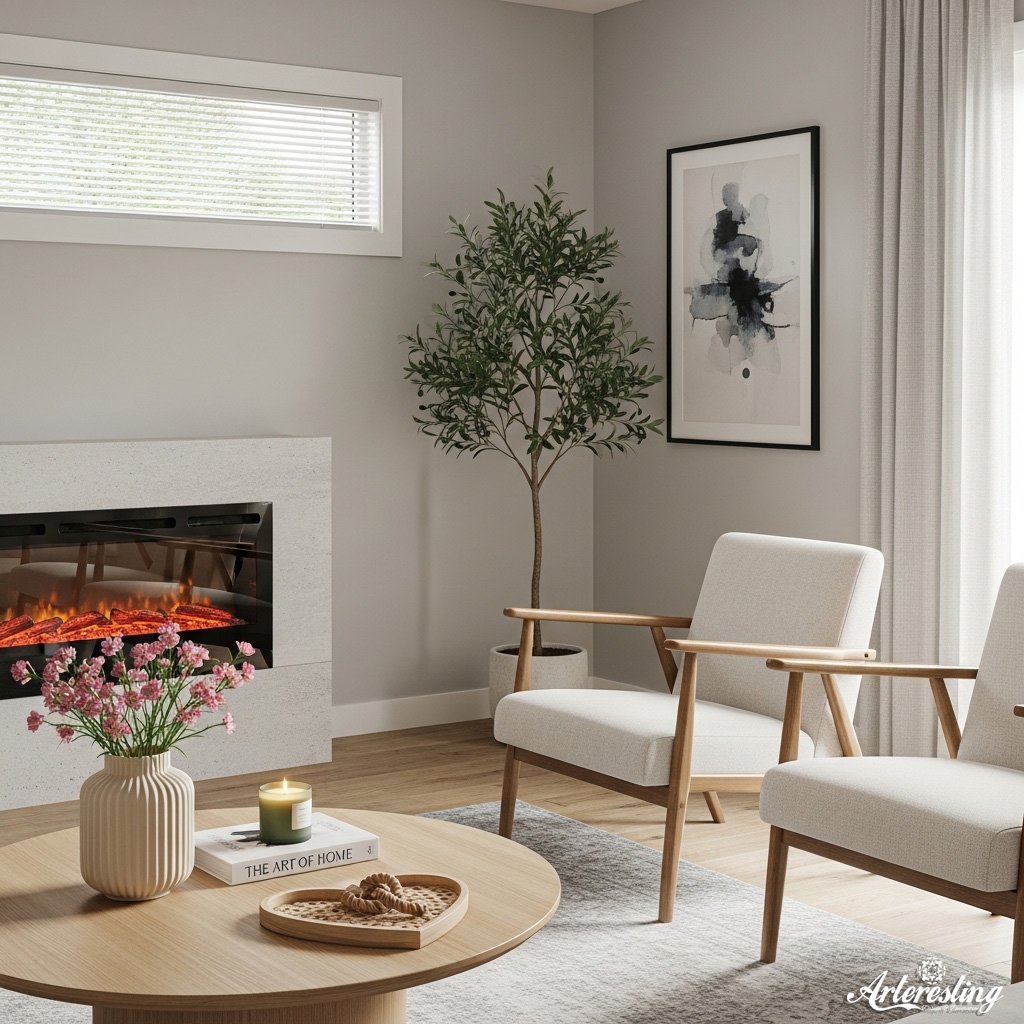
A tight footprint instantly feels wider when nothing blocks the eye. Low-profile furniture keeps sightlines clear across the entire room. Pair a sleek armchair with a low round table to ensure the room reads as one continuous, open surface.

Anchor Zones with Layered Wood and Fabric
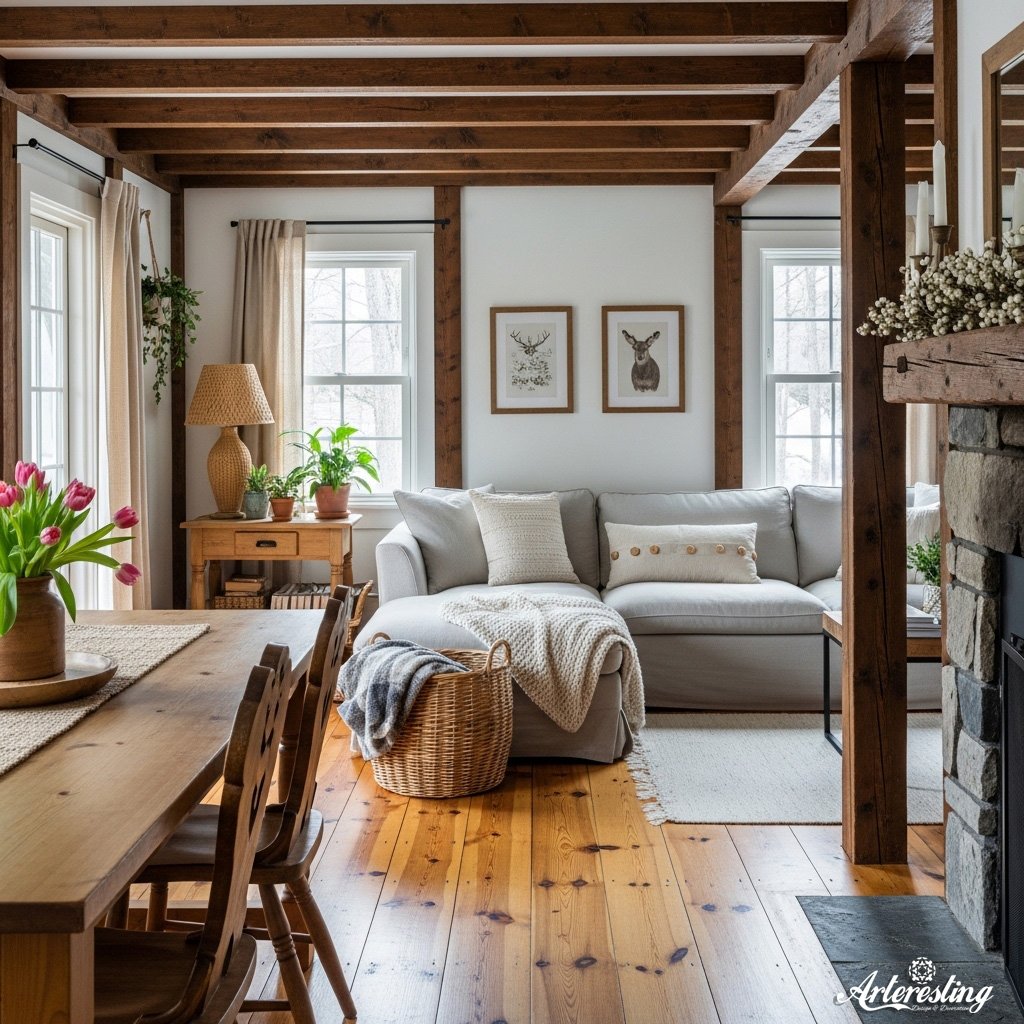
You can blend dining and lounging zones within a compact apartment design without building walls. Let a warm wooden table anchor one side of the room while a soft, textured sofa defines the other. This removes the need for excessive decor, allowing built-in textures to ground the room.
Shop The Look

Maximize Depth Using Wall Panels and Art
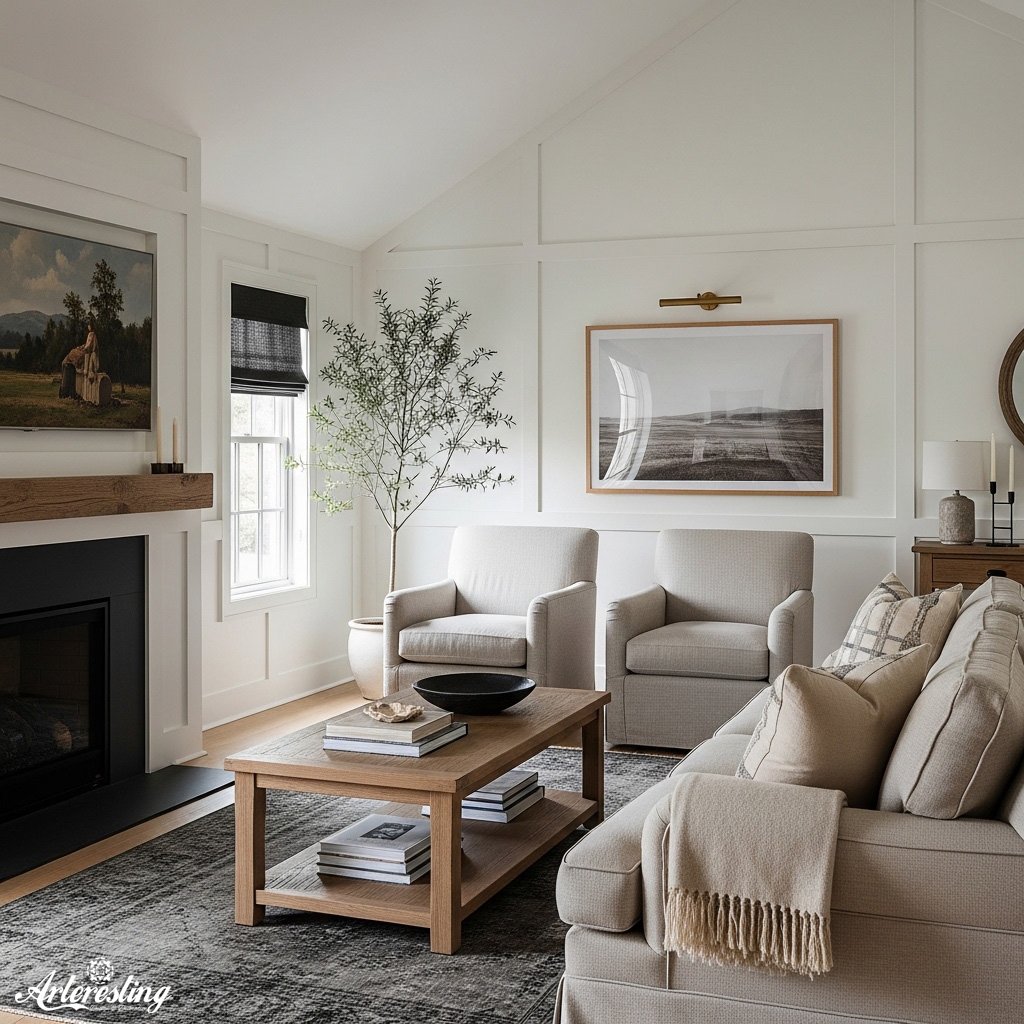
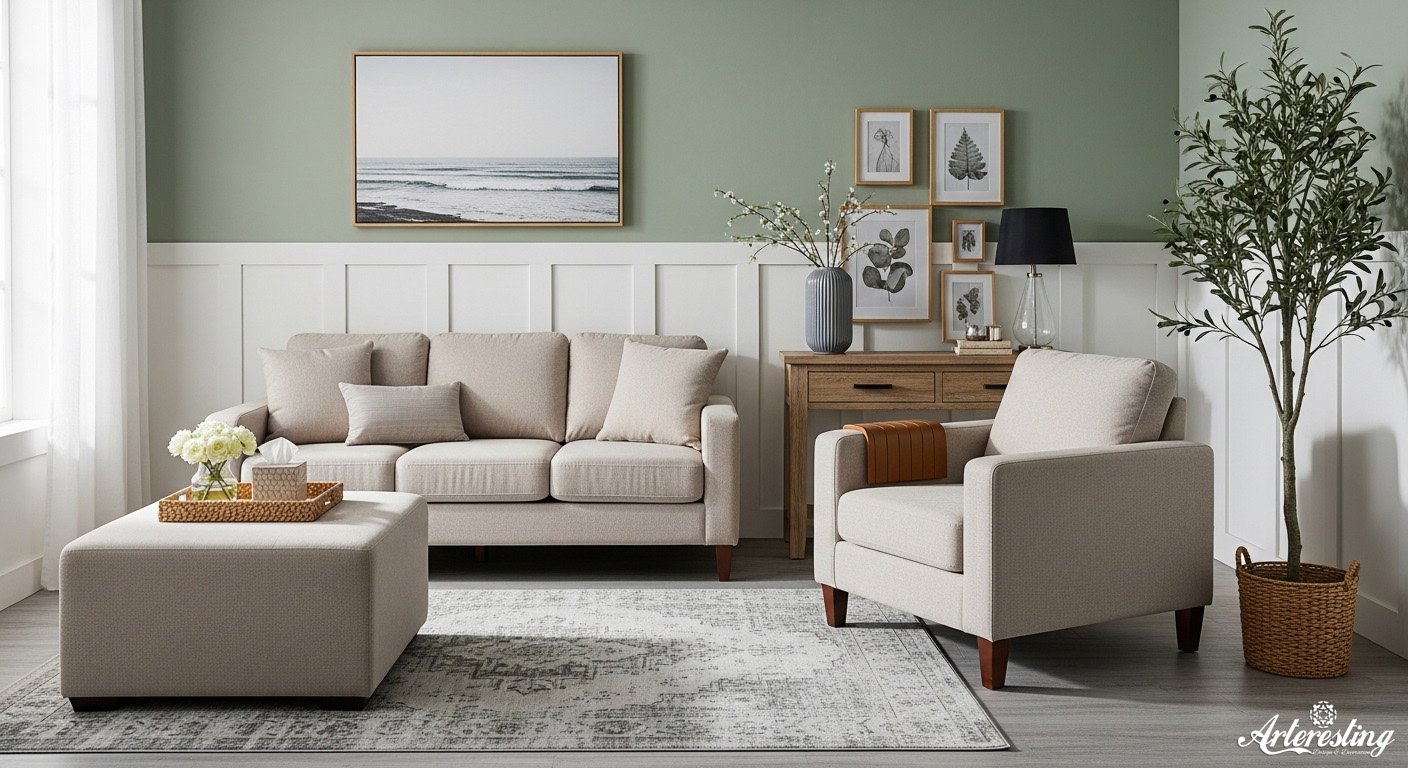
Empty walls offer untapped potential for architectural depth. Install vertical paneling and strictly curated framed art to give the room structure without consuming floor space. Keep seating tightly arranged around a central axis to maintain a flawless circulation path.
Deploy Console Tables as Visual Dividers
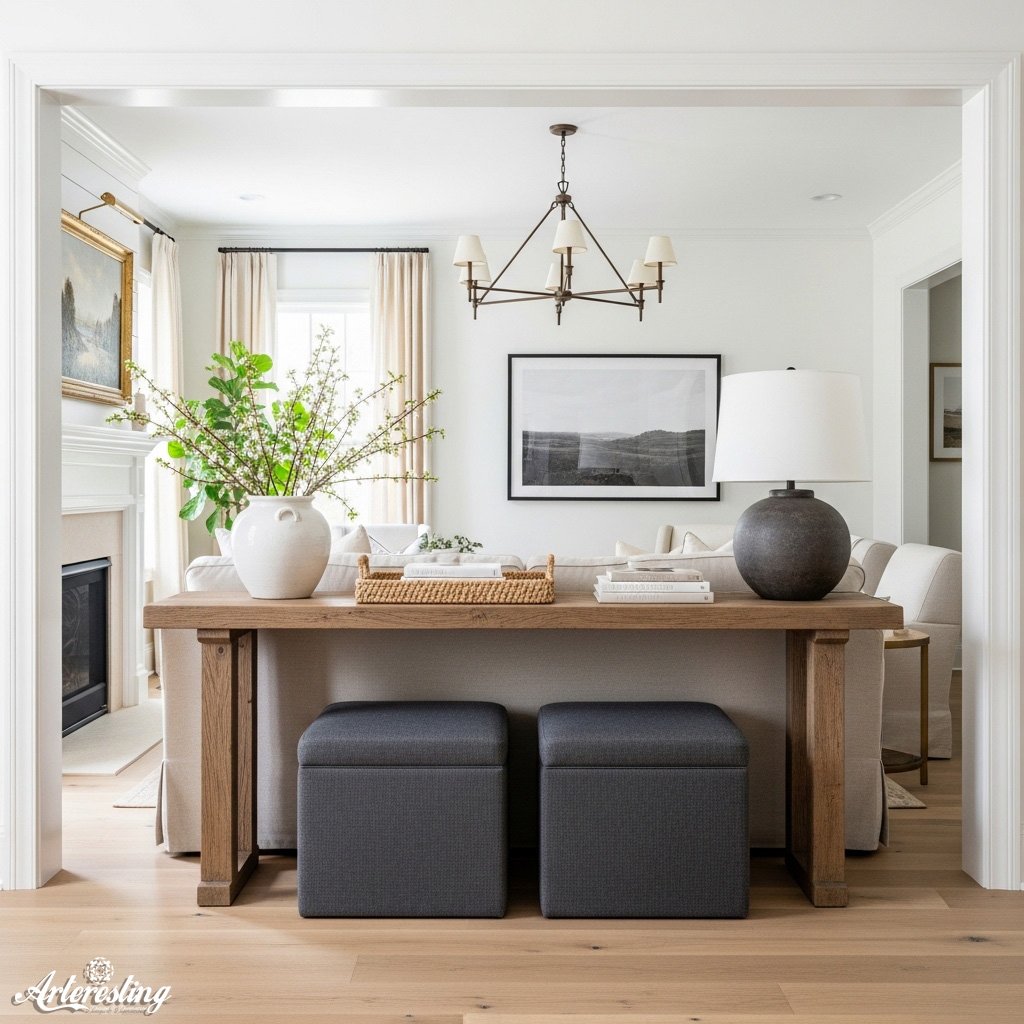
A slim console placed directly behind a floating sofa creates a distinct room division without blocking light. It doubles as a functional surface for lighting and a barrier that hides everyday items. This space-saving layout minimizes extra cabinetry while defining your seating zone.

Harmonize Open Concept Living Areas
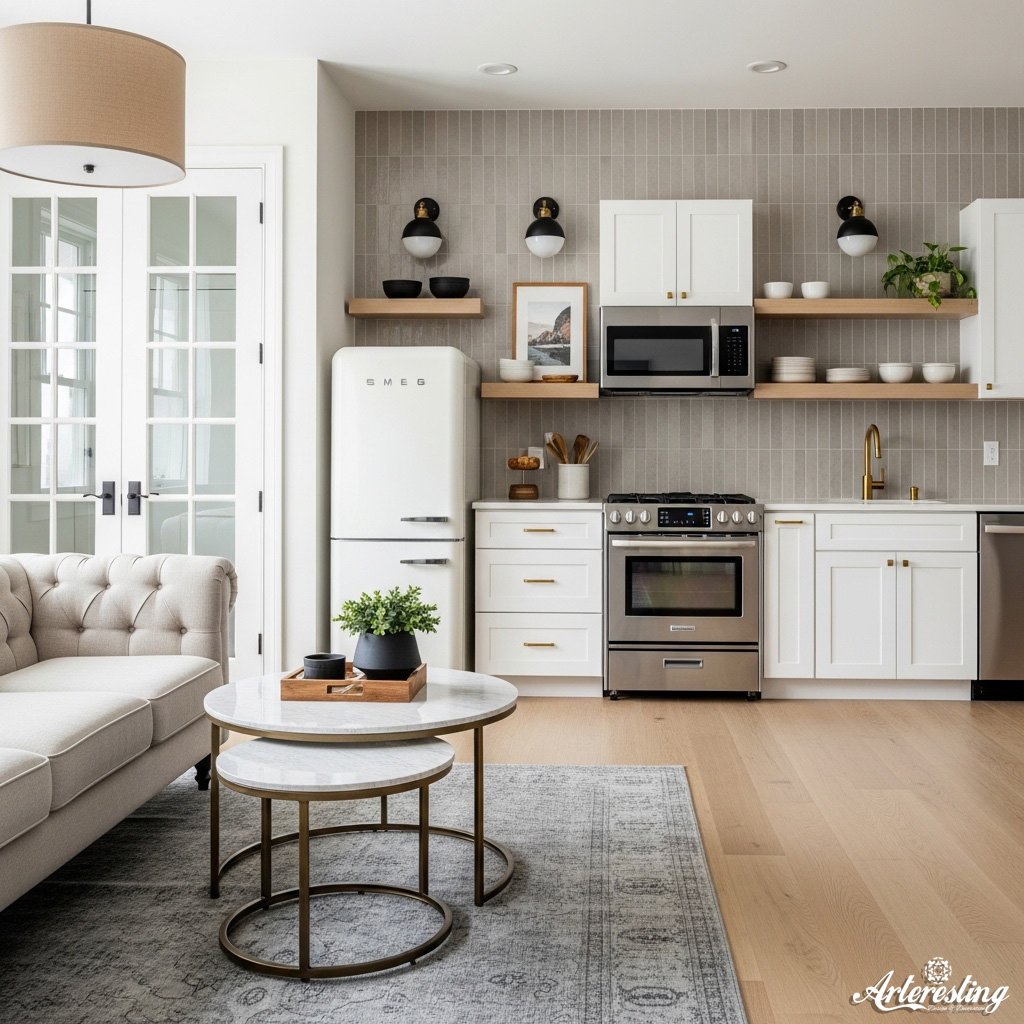
Merging a kitchen and living area requires strict visual consistency. Match the tones and hardware finishes across both spaces to prevent the room from feeling fractured. Swap heavy upper cabinets for open shelving to keep the kitchen from dominating the shared environment.

Swap Coffee Tables for Central Ottomans
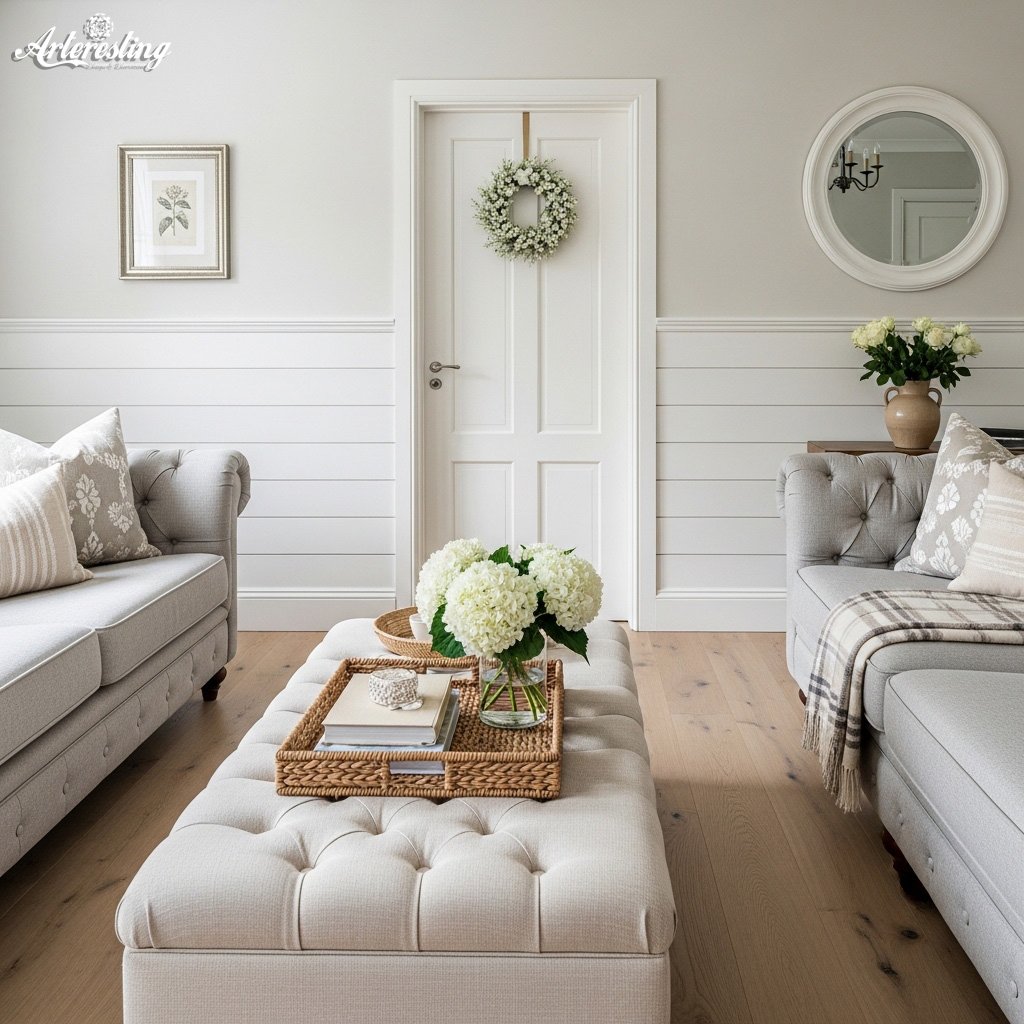
Traditional coffee tables are rigid and consume heavy visual weight. Replacing them with a tailored central ottoman adds multi-functional seating and a flexible resting surface. Maintaining symmetry with matching sofas around the ottoman drastically reduces visual clutter.
Shop The Look
Define Invisible Boundaries with Rugs and Light
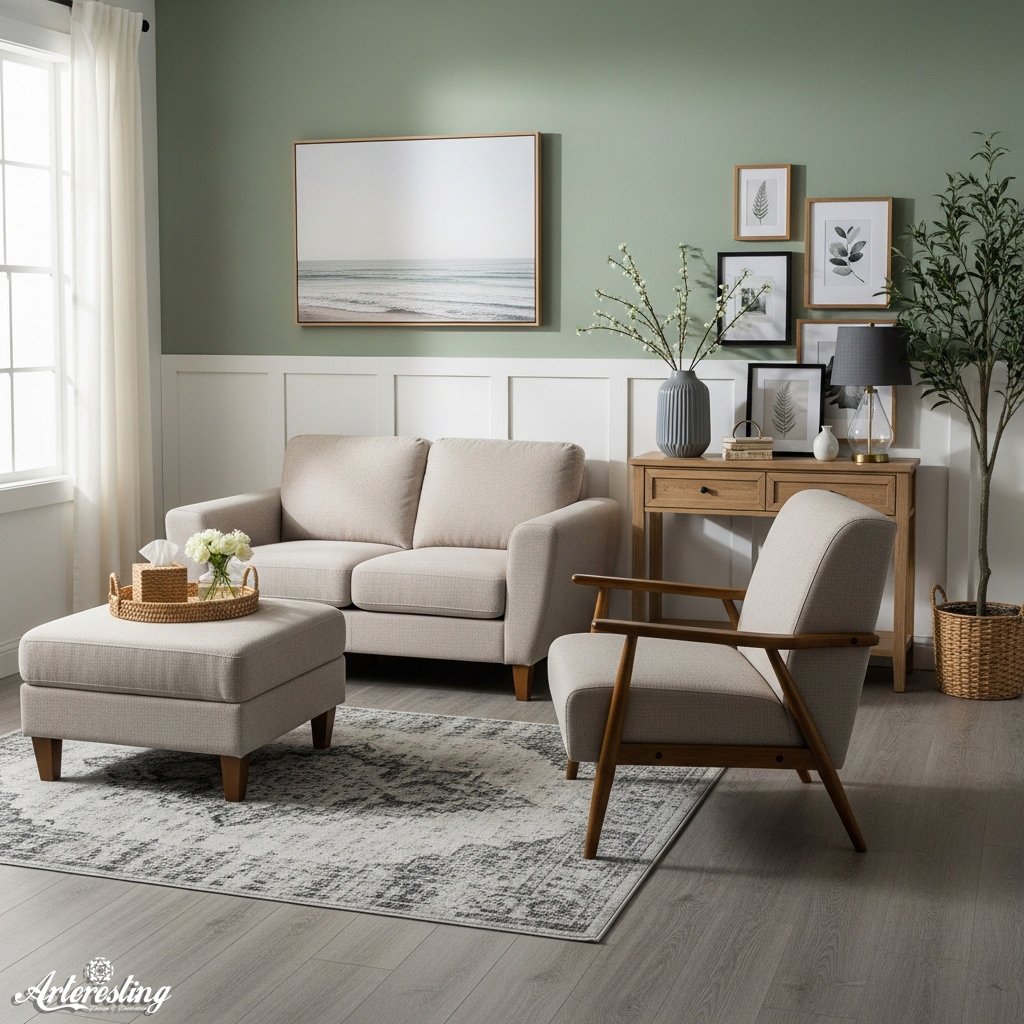
You do not need partitions to create structure in a compact space. A high-quality, oversized rug instantly establishes the perimeter of your living zone. Arrange your furniture to follow the natural light pouring into the room, making the layout feel deliberate and expansive.
Frame the TV with Built-In Storage
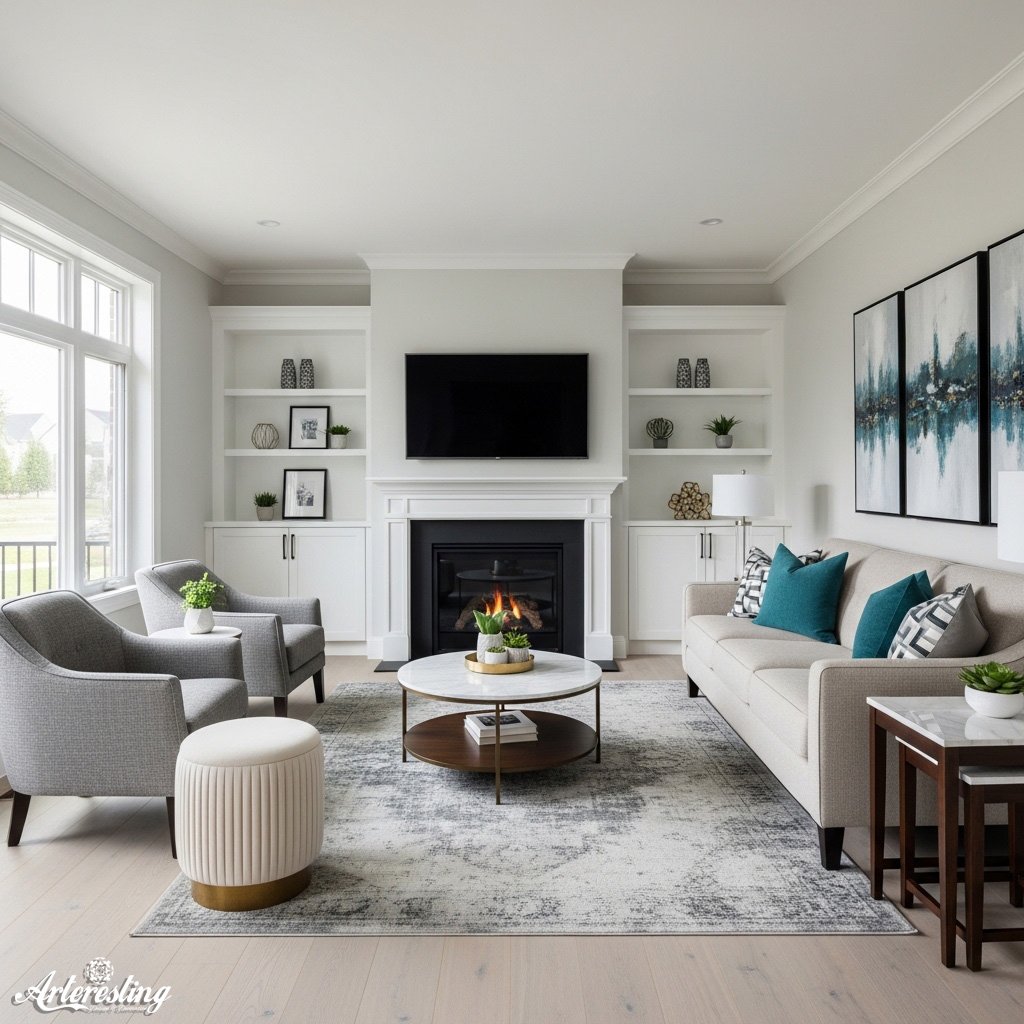
The wall housing your television is prime real estate for organization. Custom built-in shelving around the screen absorbs books, plants, and media components in one unified block. Consolidating your items onto a single wall leaves the rest of the room entirely free of distractions.
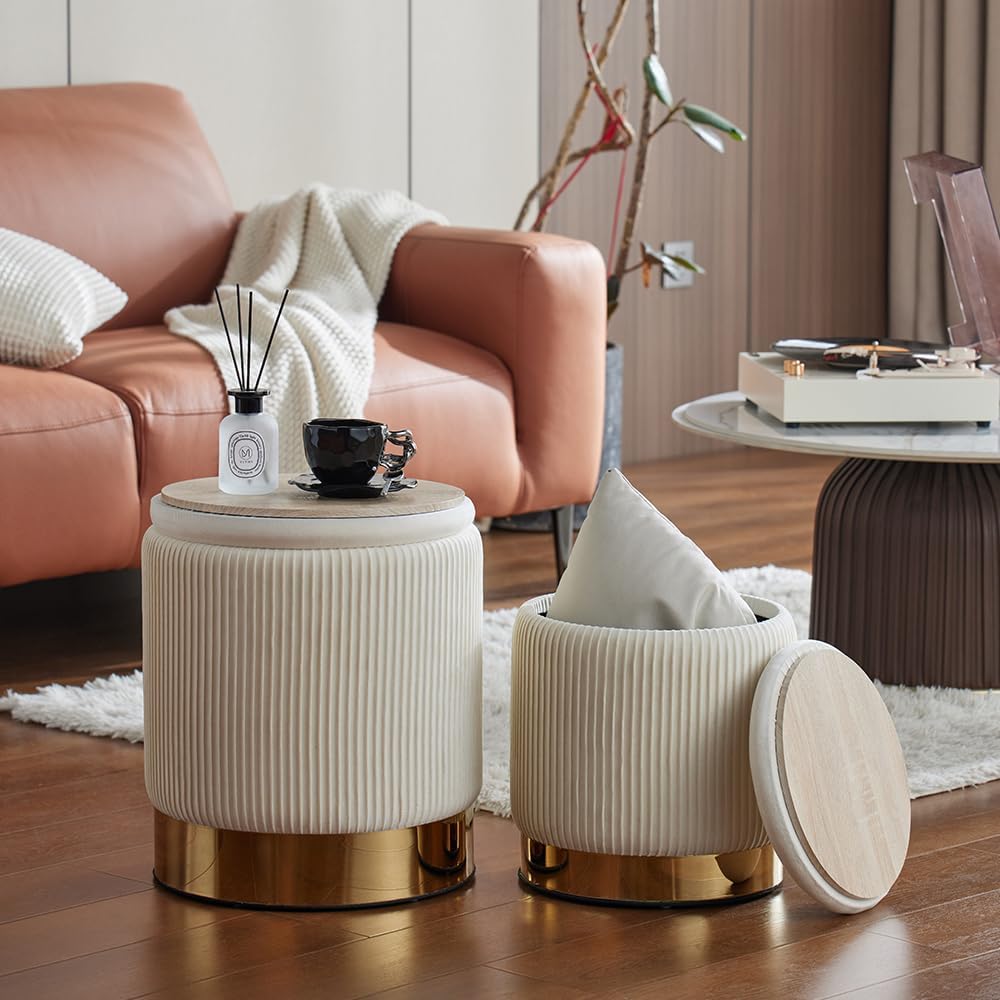
Filter Light Through Open Shelf Dividers
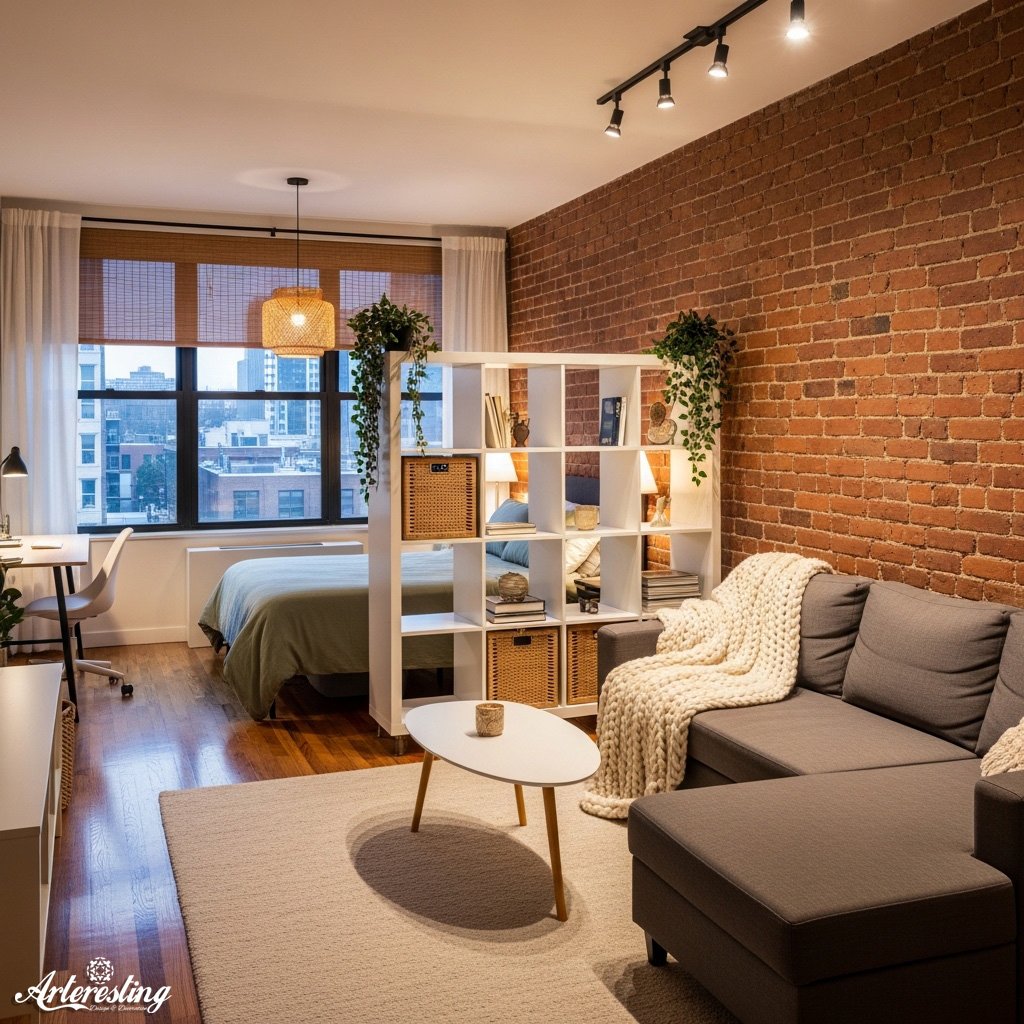
When separating a living area from a sleeping nook, solid partitions are the enemy of natural light. A structural cube shelf provides immediate privacy while allowing sunshine to pass right through. Every tier of the shelf offers practical storage, ensuring the divider works twice as hard.

Build Depth with Textured Neutral Layers
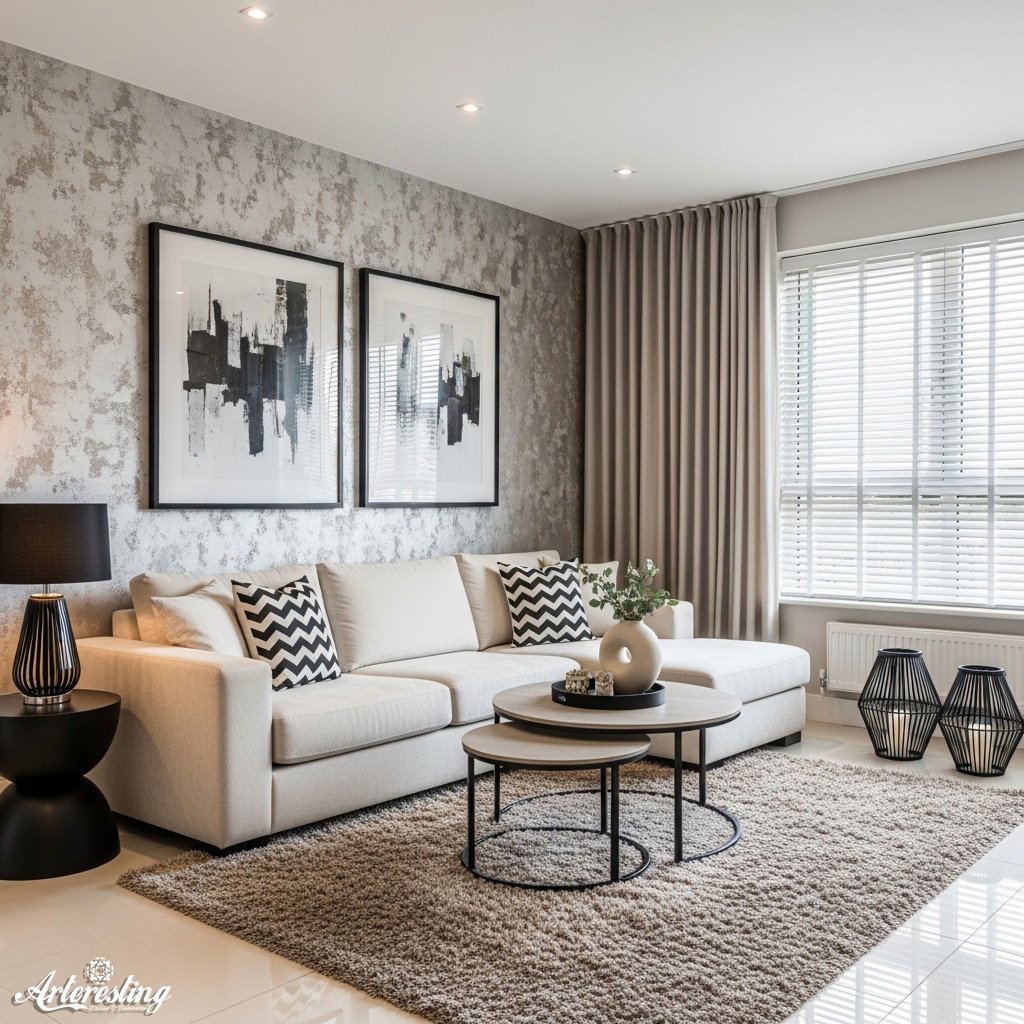
A controlled, neutral color palette relies entirely on texture to create visual interest. Layer a thick, plush rug with heavy woven cushions and soft architectural finishes. This technique adds profound depth and luxury to the space without bringing in unnecessary furniture.
Extend the Room via Floor-to-Ceiling Windows
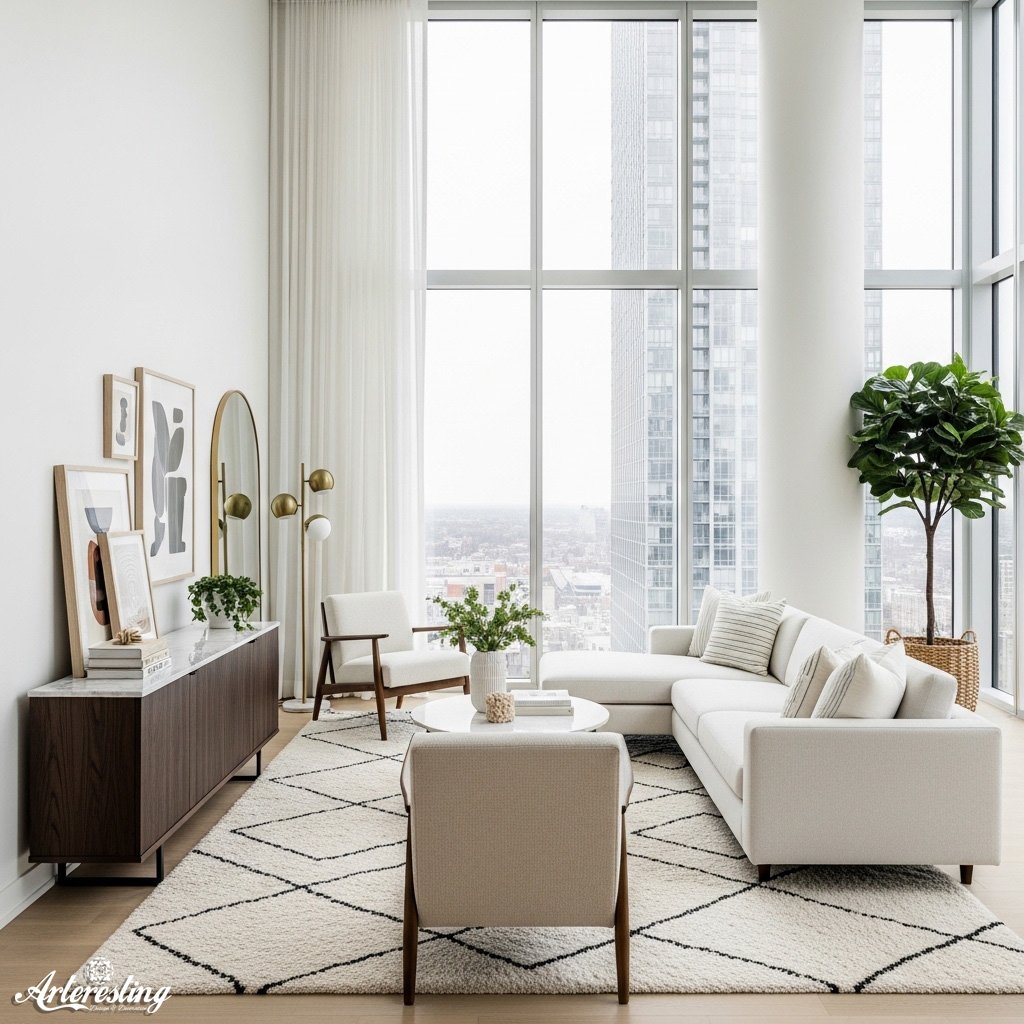
Large windows are the ultimate optical illusion for limited square footage. Pull all furniture away from the glass to allow the exterior view to serve as a natural extension of the room. Unobstructed glass makes the outdoors feel like part of your interior footprint.
Balance the Room with Mixed Materials
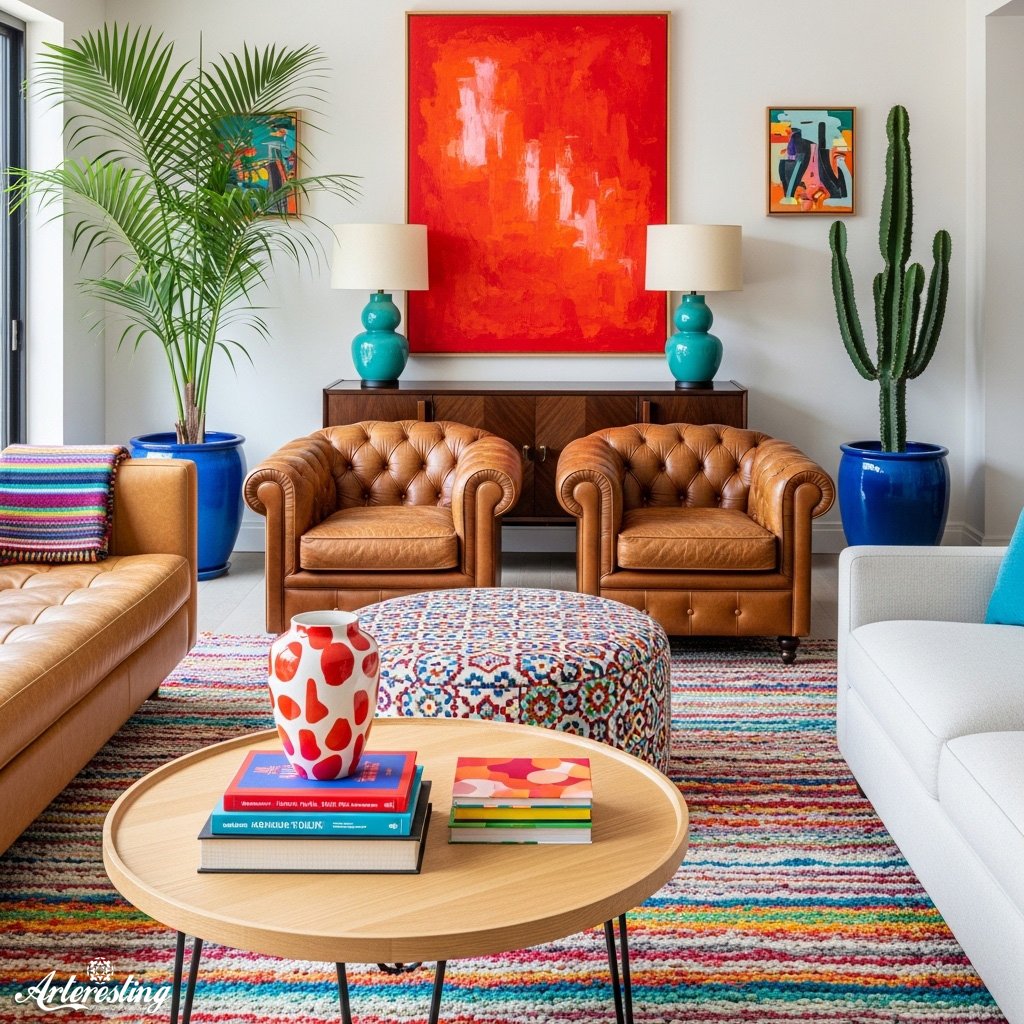
Wood, metal, and heavy fabrics can coexist beautifully in a small space if carefully controlled. Assign a specific role to each material to keep the room visually engaging but strictly disciplined. Limit your total furniture count to ensure this bold mix never feels chaotic.
Maximize Floor Area with Slim Profiles
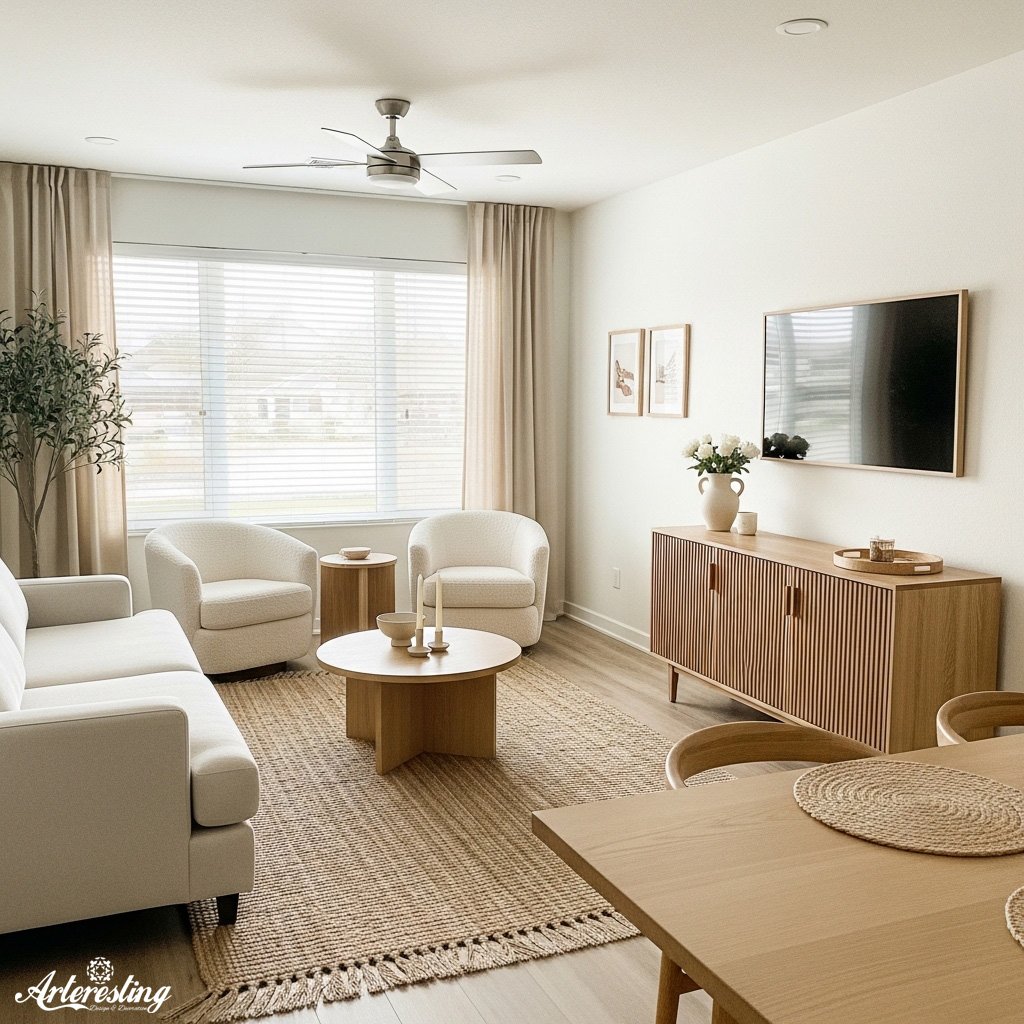
Bulky bases and heavy frames consume valuable optical space. Selecting chairs and sofas with slim, elevated legs exposes more continuous flooring underneath. Allowing light to pass under your seating immediately tricks the eye into perceiving a much larger room.
Capitalize on Vertical Storage Solutions
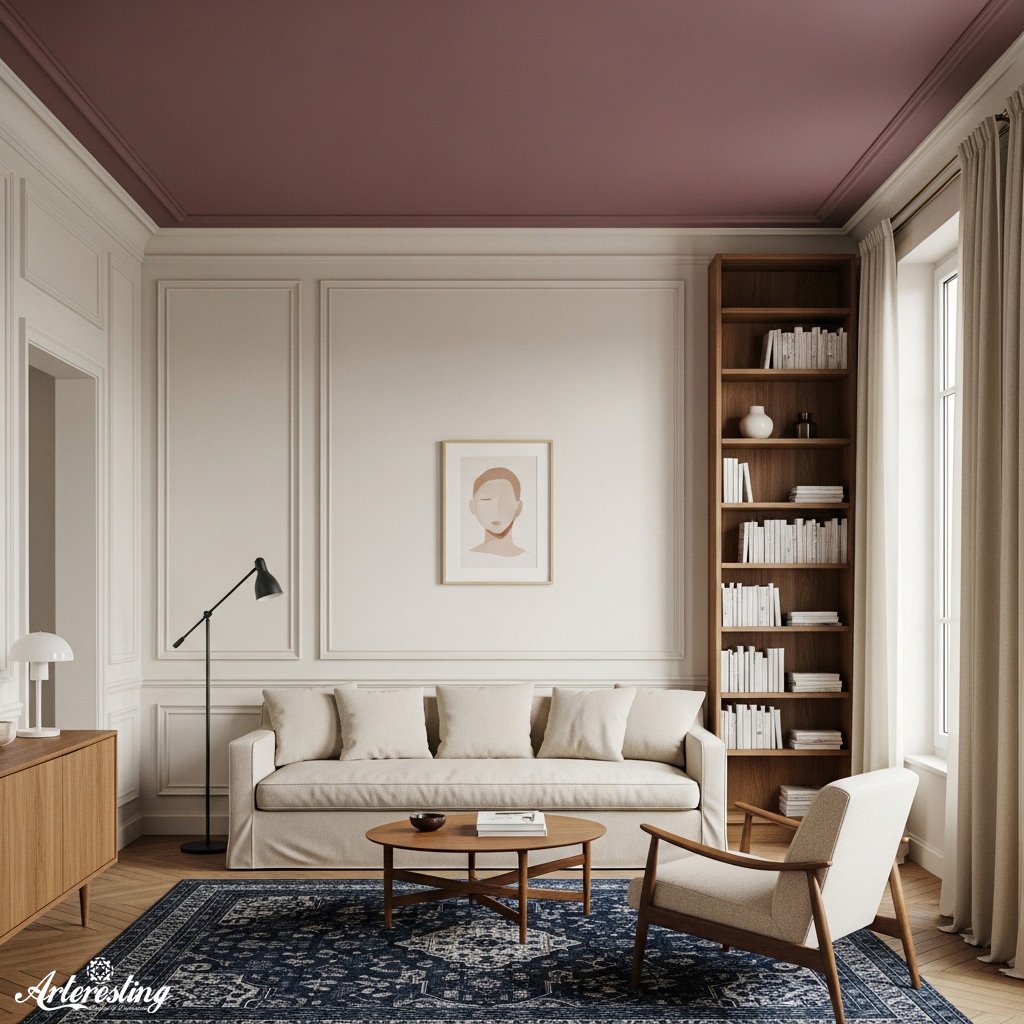
Stop spreading small storage units across your limited floor plan. A single, full-height bookshelf forces the eye upward and capitalizes on entirely unused vertical storage solutions. Consolidating your storage vertically keeps your seating area minimalist and highly functional.
Create Circular Flow Around a Central Table
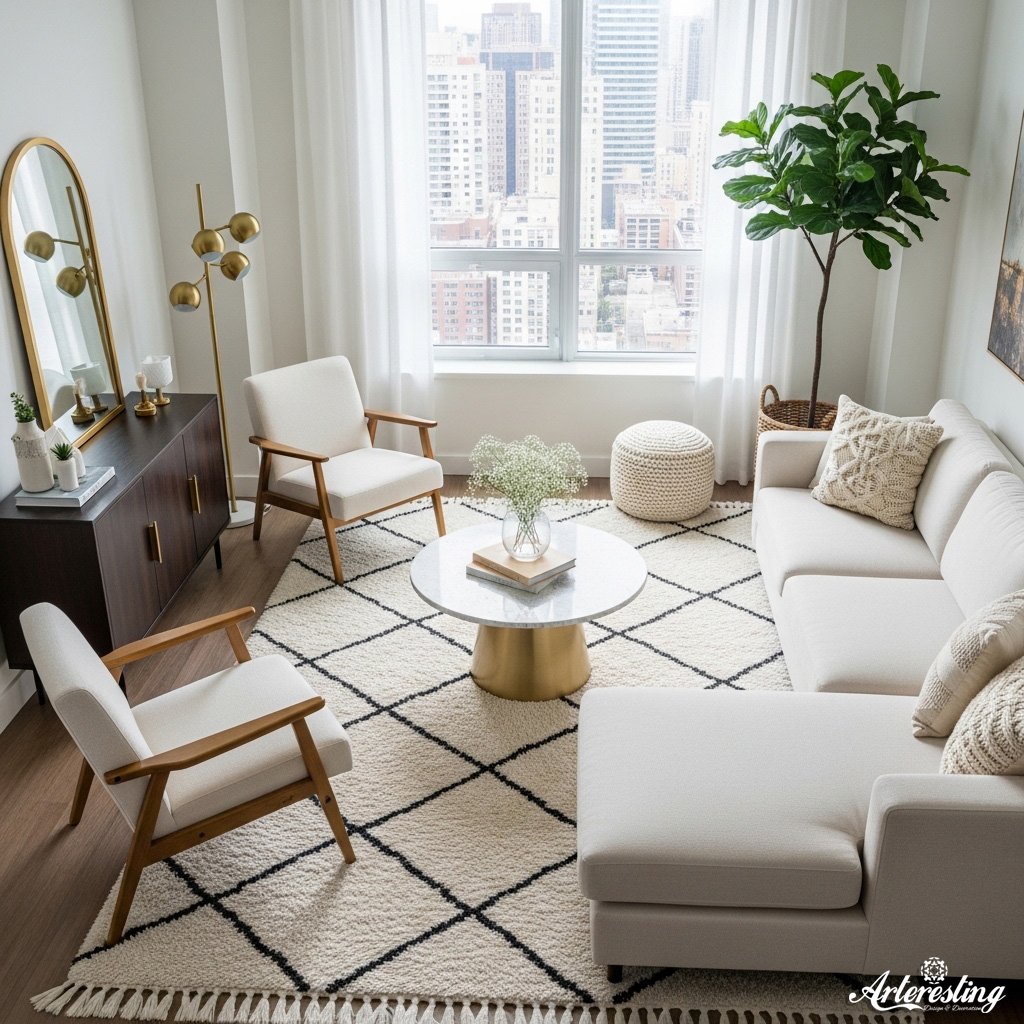
Sharp corners hinder movement in tight environments. Organizing your compact seating around a small, circular table drastically improves the traffic flow. This centered approach ensures every piece of furniture has room to breathe, resulting in a highly usable, sophisticated living space.