Table of Contents
Transforming cramped sleeping quarters into a serene, expansive retreat requires strategic styling and rigorous spatial planning. If you are struggling with limited square footage, learning how to make a small bedroom look bigger is essential for maintaining both sophisticated aesthetics and daily functionality. By implementing targeted design adjustments—from optimizing natural light reflection to selecting multifunctional decor—you can dramatically alter the perception of your room’s dimensions.
Lighting and Illumination Tactics for Visual Space
Proper lighting is the cornerstone of high-end spatial design. When square footage is at a premium, relying solely on overhead fixtures or bulky floor lamps immediately clutters the environment.
Install Wall-Mounted Sconces
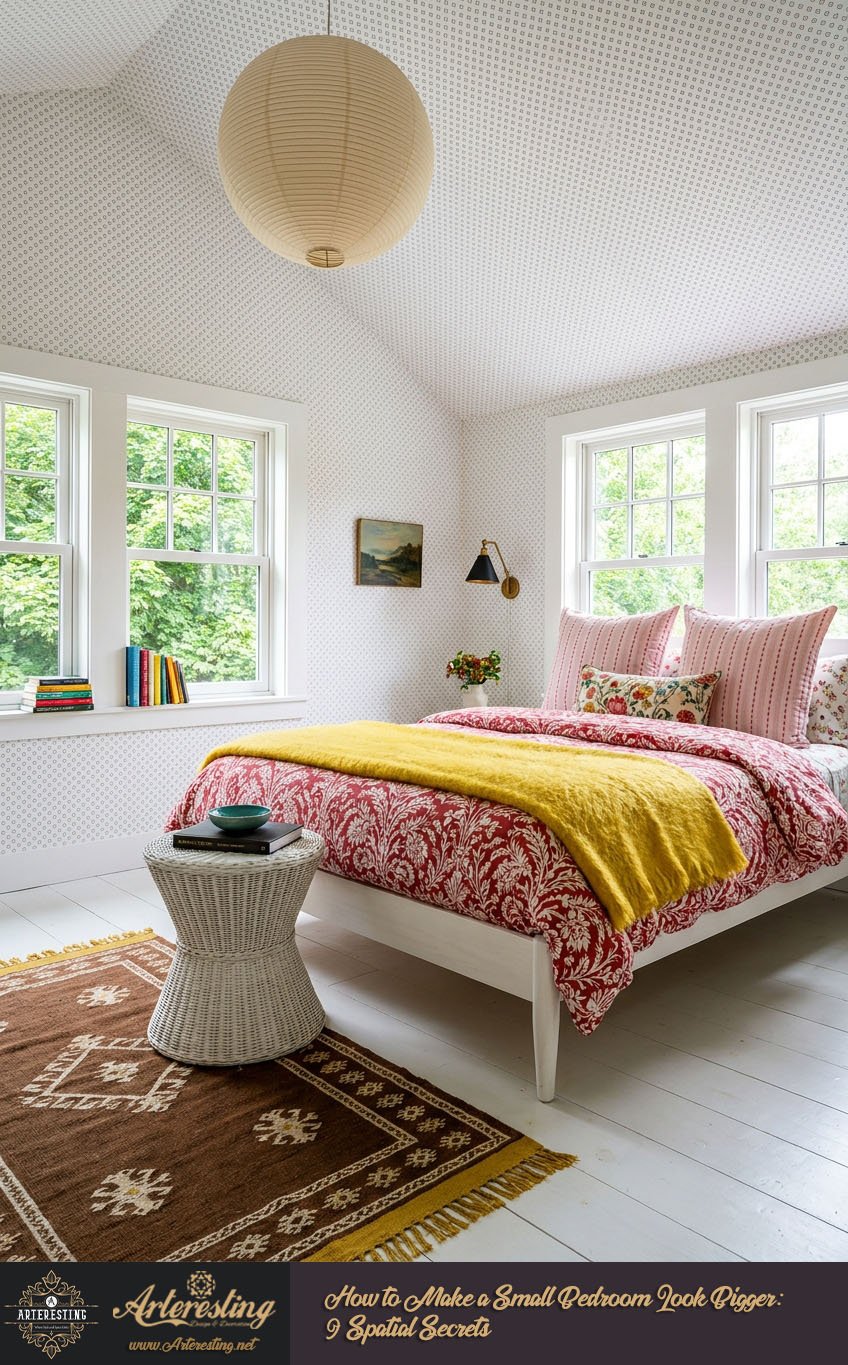
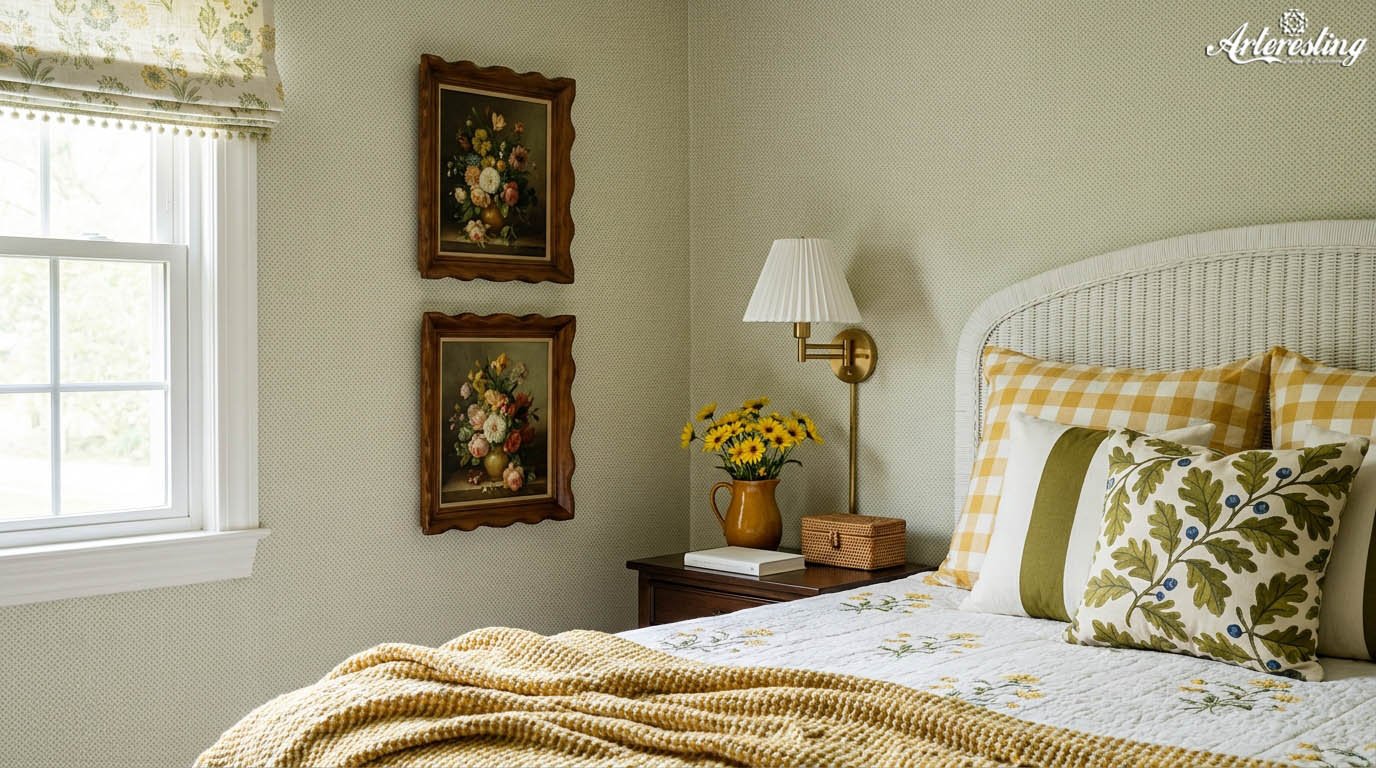
When a floor plan is too narrow to accommodate a standard nightstand, wall-mounted lighting is the definitive solution. Installing swing-arm sconces or adjustable brass fixtures frees up critical surface area while providing targeted reading light. Mounting a symmetrical pair on either side of the bed establishes a balanced, hotel-like glow that elevates the entire room.
Shop The Look



Strategically Place Mirrors for Depth
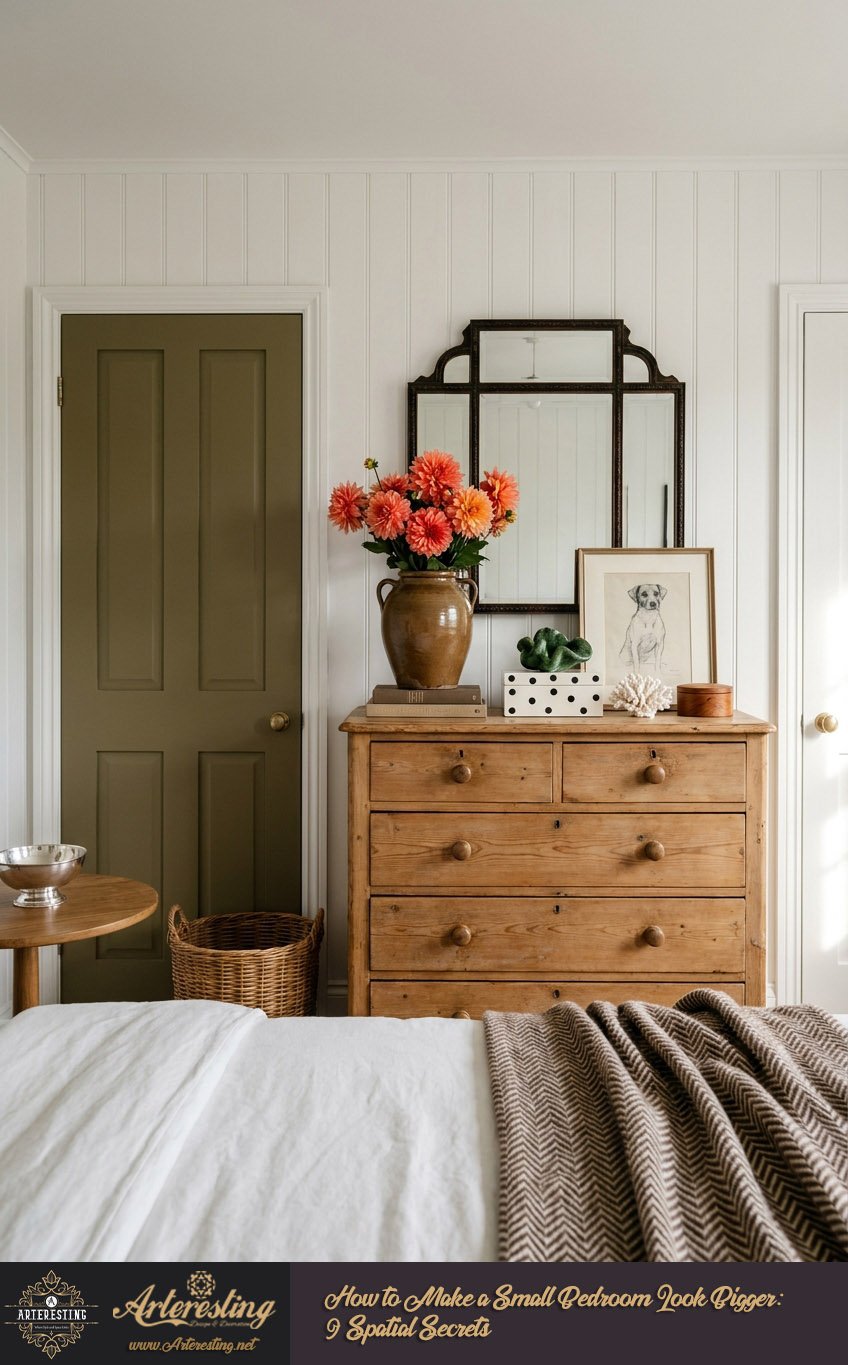
Hanging mirrors is a foundational architectural trick for expanding enclosed areas. Strategically placing a large mirror directly opposite a window acts as a secondary light source, bouncing natural light reflection into the room’s darkest corners. This technique effortlessly creates the illusion of depth, pushing the walls outward visually.

Maximizing Vertical Proportions and Architecture
A common mistake in small spaces is focusing entirely on the floor plan while ignoring the upper half of the room. Drawing the eye upward emphasizes vertical volume.
Elevate with Bunk Beds
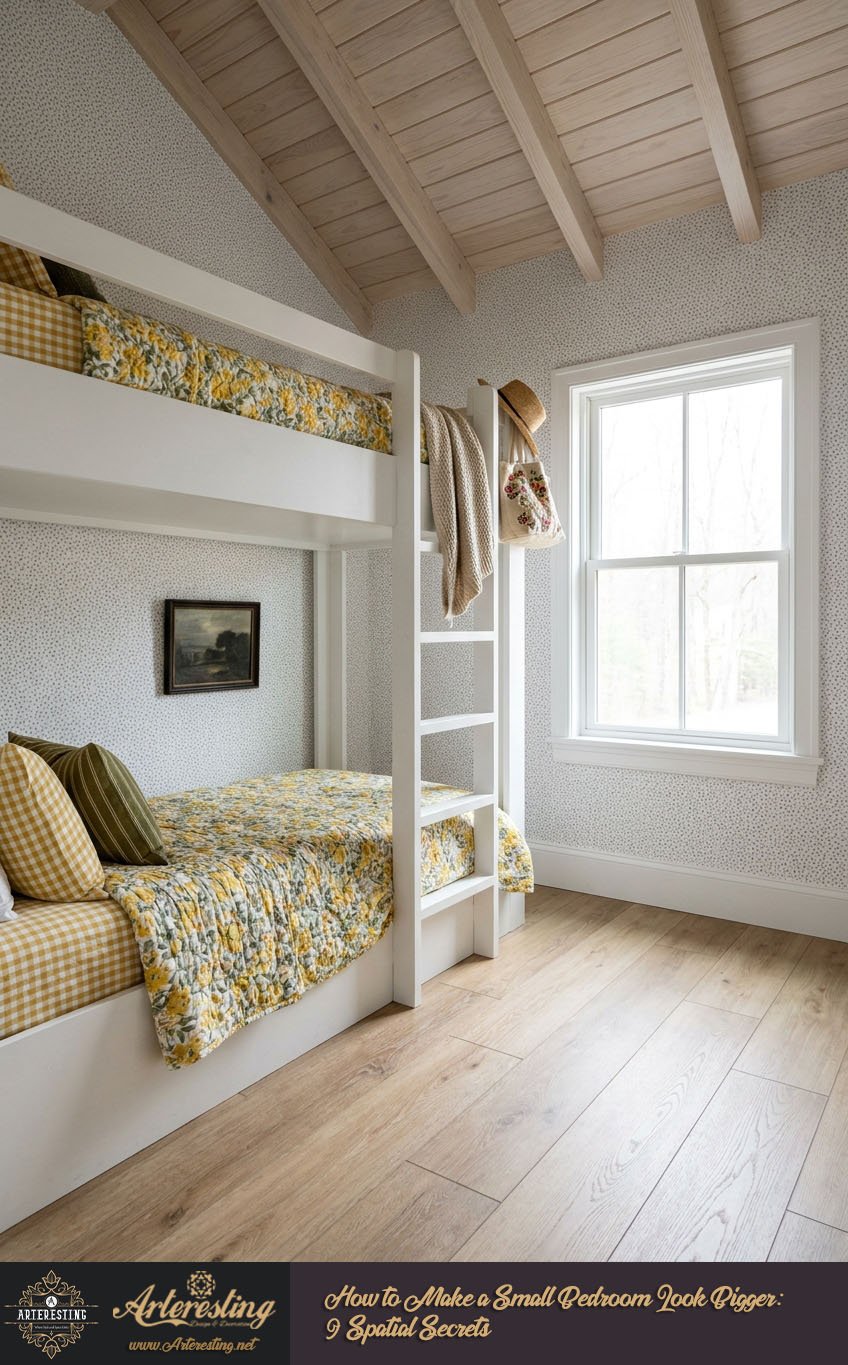
For shared spaces or children’s rooms, bunk beds remain unmatched in their ability to maximize a small footprint. Beyond their undeniable practicality, modern built-in bunks utilize vertical storage and often feature integrated stair drawers. This upward shift preserves the central floor area, allowing the room to breathe.

Utilize Floor-to-Ceiling Built-In Shelving
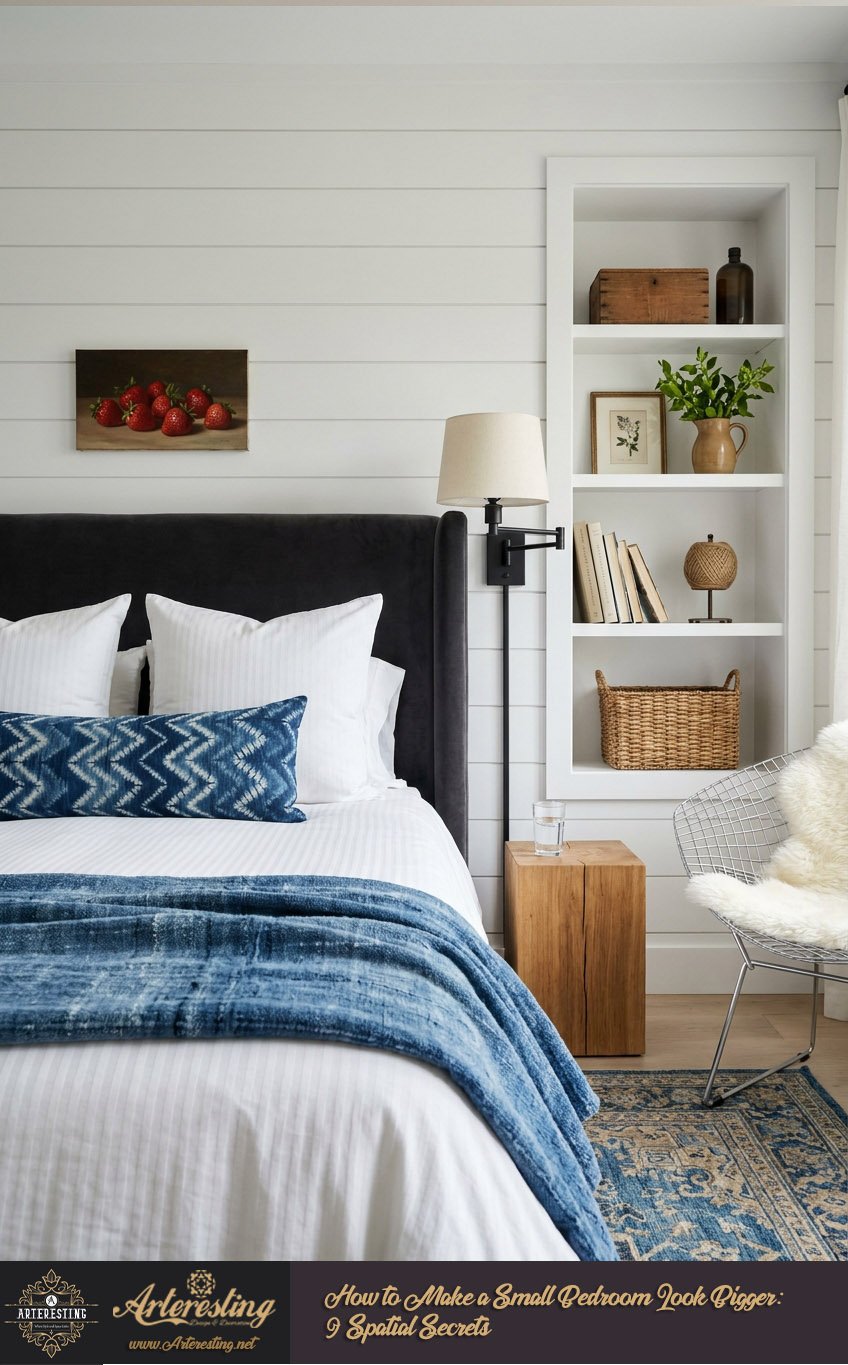
Swapping a freestanding bedside table for recessed, built-in shelving instantly streamlines the room’s profile. Taking these bookshelves from the floor to the ceiling commands the vertical space that is typically wasted. It provides a customized home for reading materials and curated accessories without encroaching on the walkway.
Shop The Look


Keep Window Treatments Flush and Minimal
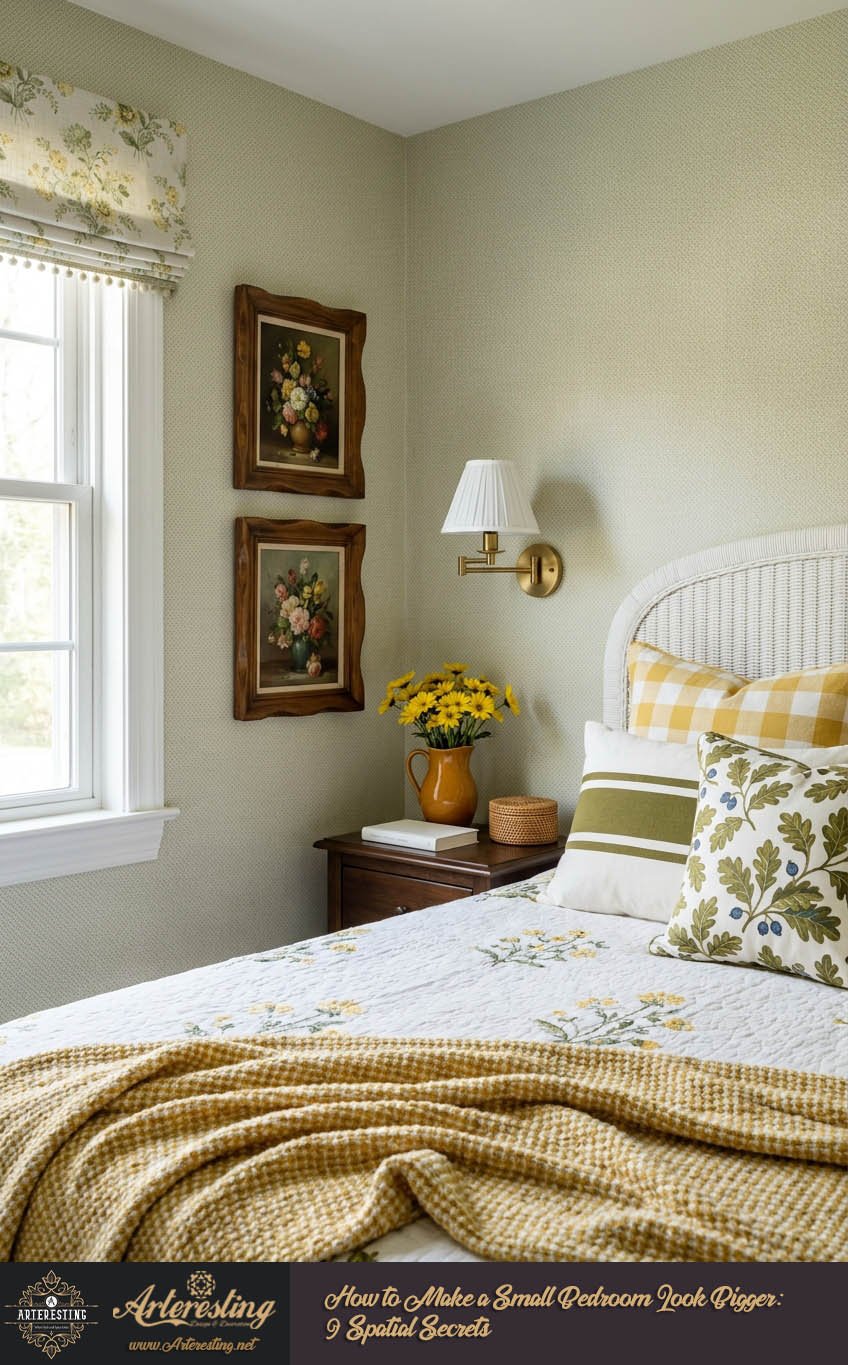
Heavy drapery pooling on the floor introduces visual weight and physically shrinks the usable space. To reclaim those precious inches, install tailored, flush-mounted window treatments.
- Roman Shades: A relaxed, linen Roman shade fitted inside the window frame offers privacy without the bulk.
- Minimalist Hardware: Avoid thick, ornate curtain rods; opt for sleek track systems or tension rods to maintain clean architectural lines.
Shop The Look


Smart Furniture Selection and Organization
In a compact bedroom, every piece of furniture must justify its presence. Eliminating single-use items in favor of highly functional pieces prevents the space from feeling overwhelmed.
Invest in Double-Duty Furniture
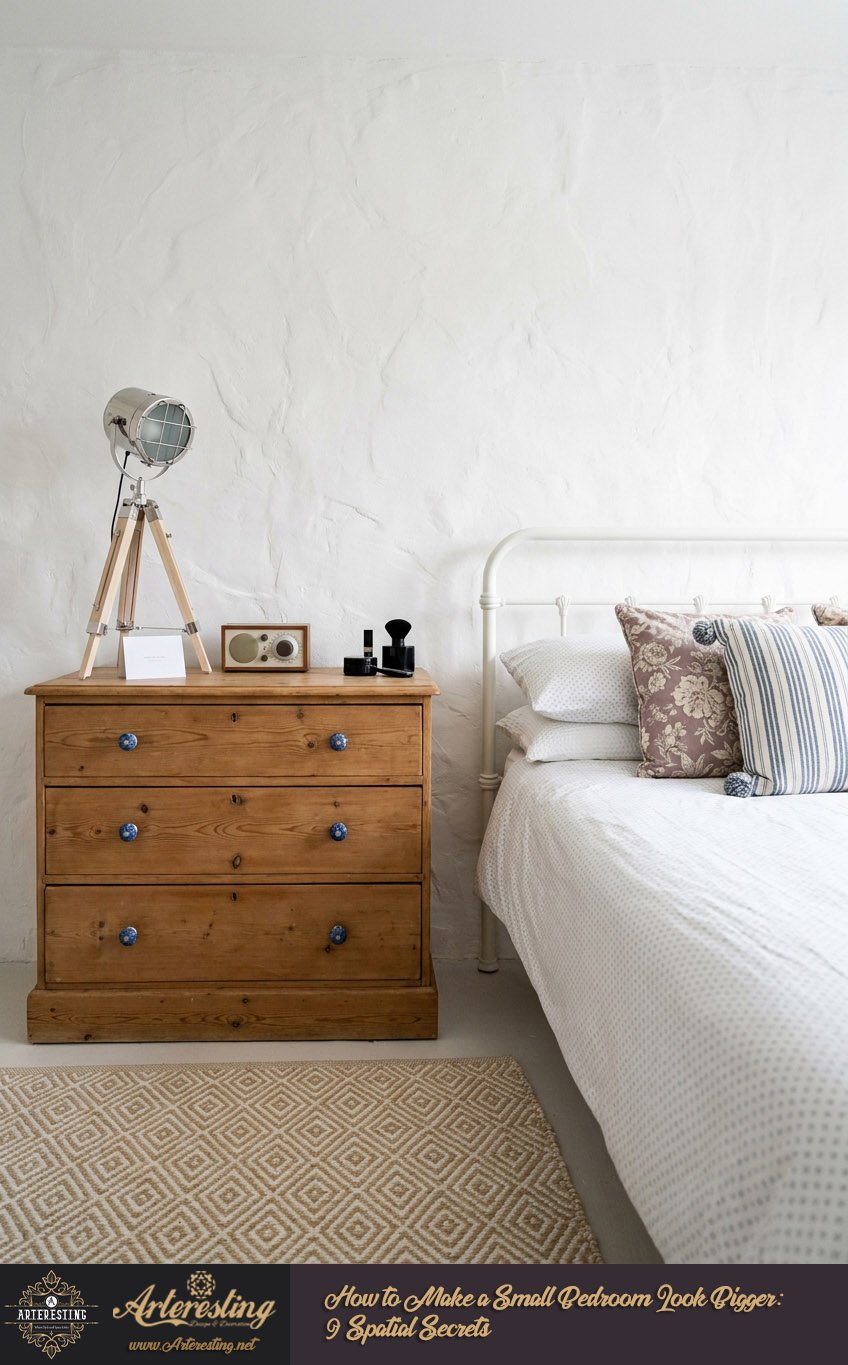
Space-saving furniture that serves multiple purposes is the secret to a high-functioning small bedroom. Instead of a traditional, diminutive nightstand, utilize a handsome chest of drawers next to the bed to provide substantial clothing storage. Alternatively, a sleek writing desk can function simultaneously as a vanity, a workspace, and a bedside table.

Install Peg Rails for Wall Storage
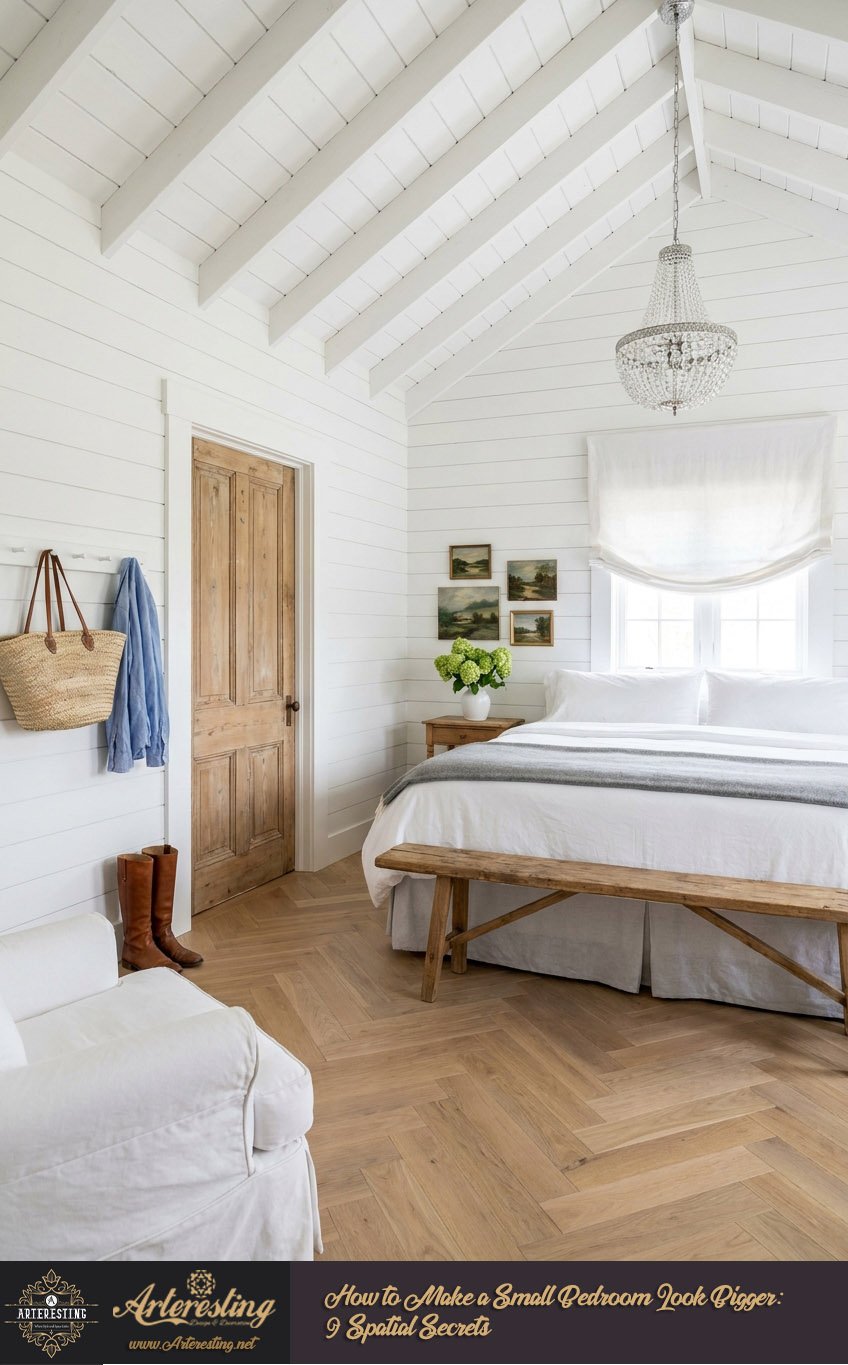
When there is no physical room for an armoire or a bulky coat rack, wall-mounted organization becomes vital. Installing a simple, shaker-style peg rail introduces casual, highly accessible vertical storage. This elegant solution keeps bags, robes, and daily accessories off the floor, maintaining a pristine and orderly environment.
Shop The Look



Color Psychology: Expanding the Room with Paint
Paint is the most cost-effective tool for manipulating spatial perception. The correct palette can blur harsh architectural boundaries and make the walls recede.
Opt for Light, Reflective Palettes
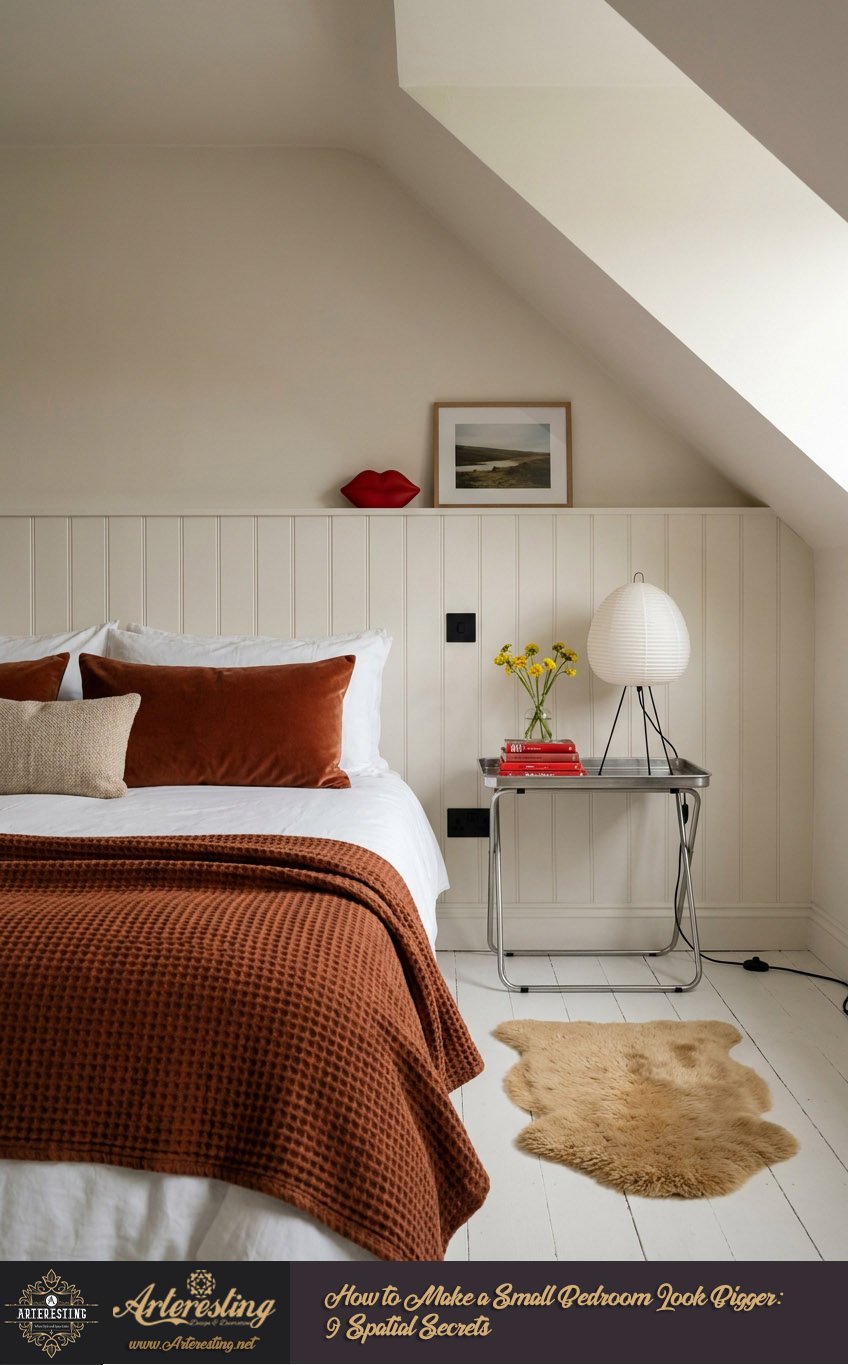
A bright, airy foundation leaves the room feeling expansive and acts as a blank canvas for patterned textiles or rich wood accents. While crisp white is an enduring classic, pale blues, soft sage greens, and muted blush tones serve beautifully as luminous neutrals. These lighter shades inherently reflect light, reinforcing the open, airy atmosphere.
Shop The Look



Embrace the Coziness of Color Drenching
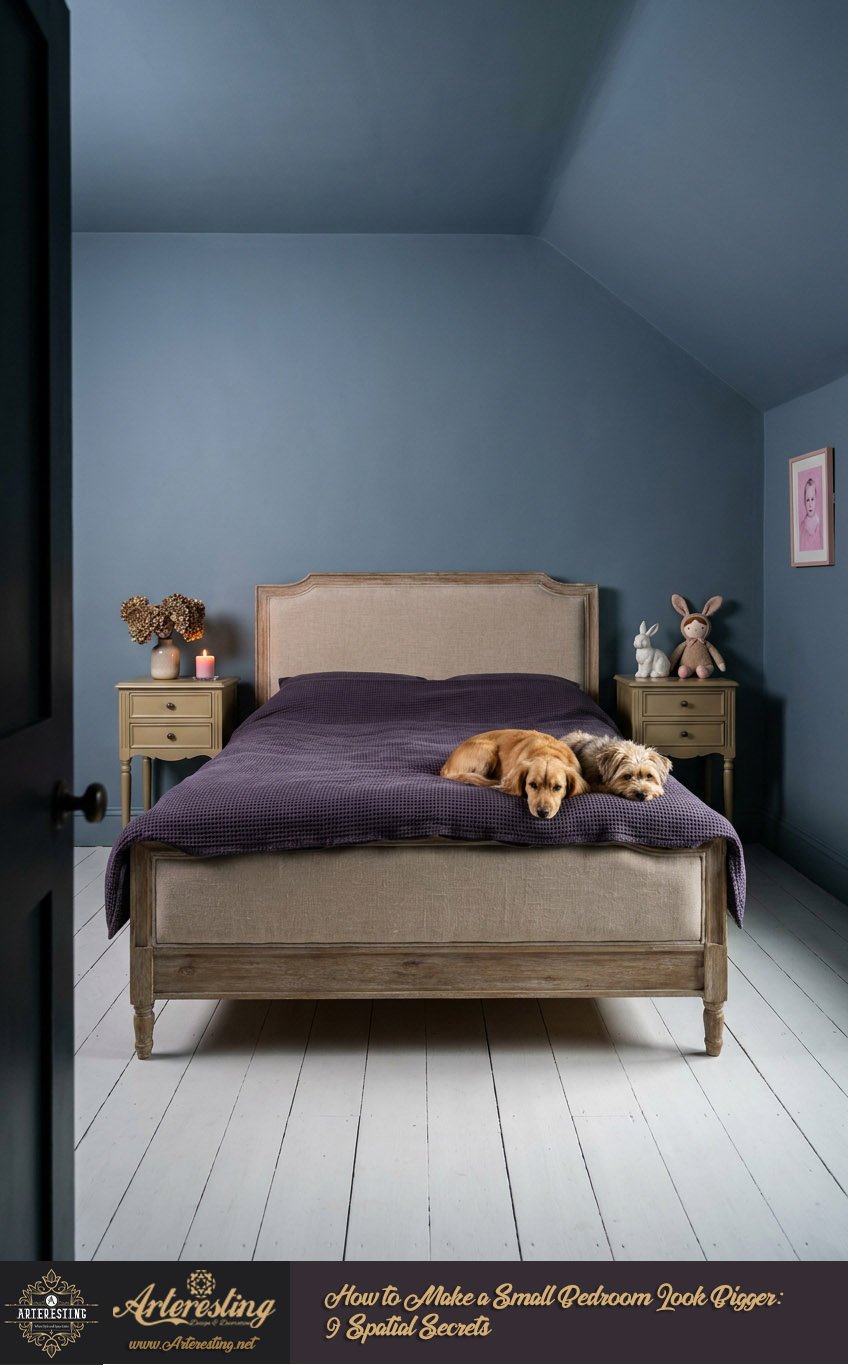
Counterintuitively, leaning into the darkness can also solve small space dilemmas. Coating the walls, ceiling, doors, and trim in a single, rich shade—a technique known as color drenching—erases harsh shadows and distracting contrasting lines. This immersive approach creates a cocoon-like environment, making the exact dimensions of the room impossible to read and profoundly cozy.
Shop The Look