Table of Contents
Visual noise in your sleeping quarters triggers subtle neurological stress. Specifically, eleven common bedroom items that ruin your sleep sabotage your nervous system before your head even hits the pillow.
Research confirms that disorganized interiors elevate evening cortisol levels. Furthermore, architectural clutter disrupts the spatial stillness required for deep rest. When your eyes scan tangled charging cables or unfinished work files, your brain remains locked in an active, problem-solving state.
Fortunately, fixing these bedroom decor mistakes doesn’t require a gut renovation. By applying disciplined styling parameters—such as the ski-slope decluttering method or the 50-percent rule—you can systematically edit your environment. Below, leading interior designers break down exactly what to remove and which architectural upgrades to install instead.
1. Wall-Mounted Televisions Are Bedroom Items Ruining Your Sleep
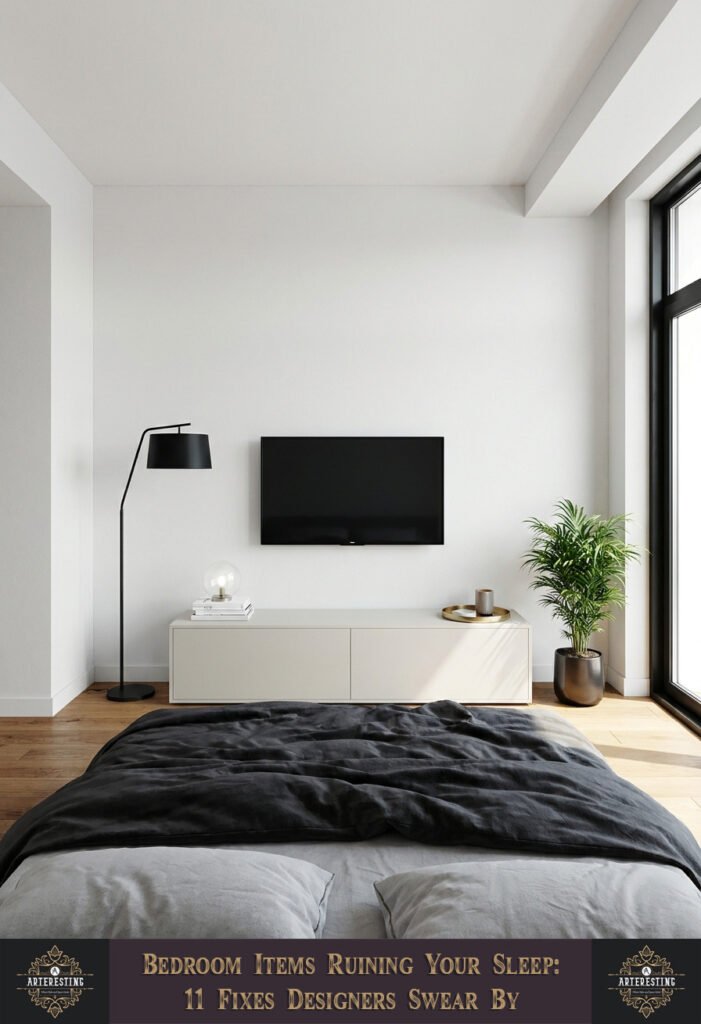
Televisions disrupt bedroom tranquility because their large, glossy black screens create an unnatural visual void when powered off. Interior designer Rayman Boozer notes that unless your room relies on a strict monochrome palette, this dark rectangle dominates the sightline and fragments architectural harmony.
Spatially, a mounted screen forces the bed to orient toward an industrial appliance rather than an artwork or window view. Moreover, glossy glass surfaces catch stray ambient light, creating distracting reflections across the room.
Emotionally, the television signals passive stimulation rather than physical recovery. Instead of mounting a permanent screen, transition to a slim tablet or laptop. As a result, you can tuck the device into a nightstand drawer after your show ends, preserving clean wall planes.
The Gilded TV Frame Collection
Transform your Samsung The Frame TV into a museum-worthy focal point. Discover our curated selection of antique and pale gold bezels designed to blend your screen seamlessly into your decor.


2. Bedroom Workstations and Desks
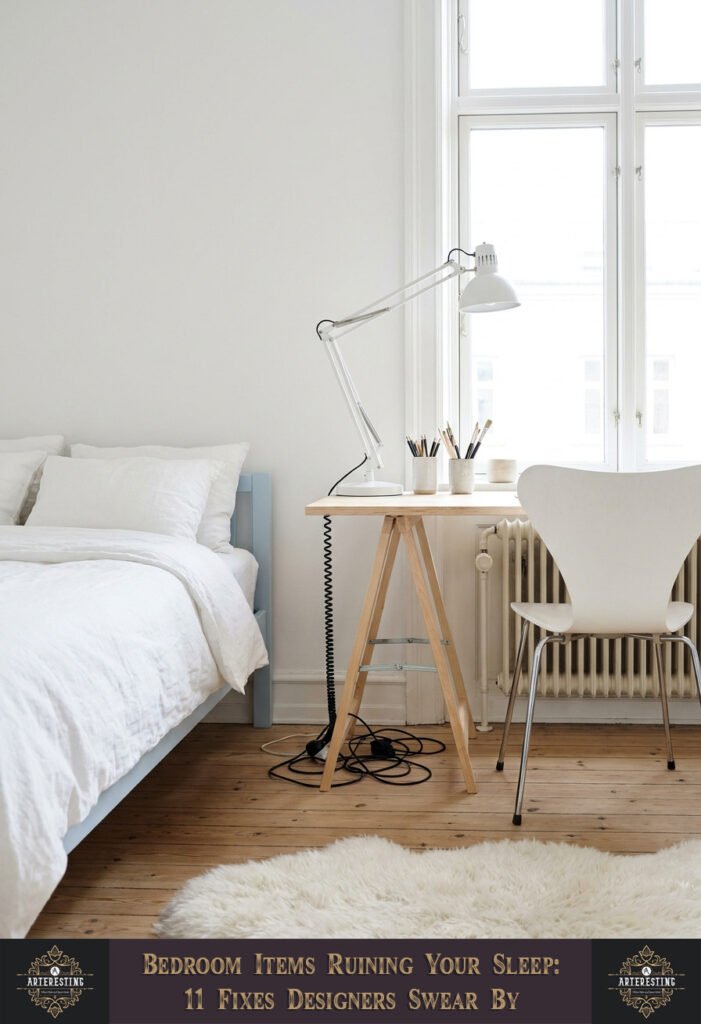
A bedroom workstation erodes the psychological boundary between work and rest. Interior designer Beth Diana Smith advises keeping desks entirely out of sleeping quarters so your brain never associates your bed with unfinished deadlines or looming tasks.
When you position a desk within view of your mattress, your peripheral vision constantly registers paperwork and monitors. Therefore, your nervous system struggles to downshift into a parasympathetic state at night.
If square footage forces you to work in your bedroom, implement strict visual containment. Choose an antique secretary desk with a fold-down front or a sleek armoire with pocket doors. Closing those doors at six o’clock physically erases the office from your evening sightline.

3. Uncontained Surface Clutter
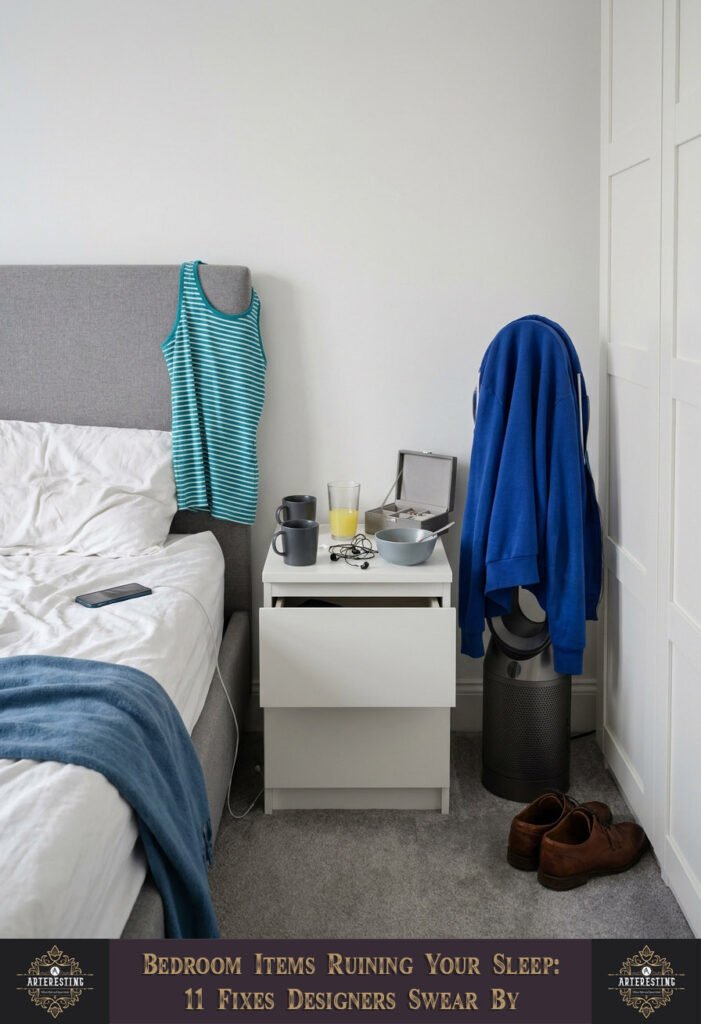
Accumulated surface clutter acts as a persistent visual stressor that prevents the mind from fully relaxing. Designer Maya Salfati emphasizes clearing dresser tops and nightstands, utilizing concealed storage solutions to establish a calm, curated environment that supports restorative sleep.
Every exposed object demands micro-attention from your brain. Furthermore, crowded horizontal surfaces break up the natural flow of light across wood grain or stone finishes.
Execute a surgical edit using the 10-10 method: remove ten items you no longer need and return ten misplaced objects to their proper rooms. Invest in fluted dressers, lidded woven baskets, and deep-drawer nightstands. Ultimately, clear surfaces allow your eyes to rest without friction.

4. High-Chroma and Bright Paint Colors
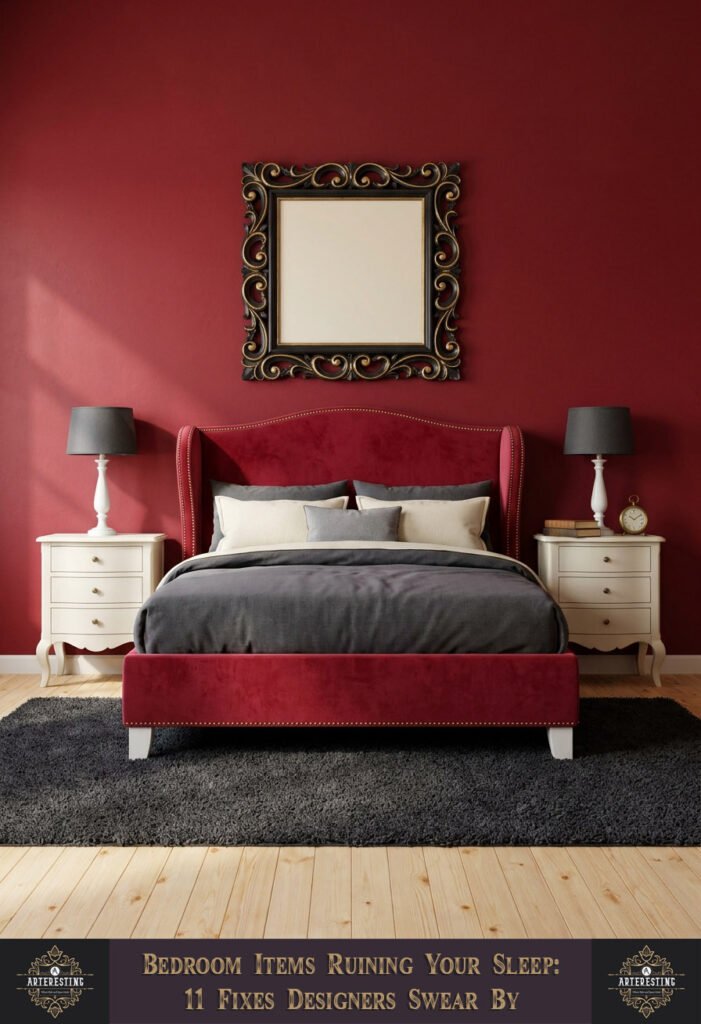
Vivid, saturated hues like bright red, orange, and yellow stimulate neurological activity and elevate emotional tension. Designers Debbie Mathews and Lorna Gross recommend replacing energetic primaries with desaturated blues, muted greens, and soft neutrals to lower heart rates and invite stillness.
Color psychology dictates how light reflects off your walls during twilight hours. Intense warm pigments bounce artificial light aggressively, keeping the visual cortex hyper-alert.
Conversely, mineral-based sage greens and dusty slate blues absorb harsh glare and mimic natural twilight. When selecting paint, test matte or eggshell finishes on multiple walls. Notice how low-sheen plaster or chalky neutral tones soften shadows and envelop the room in quiet warmth.
The Vintage & Retro Duvet Collection
Refresh your bedroom with timeless character. Discover our custom-printed duvet covers featuring vintage tropical palms, retro mid-century suns, and rich Victorian crimson peonies.


5. Oversized Mirrors Facing the Bed
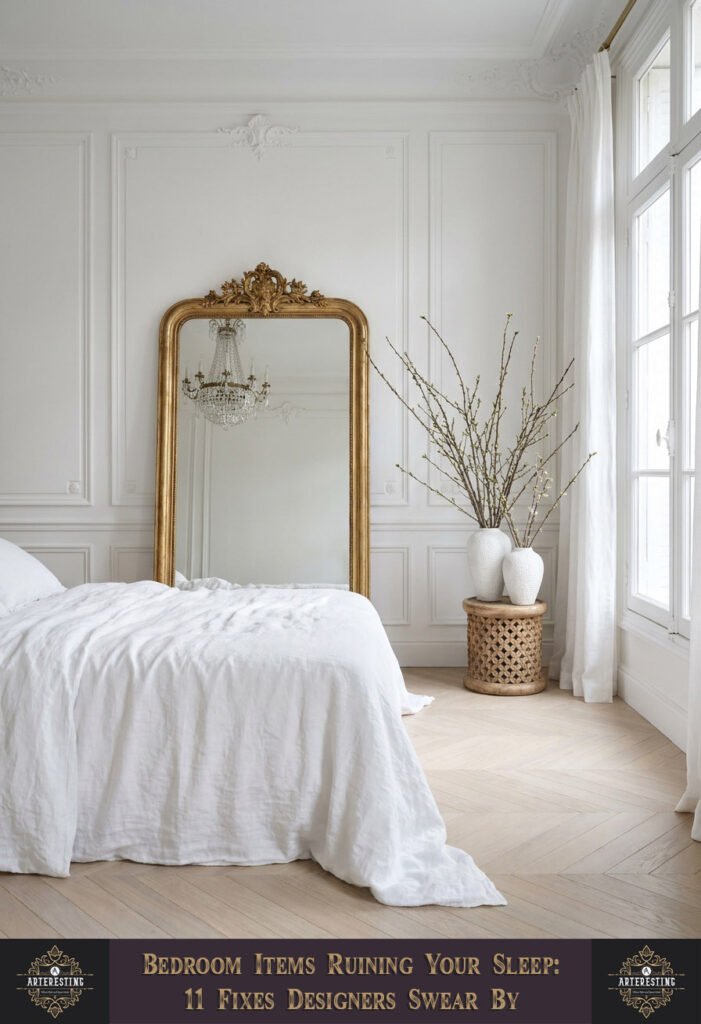
Oversized or heavily ornate mirrors visually destabilize a bedroom by doubling visual movement and bouncing stray light across the room. Dwellify co-founder Alexa Larson warns against placing large mirrors opposite the bed, as sudden reflections in dim light trigger subconscious alertness.
Architecturally, a massive mirror acts like an extra window that never closes. During the night, passing headlights or hallway shadows reflect across the glass, startling your peripheral vision.
Select moderately scaled mirrors with thin, understated brass or timber frames instead. Hang them perpendicular to windows or above a dresser tucked out of your direct sleeping sightline. Thus, you retain spatial depth without sacrificing nocturnal stillness.
The Quiet Luxury Blanket Collection
Layer your space with understated, tactile warmth. Discover our custom-printed throw blankets featuring rustic woven linens, muted rose vertical stripes, and deep blue celestial pinstripes.


6. Exposed Electrical Cords and Tangles
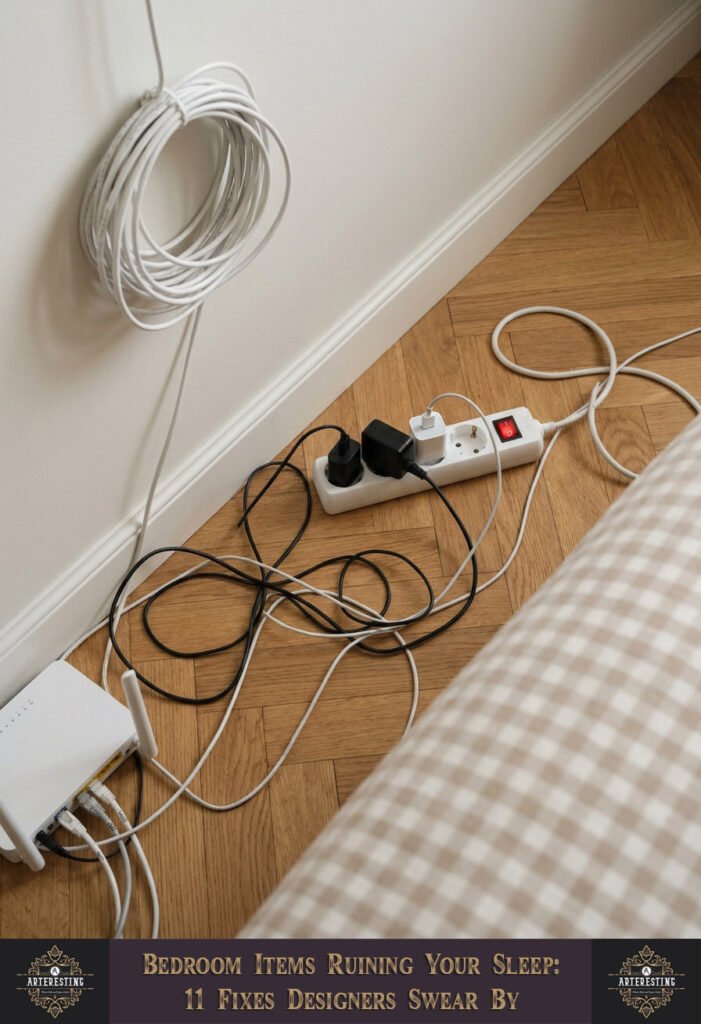
Exposed charging cables and tangled power strips inject industrial chaos into an otherwise serene interior. Alexa Larson recommends routing wires behind furniture, installing concealed cord channels, or switching to integrated wireless charging pads to eliminate visual noise and electrical hazards.
Loose black cords hanging beneath a floating nightstand immediately cheapen high-end millwork. Additionally, cluttered power strips gather dust and create genuine fire risks near heavy drapery or upholstered bed frames.
Architectural Cord Concealment
Upgrade your bedside functionality by drilling a discreet grommet hole into the back panel of your nightstand. Thread a braided fabric cord through the opening and secure it along the rear leg with adhesive clips. Alternatively, place a stone or leather wireless charging tray directly on the tabletop for effortless, wire-free power.
The Cord & Cable Concealment Edit
Eliminate visual clutter around your desk and entertainment center. Discover warm wood-lid organizers, handmade rattan boxes, and complete cable management kits to keep power strips out of sight.


7. Harsh, Single-Source Overhead Lighting
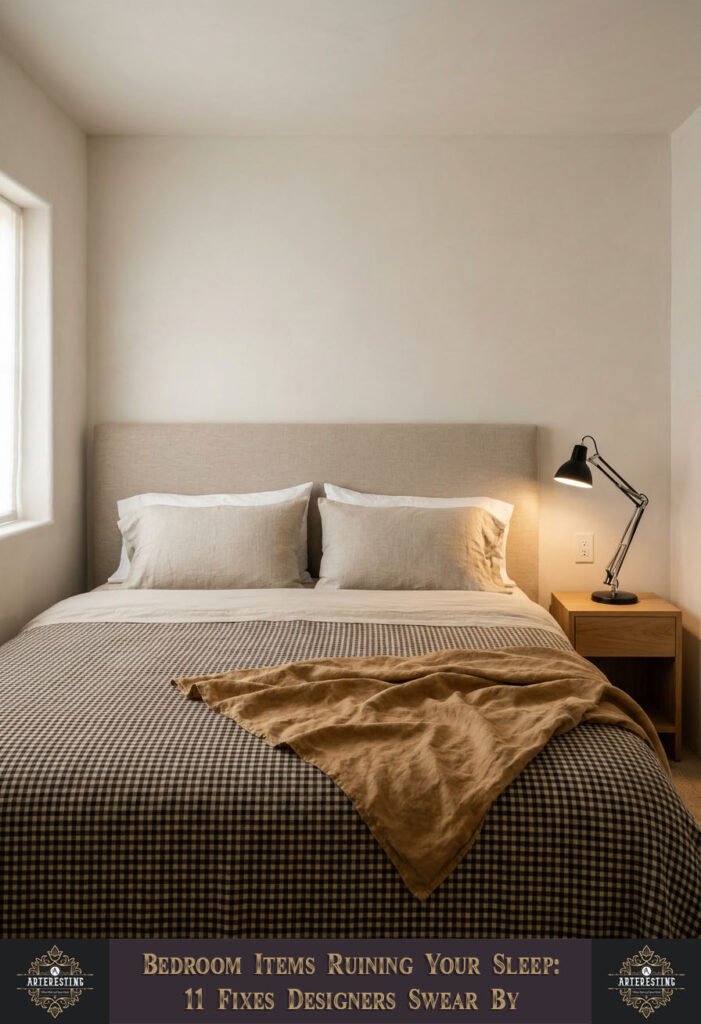
Relying on a single overhead ceiling fixture floods the bedroom with flat, clinical glare that suppresses melatonin production. Designers Theresa Butler and Kelly Hoppen advocate for layered, dimmable lighting—combining ambient sconces, warm bedside lamps, and accent fixtures—to cultivate an intimate evening atmosphere.
Overhead downlights cast unflattering downward shadows across textiles and walls. Worse yet, high-kelvin cool bulbs trick your circadian rhythm into believing it is midday.
Build a three-tier lighting plan using bulbs rated at 2700 Kelvin or lower. Install articulated wall sconces with linen shades beside the headboard to free up nightstand space. Finally, wire every switch to a smooth rotary or touch dimmer so you can gradually lower illumination an hour before sleep.
The Heritage Plaid Sheet Collection
Dress your bed in timeless warmth and classic texture. Discover our custom-printed sheet sets featuring rustic navy weaves, deep teal tartans, and traditional emerald green plaids.


8. Excessive Electronics Are Sleep-Disrupting Bedroom Items
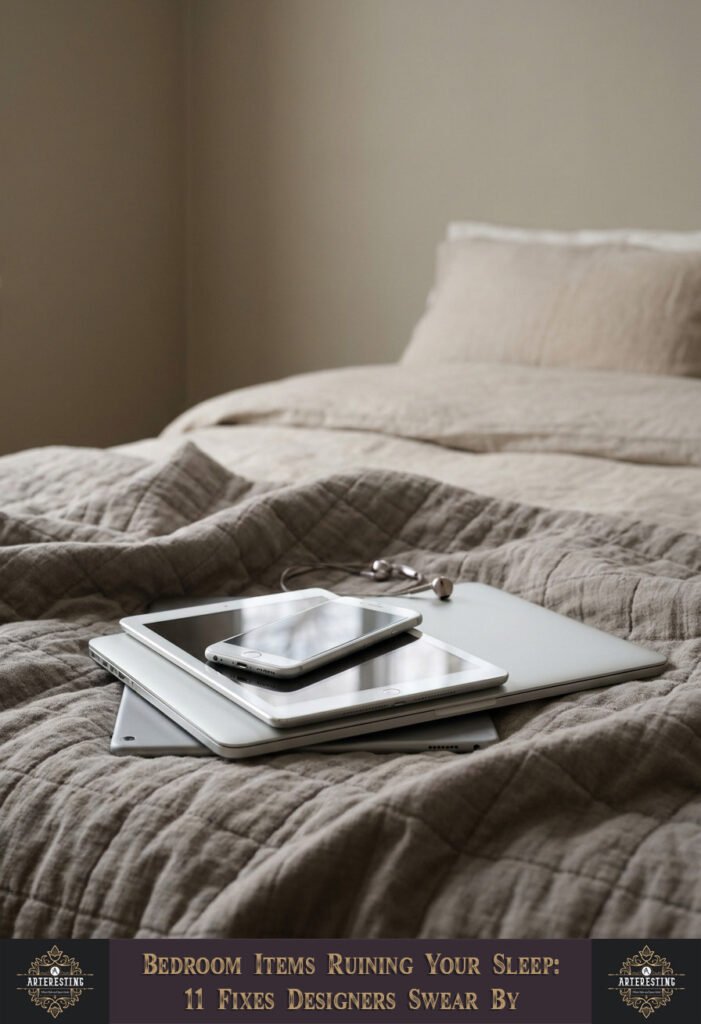
Keeping multiple digital devices in the bedroom fragments your attention and exposes your eyes to sleep-stealing blue light. Designer Amber Guyton recommends maintaining a strictly device-free sleeping sanctuary to quiet an anxious mind and protect uninterrupted sleep cycles.
Smartphones, tablets, and smartwatches emit micro-notifications and standby LED glows throughout the night. Even when silenced, a phone’s physical presence on your nightstand encourages late-night scrolling.
Establish a dedicated charging station in your kitchen or hallway. Replace your phone alarm with a tactile, analog bedside clock with a warm, non-glare dial. Removing these sleep-disrupting bedroom items instantly transforms your bed back into a space dedicated solely to rest.

9. Mismatched Furniture and Nightstand Heights
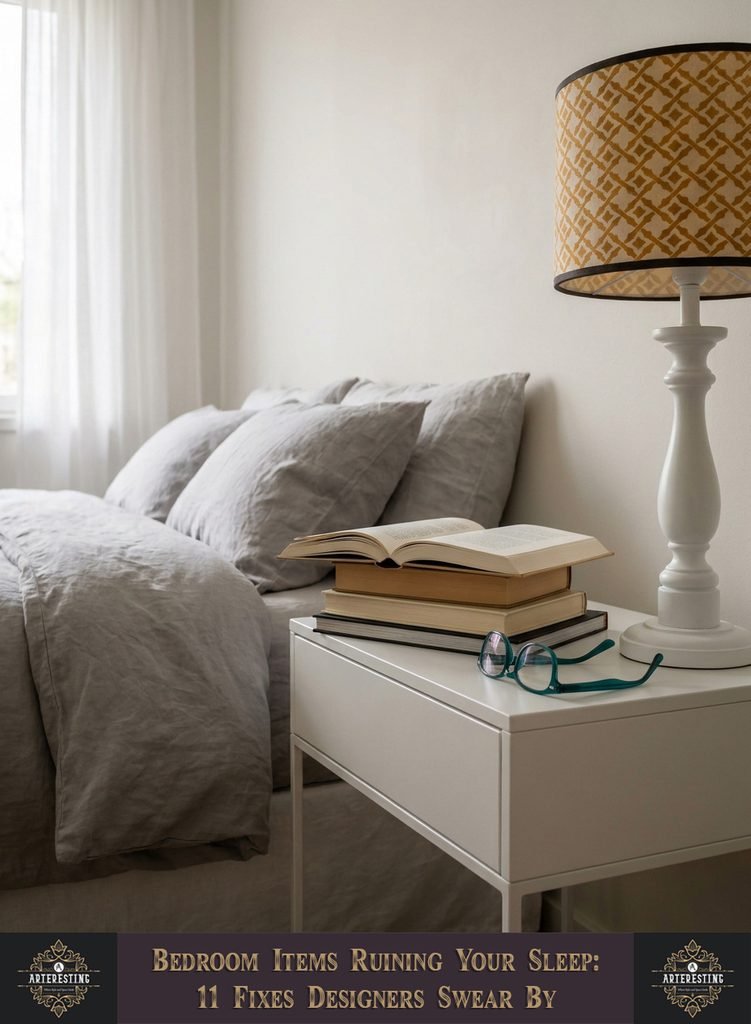
Jarring variations in furniture heights disrupt visual equilibrium and compromise bedside ergonomics. Studio Shaolin founder Shaolin Low advises aligning nightstand surfaces precisely with the top of your mattress—or up to one inch lower—to create a continuous, restful horizon line.
When a side table towers over your mattress, you risk knocking over water glasses or lamps in the dark. Conversely, a table set too low forces awkward downward reaching that strains your shoulder.
Measure your mattress height from the floor, including the box spring and topper, before purchasing bedside tables. Aim for a 24-to-28-inch height range depending on your bed frame profile. Consistent horizontal planes allow your gaze to sweep smoothly across the room without visual hiccups.

10. Children’s Toys in the Primary Suite
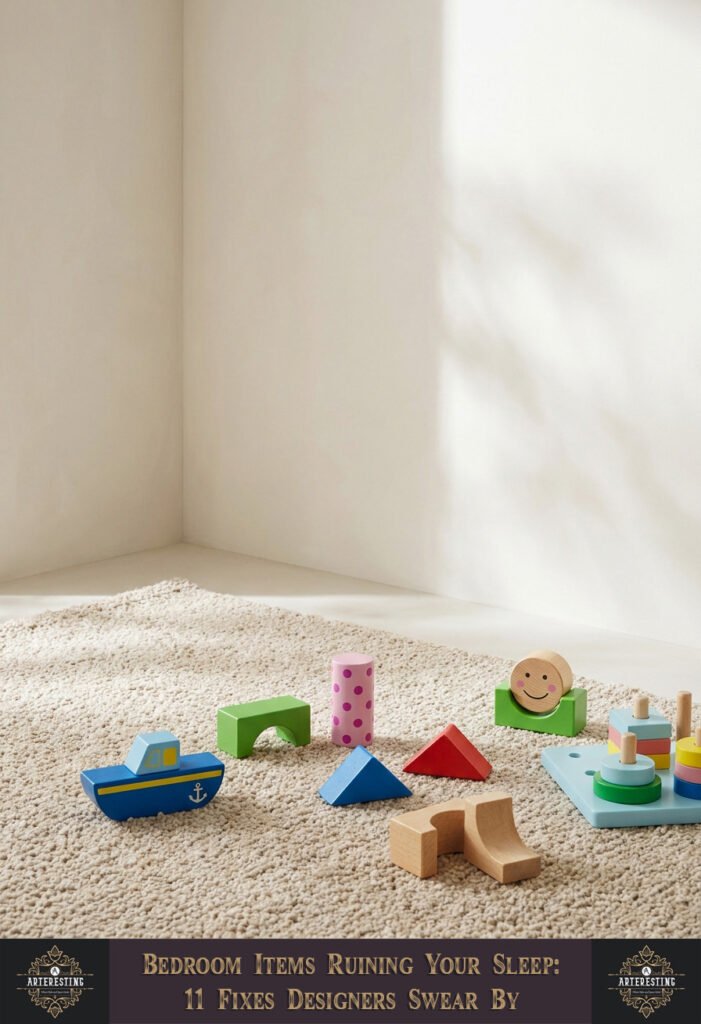
Allowing children’s toys into the primary bedroom blurs vital household boundaries and erodes your personal sanctuary. SALTHOUSE Collective designer Leigh Jendrusina stresses reserving the primary suite exclusively for adults, so parents retain one restorative, clutter-free retreat within the home.
Bright plastic toys introduce jarring primary colors and chaotic shapes that clash with calming bedroom textures. Emotionally, stepping over building blocks at midnight reminds you of parenting duties rather than personal relaxation.
Maintain a strict threshold rule at your bedroom door. Place a lidded storage ottoman or woven hamper just outside the suite in the hallway to catch stray toys before bedtime. Keeping your quarters distinctly adult-oriented reinforces daily mental recovery.

11. Unlined Sheer Curtains Alone
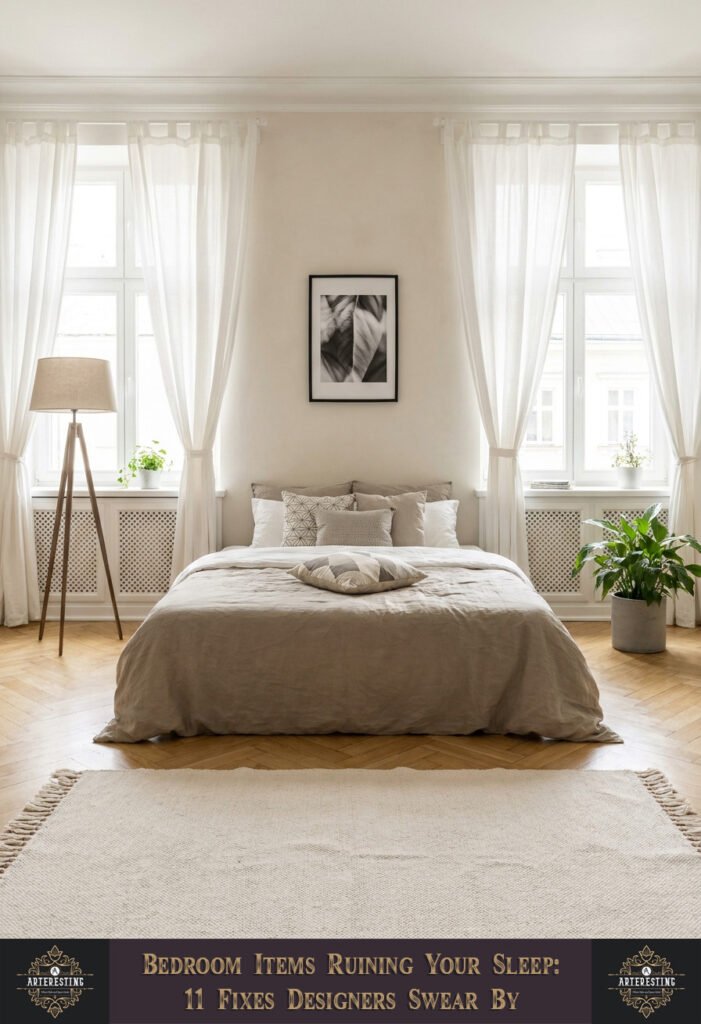
Hanging unlined sheer curtains on bedroom windows allows streetlamps and early dawn light to penetrate the room and fragment your sleep. Abby Leigh Designs founder Abby Gruman recommends layering heavy blackout drapery over sheers to guarantee total nocturnal darkness.
While gossamer linen sheers diffuse harsh afternoon sun beautifully, they offer zero light blockage at night. Even faint ambient glow through a window signals your brain to lighten its sleep stages.
Double-Track Drapery Execution
Install a ceiling-mounted double curtain track extending six inches beyond the window casing on both sides. Hang organic cotton or linen sheers on the inner track for daytime privacy and soft light filtration. Layer heavyweight wool, velvet, or blackout-lined Belgian linen on the outer track to seal out every sliver of light at bedtime.
Eliminating these bedroom items that ruin your sleep shifts your bedroom from a chaotic multi-purpose zone into an intentional architectural refuge. Start by clearing one surface tonight, adjusting your lighting temperature, and letting quiet design do the rest.
The Moroccan Architecture Collection
Bring sun-drenched serenity to your walls with magnet-mounted metal art. Discover our curated gallery featuring tranquil Moroccan villas, blush-toned courtyards, and palm-framed archways.



Interior designers warn that eleven common bedroom items—including visible televisions, work desks, bright wall colors, oversized mirrors, and sheer curtains—disrupt circadian rhythms and trigger subconscious stress. Replacing harsh overhead lighting with dimmable sconces, concealing electrical cords, and aligning nightstand heights with the mattress restores spatial harmony and promotes deeper sleep.