Table of Contents
Moving away from stark white spaces requires precise architectural planning. Specifically, implementing dark bedroom decor ideas transforms a purely functional sleeping area into a restorative spatial experience. Visually, deep jewel tones and architectural textures absorb light, fostering deep psychological rest. Consequently, highly saturated tones mitigate light interference beautifully.
1. Employing Plum for Moody Bedroom Aesthetics
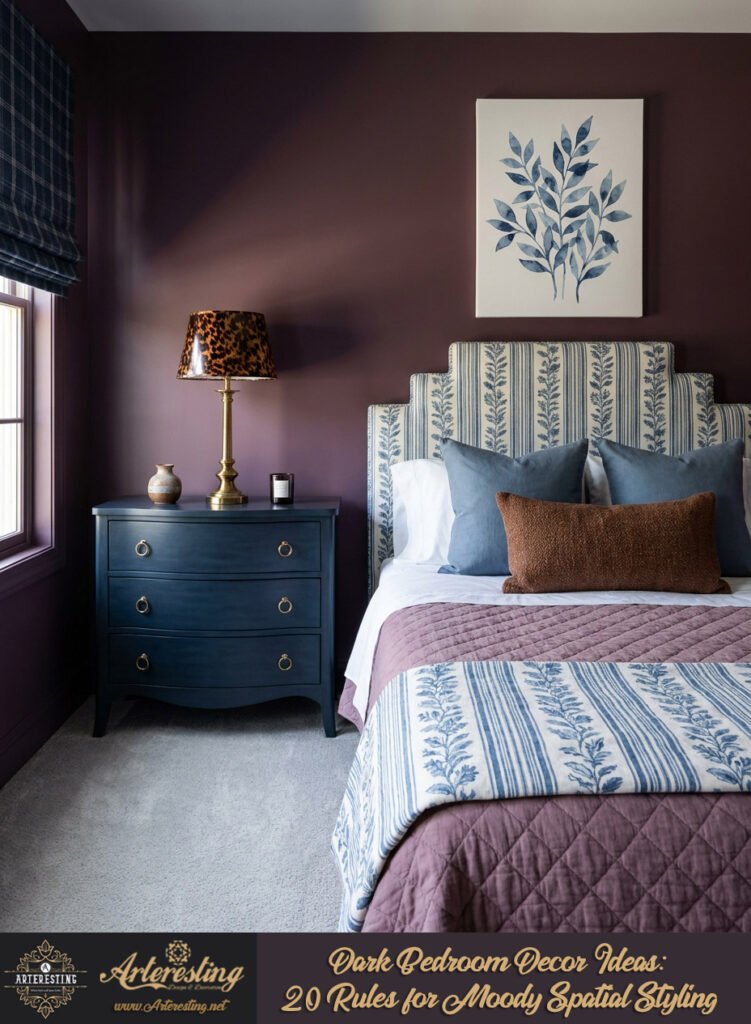
Utilizing a dynamic shade like dusty plum ensures the room transitions beautifully throughout the day. Specifically, this hue shifts from a soft daytime purple to a near-black tone by evening. Consequently, this natural dimming effect signals the brain for optimal rest.
Psychologically, plum acts as an environmental transition. Furthermore, the pigment responds directly to changing artificial light temperatures. Therefore, specifying dynamic colors like Sherwin-Williams Patchwork Plum guarantees seamless spatial transitions. Crucially, apply this shade across all four walls to maintain absolute visual consistency.
The Heritage Blanket Collection
Wrap yourself in original artistry. Discover our cozy throw blankets featuring rustic farmhouse harvests, antique botanical tulips, and the rich, deep motifs of ancient azure courtyards.


2. Grounding with Deep Green in Dark Bedroom Interiors
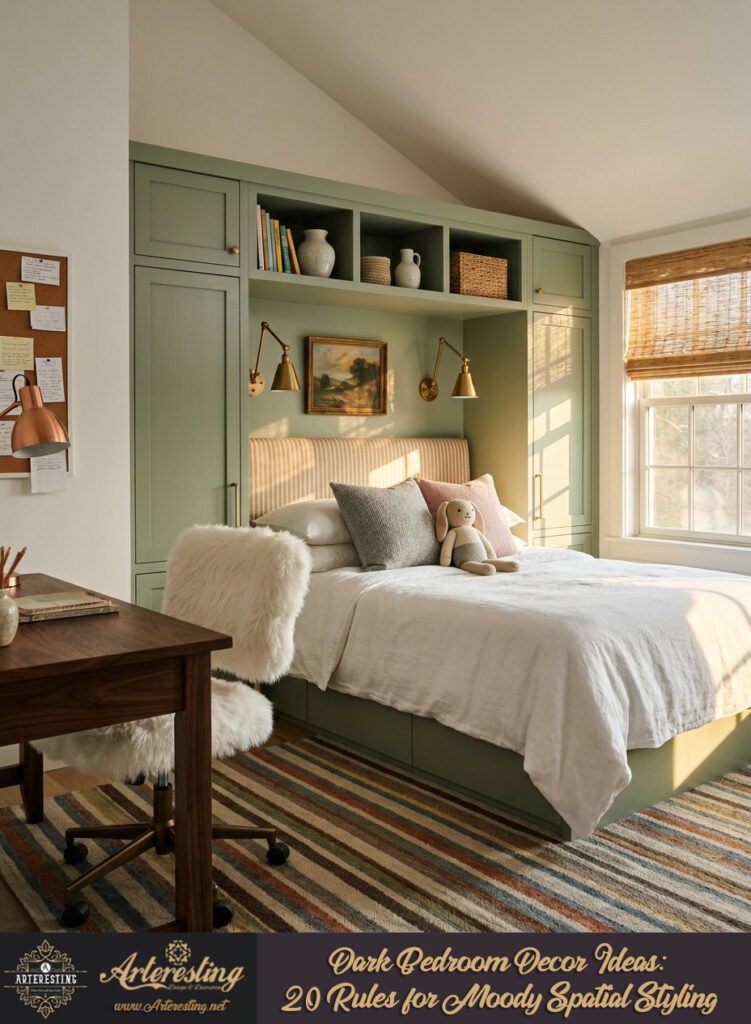
Installing deep green custom cabinetry provides a striking focal point without overwhelming the entire space. Moreover, balancing this saturated tone against crisp white walls preserves natural light reflection while injecting necessary depth into the room’s architecture.
Deep green hues evoke immediate organic calm. Visually, custom cabinetry painted in Farrow & Ball’s Green Smoke anchors the room flawlessly. Consequently, this technique satisfies the desire for darkness without committing to fully painted walls. Naturally, pair this finish with raw brass hardware for sharp metallic contrast.
The Whimsical Dreamscape Collection
Transform bedtime into a storybook adventure. Discover our enchanting collection of ultra-soft sheet sets featuring cheerful sunshine bears, moonlight explorers, and whimsical bow-tie cats.


3. Drenching the Ceiling in Gray
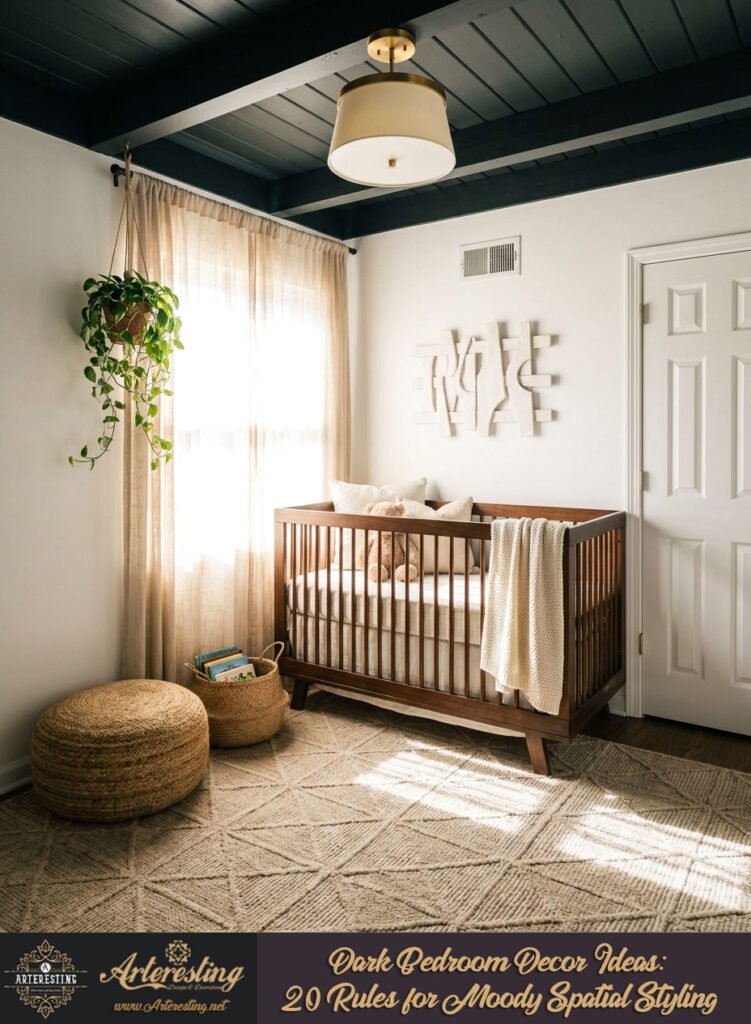
Drawing the eye upward with a deep gray ceiling paint is a highly effective spatial manipulation tool. Specifically, utilizing a cool shade like Valspar’s Sable Evening against exposed beams emphasizes architectural height while grounding the atmosphere.
Traditionally, ceilings remain white to maximize perceived height. However, painting the ceiling a dark gray creates a highly comforting canopy effect. Furthermore, this technique works exceptionally well in nurseries or spaces lacking natural light. Therefore, ensure the primary wall color remains relatively neutral to properly support the heavy ceiling.

4. Layering Blue for Deep Color Palettes for Bedrooms
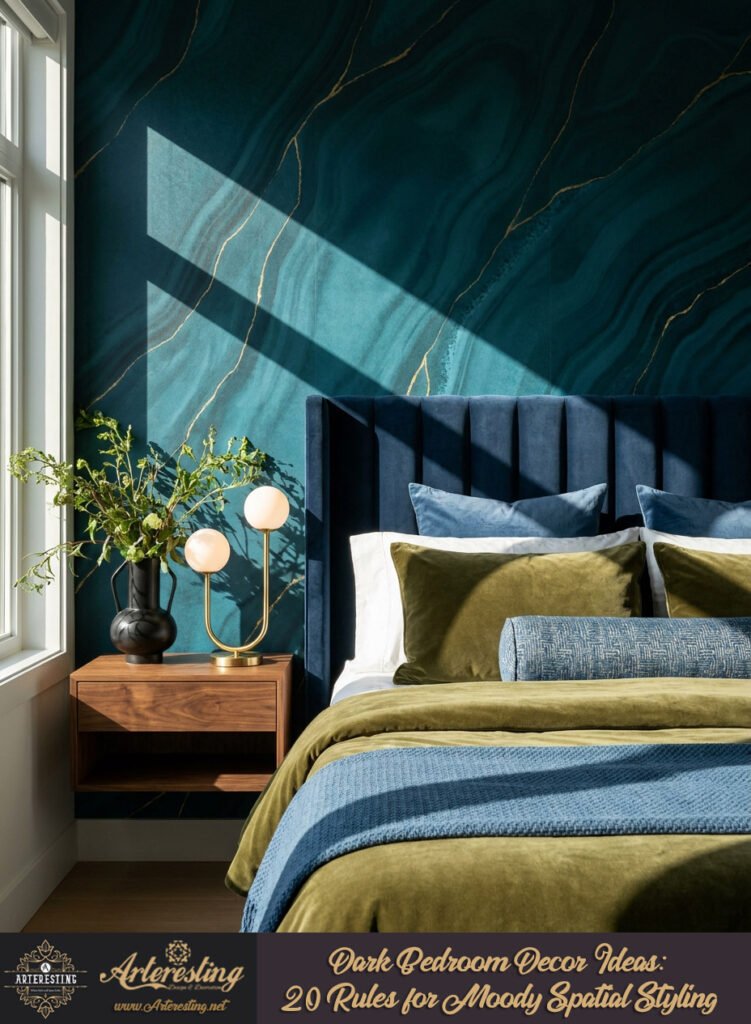
Layering multiple tonal variations of blue produces a deeply tranquil environment devoid of visual flatness. Specifically, combining a navy upholstered headboard with blue marble-patterned wallpaper introduces rich texture while maintaining strict chromatic discipline.
Monochromatic layering builds immediate spatial depth. Consequently, using disparate textures within the same color family prevents a flat appearance. Visually, dynamic marble wallpaper interacts beautifully against soft velvet upholstery. Ultimately, this structural layering achieves highly sophisticated visual weight.
The Eclectic Heritage Collection
Elevate your interiors with our latest custom-printed wallpapers. Discover a beautifully curated mix of soothing sage farmhouse plaids, striking navy Art Deco geometrics, and warm terracotta Art Nouveau florals.


5. Architectural Drama Using Black Board-and-Batten
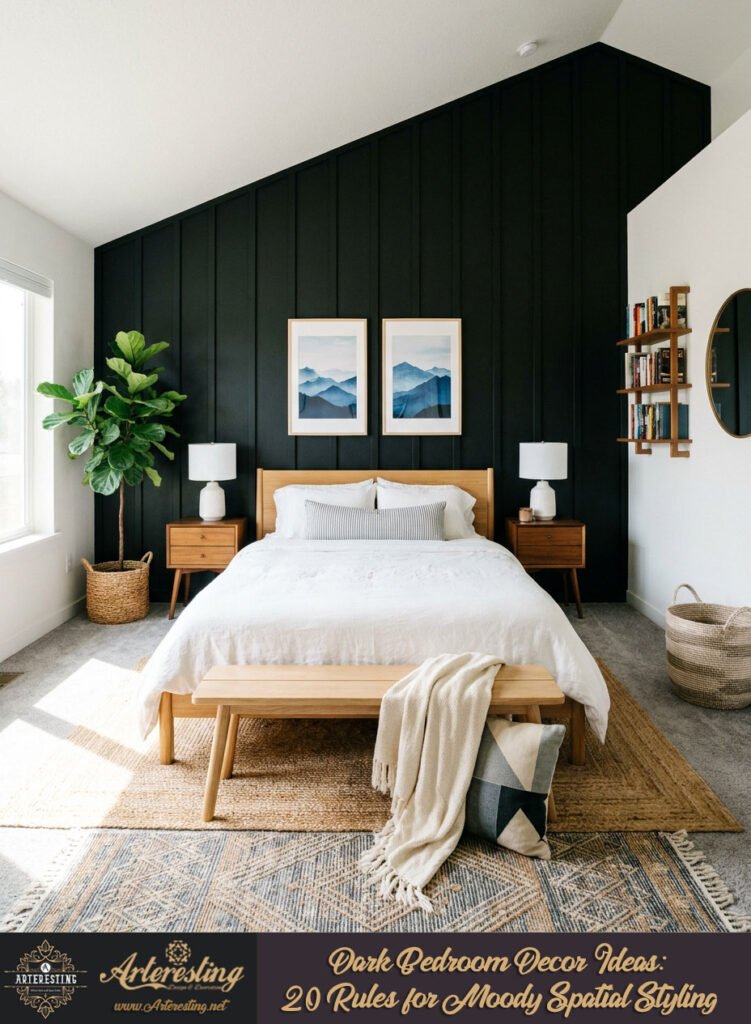
Constructing a black board-and-batten accent wall immediately injects structural rigidity and moody intensity into the room. Crucially, finishing the woodwork in a flat, matte black paint absorbs light to maximize the dramatic architectural shadows.
Flat drywall often lacks tactile interest. Therefore, adding board-and-batten introduces necessary geometric structure. Furthermore, the matte black finish eliminates harsh glare from artificial lighting. Specifically, this geometric approach significantly elevates the room’s perceived architectural value.
The Earthy Boho & Vintage Collection
Infuse your home with natural warmth and nostalgic patterns. Discover our beautifully curated throw pillows featuring vintage golden leaves, textured sunset stripes, and playful mid-century suns.


6. Navy Backdrops as Dark Bedroom Decor Ideas
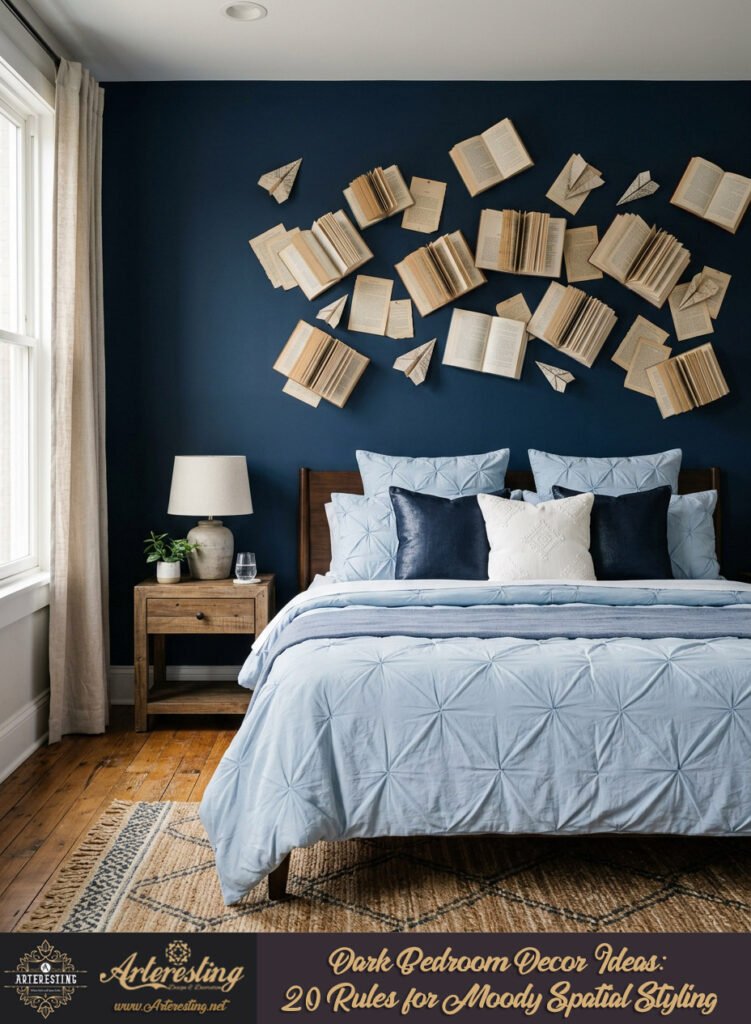
Utilizing a solid navy paint establishes a high-contrast canvas for exhibiting unique wall displays. Moreover, arranging open hardcover books directly against this saturated backdrop turns ordinary objects into highly intentional, three-dimensional art installations.
Deep navy operates as a sophisticated, high-end neutral. Consequently, light-colored objects pop vividly against the dark pigment. Specifically, securing open books creates floating sculptural elements along the perimeter. Furthermore, this method merges classical literature with structural interior design seamlessly.
The Boho Moroccan Collection
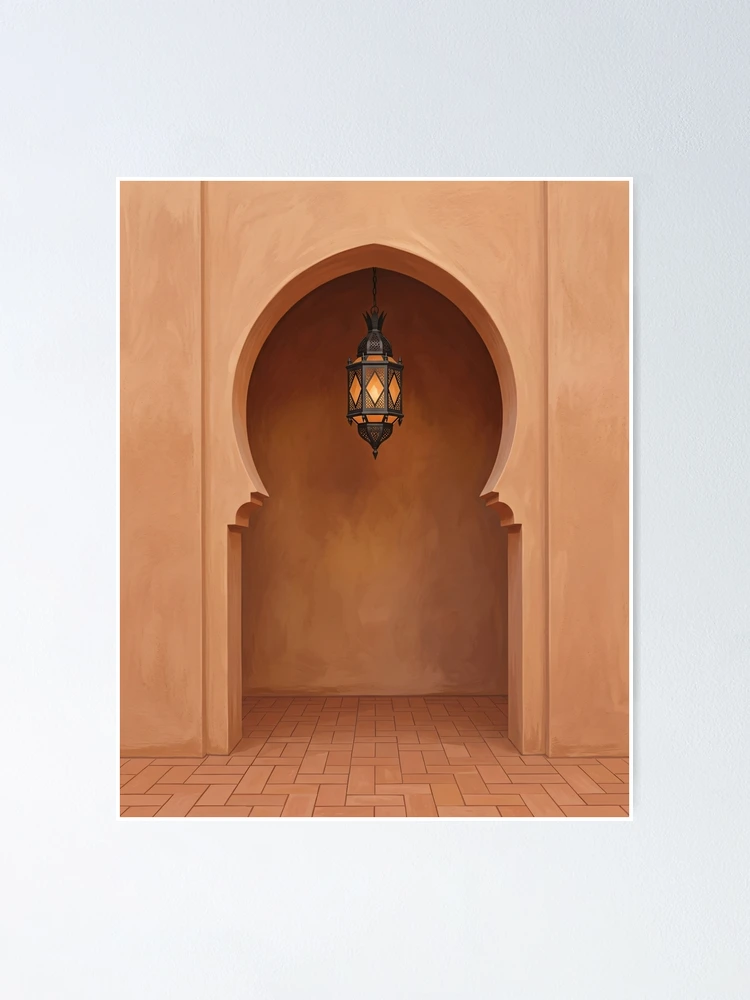
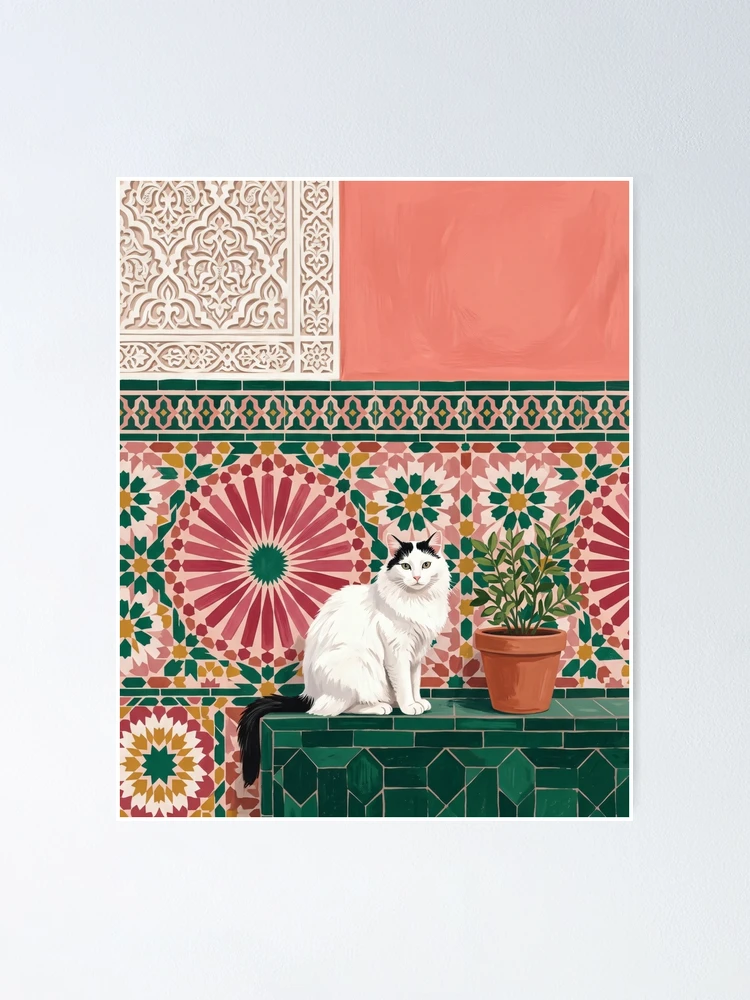
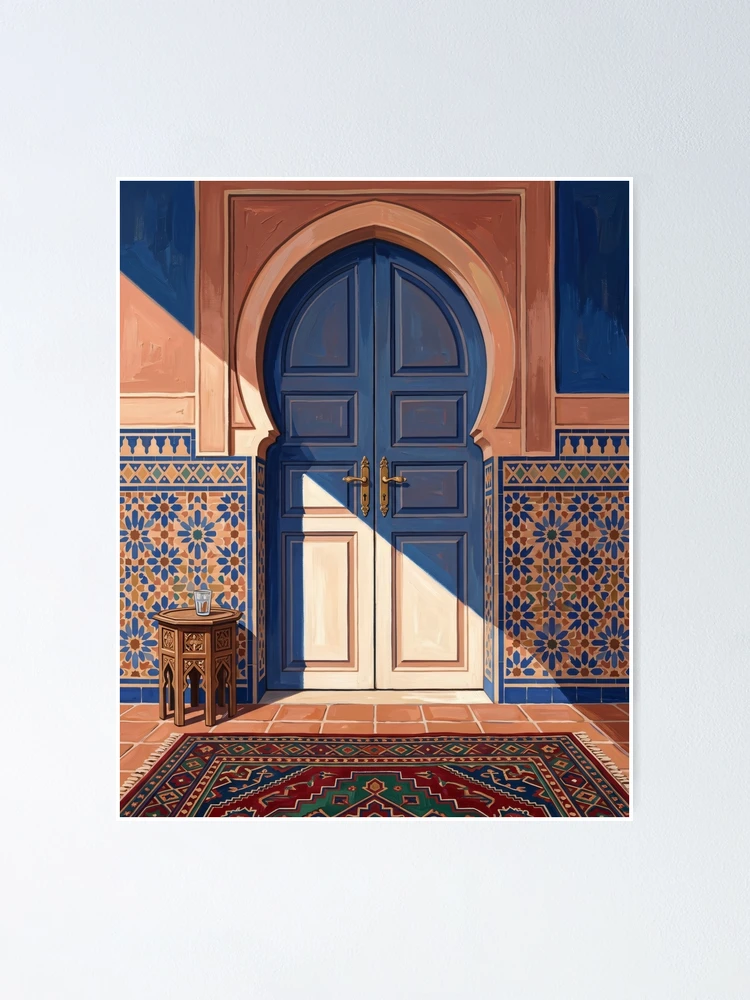
Transform your space with sunlit terracotta archways, vibrant Zellige tiles, and charming bohemian art. Available as premium posters, gallery-wrapped canvases, framed prints, and more to suit your unique aesthetic.
7. Pairing Black and Dark Gray
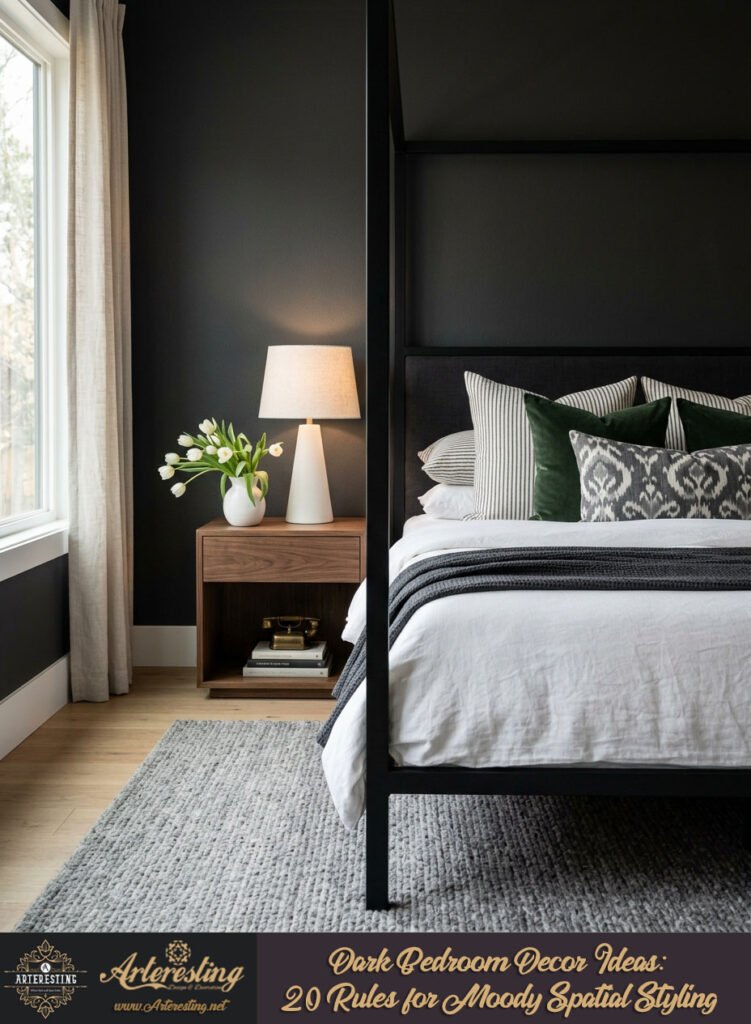
Combining dark gray walls with a structural black four-poster bed creates highly sophisticated tonal friction. Specifically, this pairing builds architectural weight while avoiding the oppressive feeling of a purely pitch-black spatial envelope.
Layering close tonal values requires extreme lighting precision. Visually, the dark gray walls soften the harshness of the solid black furniture. Moreover, mixing light and dark bedding across the mattress provides necessary visual relief. Therefore, the resulting space feels exceptionally tailored and cohesive.
The Deco & Tapestry Collection
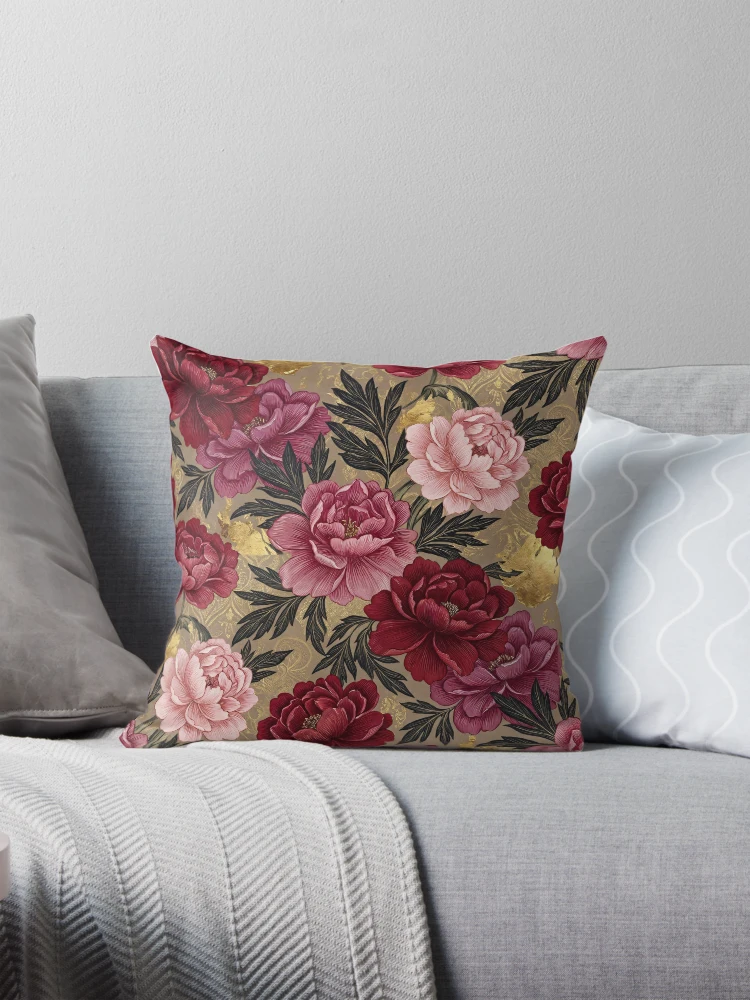
Add a layer of historical elegance to your seating. Discover our curated collection of throw pillows featuring striking Navy Art Deco geometrics and lush, vintage Victorian floral tapestries.

8. Executing Monochromatic Black on Black
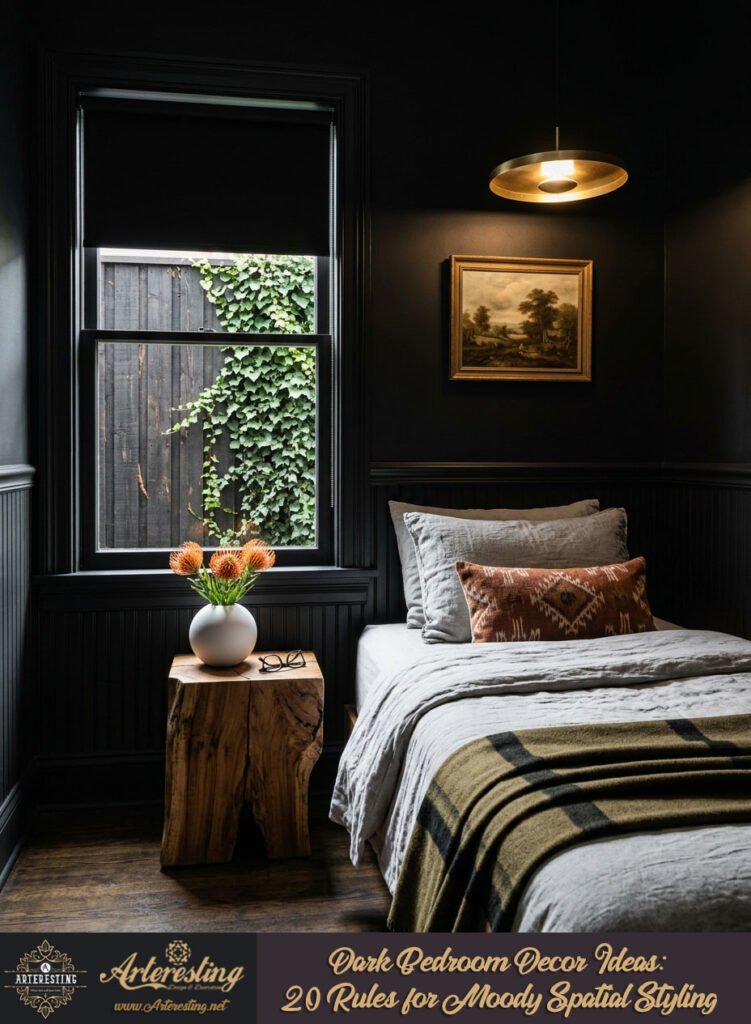
Enveloping the walls, trim, and window frames in a uniform black hue constructs an ultra-intimate, seamless visual experience. Crucially, applying a high-gloss finish specifically to the trim introduces light-catching contrast against flat, matte walls.
Color drenching entirely erases rigid visual boundaries. Consequently, painting everything one shade makes small rooms feel surprisingly expansive. Furthermore, varying the paint sheen prevents the darkness from feeling lifeless. Specifically, glossy trim reflects lamplight beautifully across the room’s perimeter.
The Heritage Geometry Collection
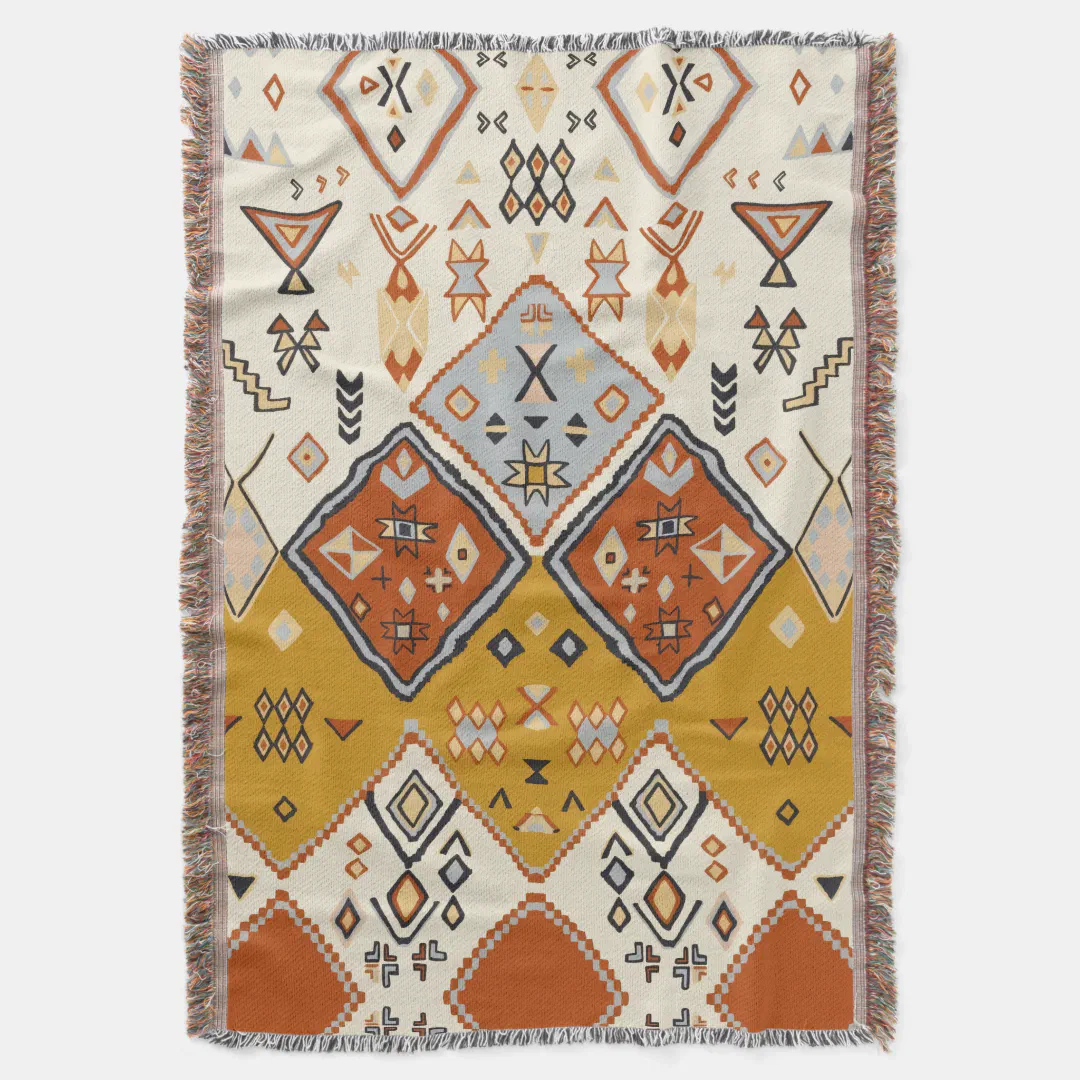
Wrap yourself in rich, cultural artistry. Discover our curated collection of ultra-soft throw blankets featuring intricate Andalusian motifs, striking black and gold abstracts, and traditional Moroccan tribal geometry.
9. Engineering a Structural Accent Wall
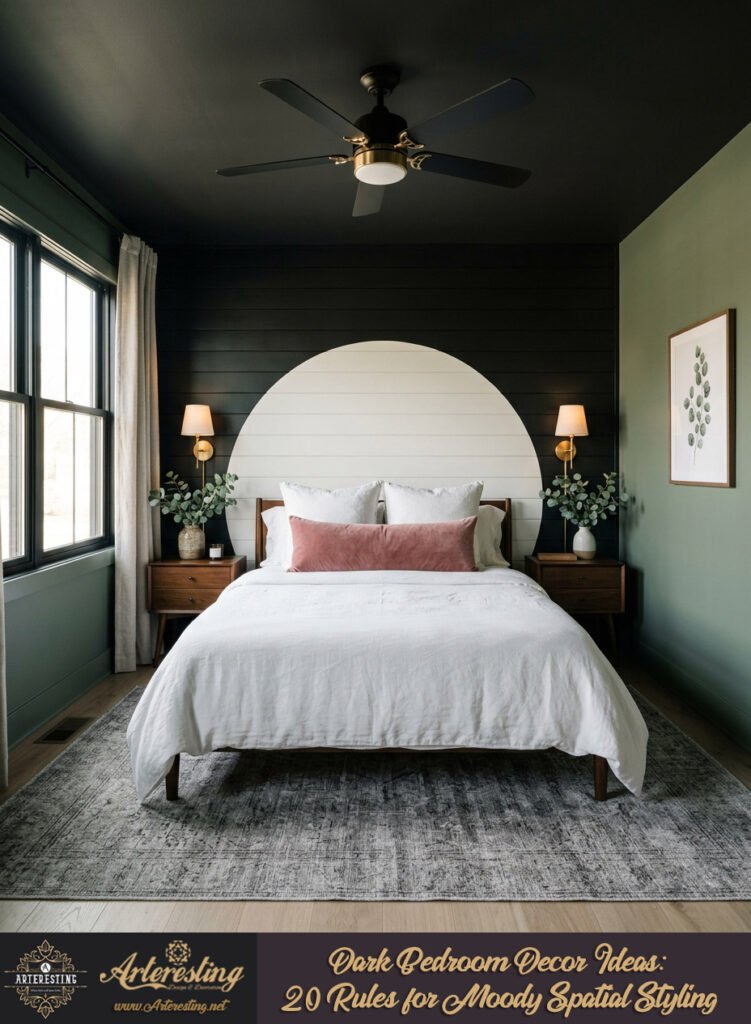
Isolating dark paint to a single accent wall and ceiling establishes strict spatial zoning. Specifically, painting a lighter archway and installing horizontal black wood slats introduces necessary tactile friction and geometric rhythm to the structure.
Full room saturation can overwhelm certain floor plans. Therefore, targeting just one wall delivers high impact with structural restraint. Visually, the horizontal wood slats disrupt the flat drywall. Moreover, the integrated painted arch softens the rigid linear geometry effectively.
The Mediterranean Indigo Collection
Frame your windows with bold, sophisticated patterns. Discover our curated collection of statement curtains featuring deep indigo geometry, striking navy and gold marble swirls, and classic Moroccan cobalt motifs.


10. Enveloping the Space in Moody Purple
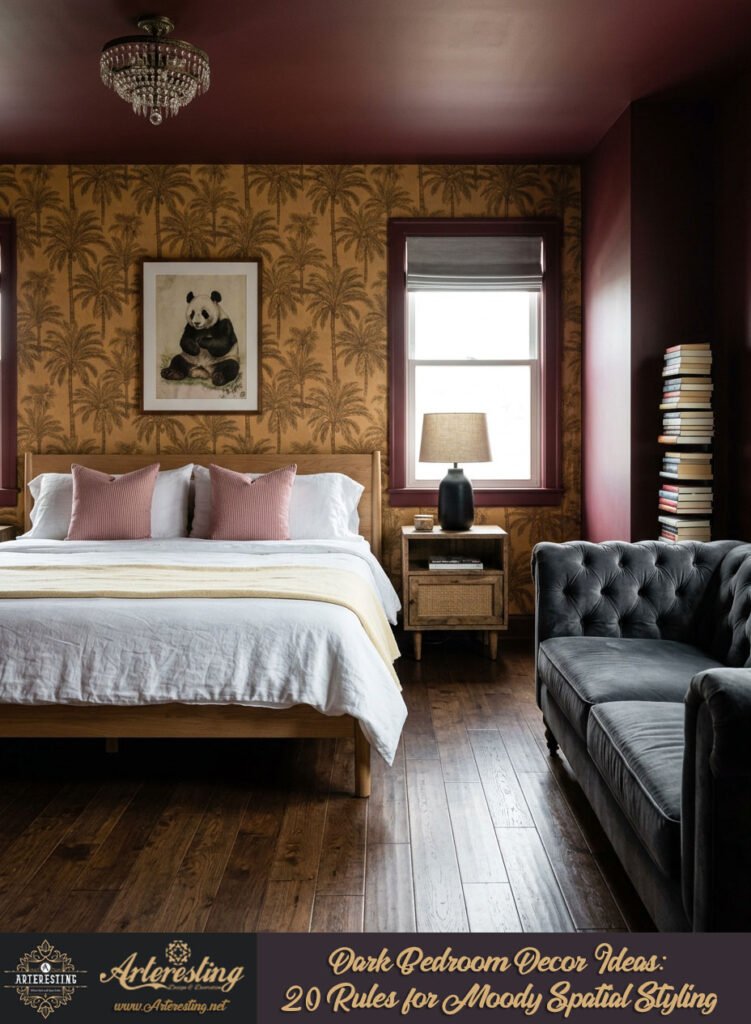
Drenching the ceiling, trim, and walls in a rich, saturated purple hue establishes an edgy yet inherently peaceful atmosphere. Visually, this highly pigmented envelope adds immediate thermal warmth to the interior architecture.
Deep jewel tones perform exceptionally well under low light conditions. Specifically, continuing the purple onto the ceiling creates a seamless structural box. Furthermore, this color profile absorbs harsh daylight elegantly. Consequently, the room functions as a highly restorative, quiet sanctuary.
The Mediterranean Indigo Collection
Frame your windows with bold, sophisticated patterns. Discover our curated collection of statement curtains featuring deep indigo geometry, striking navy and gold marble swirls, and classic Moroccan cobalt motifs.


11. Applying Warm Brown for Spatial Intimacy
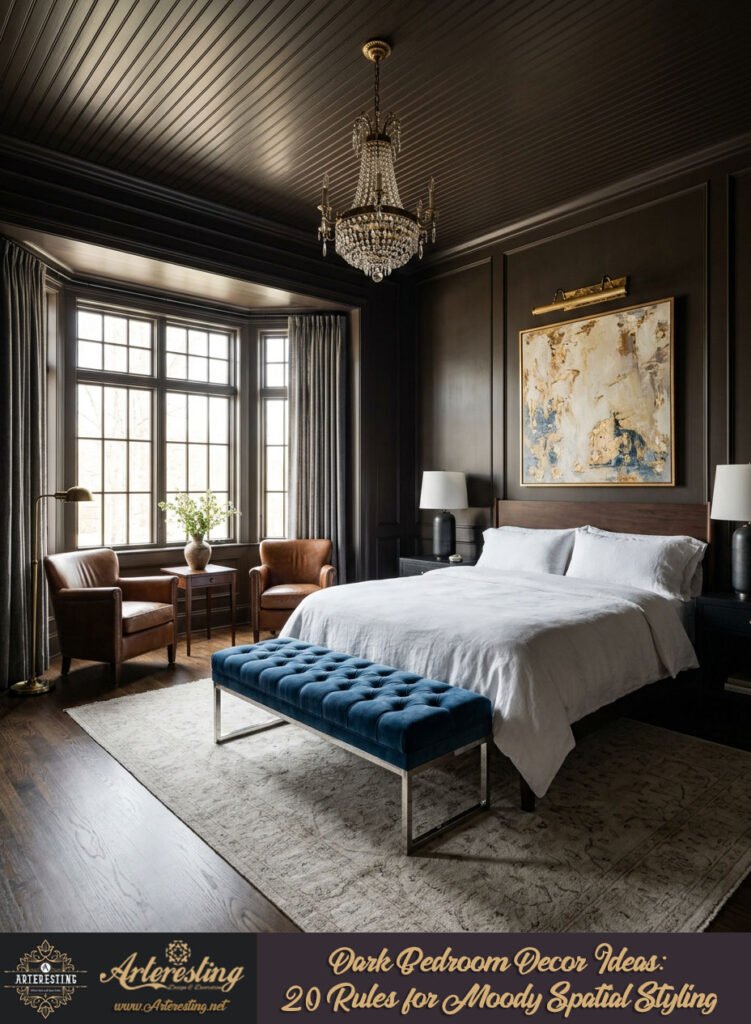
Implementing a heavily saturated brown, such as London Clay, injects unparalleled organic warmth into the sleeping quarters. Crucially, integrating picture molding elevates the flat paint, catching artificial accent lighting to set a deeply calming mood.
Earth tones directly anchor the human nervous system. Therefore, utilizing rich brown paint mimics the safety of natural enclosures. Furthermore, the applied picture molding introduces classical architectural shadows. Visually, warm bulb temperatures reflect off the brown pigment for maximum visual comfort.

12. Layering Textures in Dark Bedroom Interiors
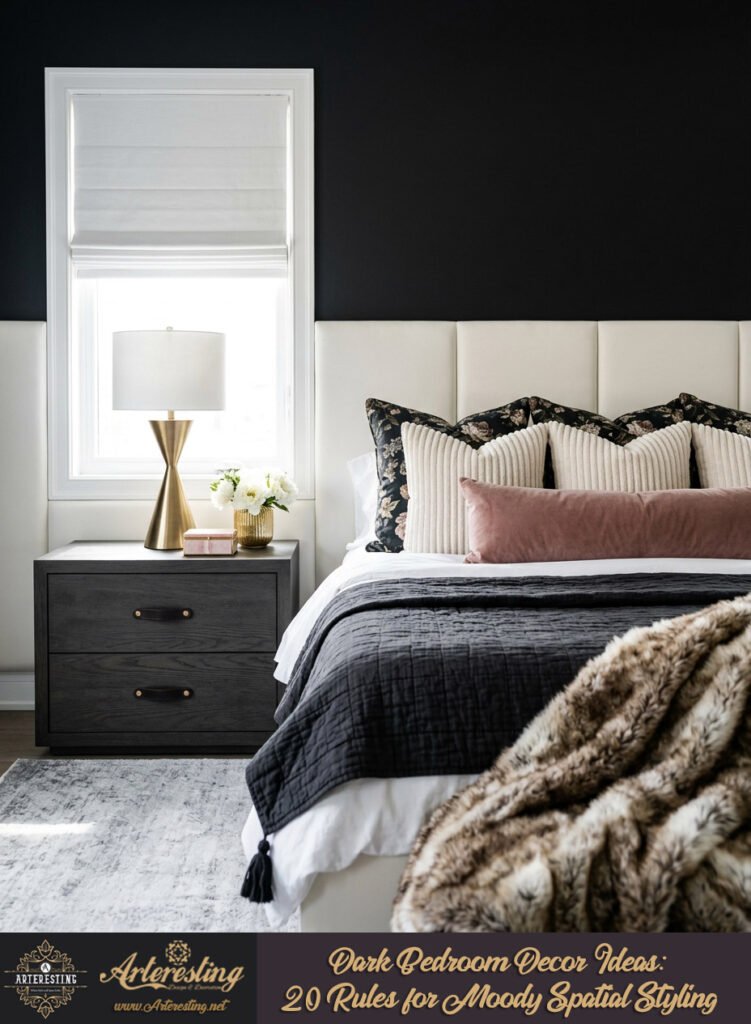
Applying a flat finish, such as Web Gray, builds essential depth without introducing distracting light glare. Moreover, establishing stark contrast by painting the adjacent window frames bright white crisply frames the exterior view.
Matte finishes absorb ambient light perfectly. Visually, this creates a velvety, recessive wall surface. Specifically, when exploring dark bedroom decor ideas, installing a crisp white Roman shade over a white window frame breaks up the heavy envelope. Consequently, the room maintains vital visual balance without compromising mood.
The Midnight Luxury Collection
Elevate your bedroom with deep, sophisticated hues. Discover our curated collection of pillow shams featuring metallic gold abstract swirls, minimalist midnight wildflowers, and quiet celestial pinstripes.


13. Experimenting with Bold Kids’ Room Tones
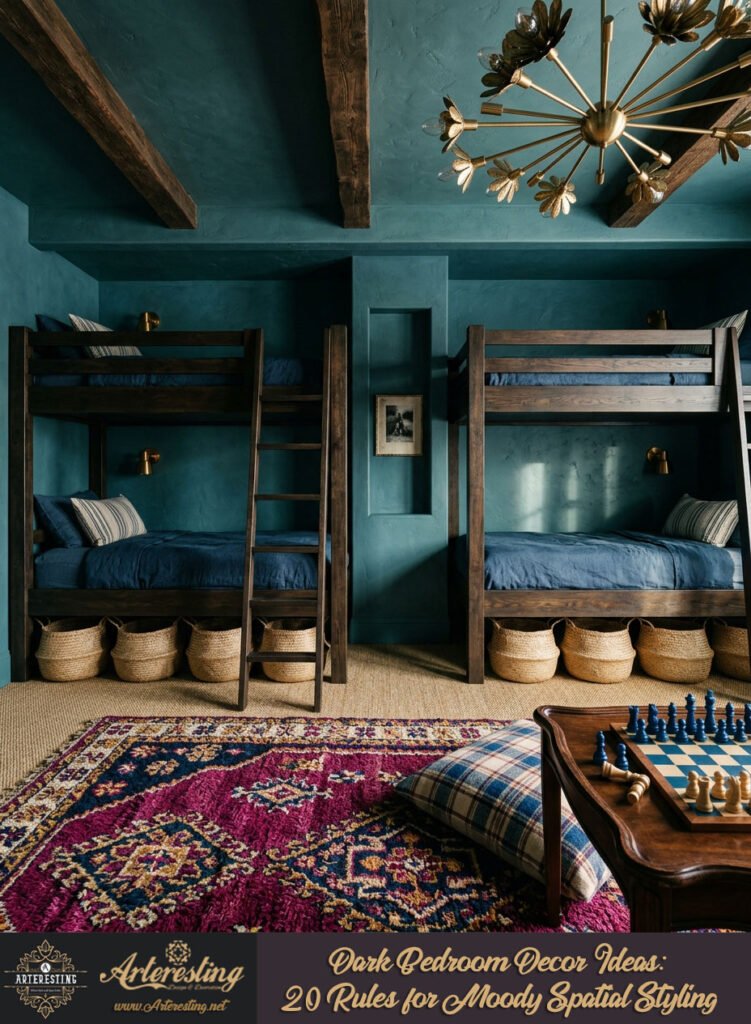
Utilizing highly saturated oceanic tones like Dunn-Edwards’ Aquatic encourages playful yet grounded spatial design. Crucially, pairing this dark blue hue with tactile wall treatments immerses the occupant in a visually stimulating environment.
Children’s spaces easily handle dramatic color saturation. Therefore, applying bold blue shades fosters imagination while promoting deep rest. Visually, the rich pigment acts as an underwater architectural illusion. Furthermore, textured application methods hide everyday scuffs highly efficiently.
The Heritage Tartan Collection
Infuse your space with cozy, timeless patterns. Discover our beautifully curated throw pillows featuring rich heritage tartan, classic emerald and navy, and traditional cabin plaids.


14. Creating Visual Contrast with White Furniture
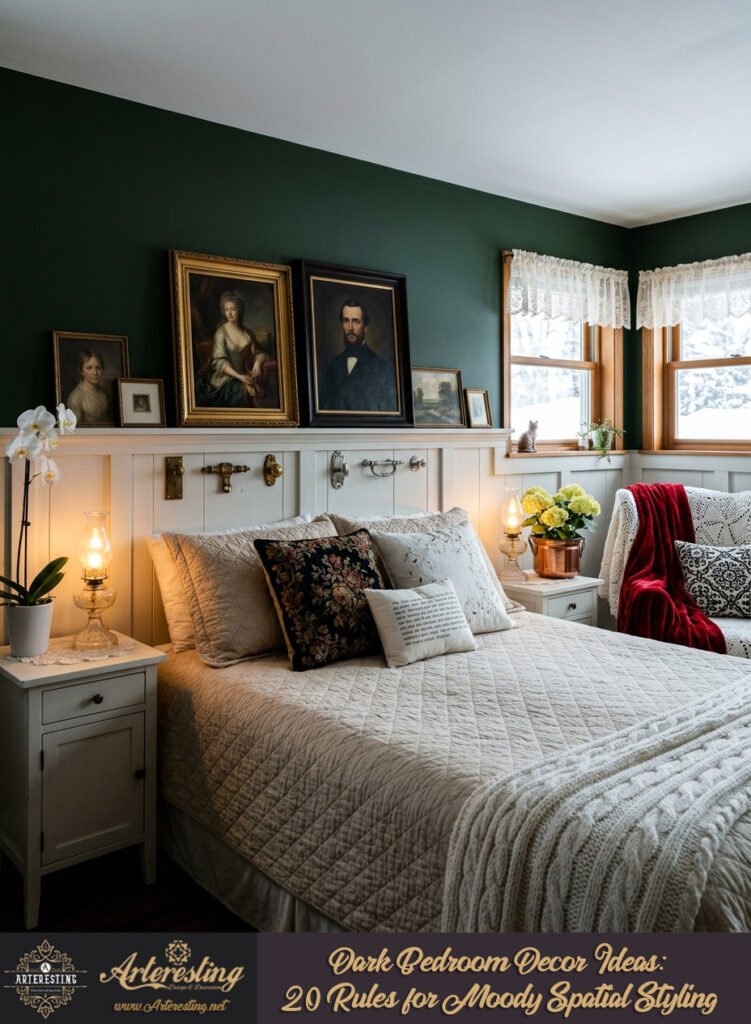
Positioning stark white furniture against deep green walls deliberately fragments heavy color blocks. Specifically, integrating white window valances further highlights this high-contrast strategy, ensuring the moody green feels intentional rather than overwhelmingly dark.
Visual breathing room remains critical in dark interiors. Consequently, crisp white silhouettes pop sharply against saturated shades like Behr’s Pastoral. Furthermore, this stark dichotomy emphasizes the furniture’s geometric lines. Therefore, the room achieves a highly tailored, crisp aesthetic.
The Elegance Classic Collection
Infuse your space with dramatic, historical narratives. Discover our beautifully curated duvet covers featuring rich Victorian crimson peonies, striking navy and gold Art Deco geometry, and moody Victorian ferns.


15. Integrating Patterned Wallpaper in Moody Bedroom Aesthetics
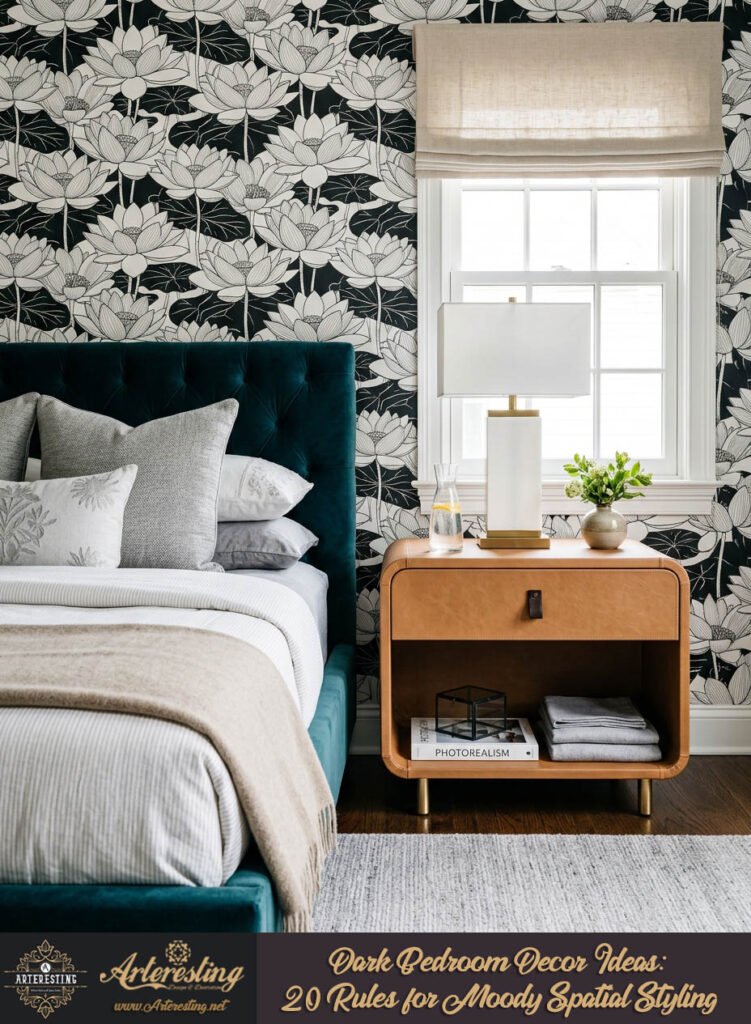
Installing a high-contrast black-and-white patterned wallpaper grounds the bedroom without requiring fully painted dark walls. Crucially, this graphic application merges light and dark values simultaneously to deliver dynamic visual momentum across the room.
Wallpaper introduces crucial organic or geometric rhythm. Specifically, a monochromatic pattern bridges the gap between airy and moody styles seamlessly. Visually, the busy print disguises wall imperfections perfectly. Therefore, it serves as an excellent foundational layer for minimal furniture.

16. Blending Cheerful Tones with Dark Paneling
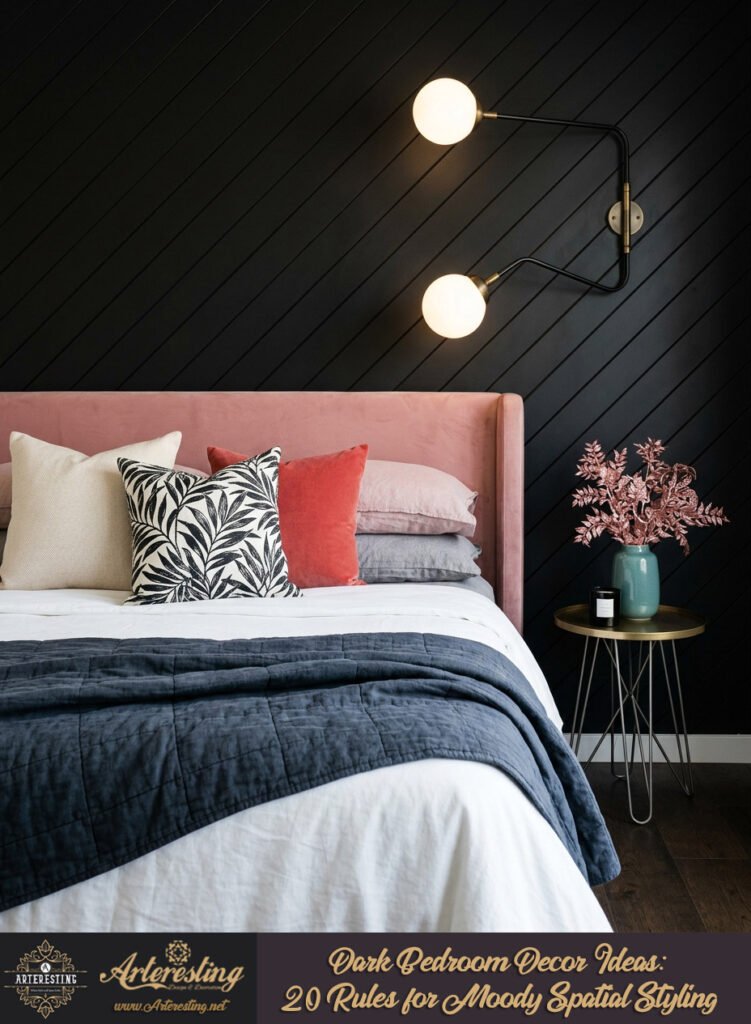
Juxtaposing a vibrant pink upholstered headboard against a rigid black wood-paneled wall creates exceptional chromatic friction. Specifically, this combination prevents the dark architecture from feeling excessively severe by injecting localized bursts of cheerful color.
Heavy black paneling requires immediate visual disruption. As a result, bright pink fabric softens the aggressive structural lines. The velvet texture also contrasts sharply with the hard wood surface. Ultimately, this balancing act produces a highly personalized, dynamic interior.
The Rustic & Celestial Blanket Collection
Wrap yourself in rich textures, natural warmth, and soulful patterns. Discover our beautifully curated throw blankets featuring sunny rustic hay bales, earthy woven slate linen, and deep celestial pinstripes.


17. Anchoring the Room with Black Furniture
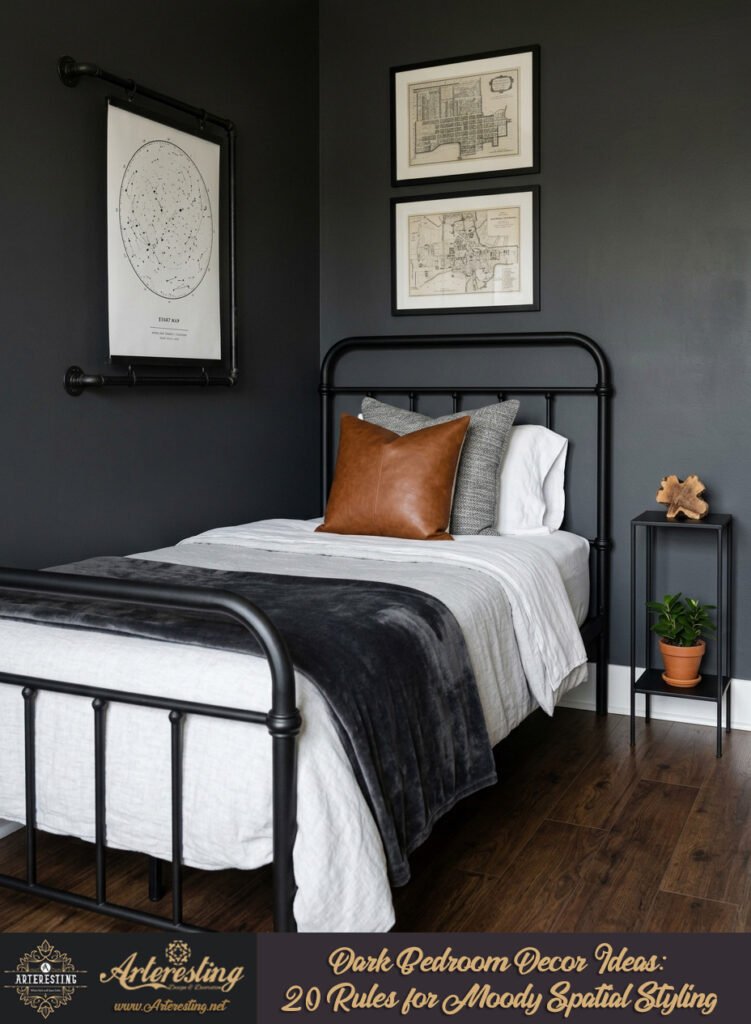
Deploying substantial black furniture pieces within a dark gray architectural envelope anchors the space physically. Moreover, integrating thematic elements, such as galaxy wall art, personalizes the moody atmosphere effectively for younger occupants.
Gray walls provide a neutral but deep architectural backdrop. Therefore, matte black furniture stands out without clashing aggressively. Visually, the subtle tonal shift between gray and black maintains sophisticated continuity. Specifically, cosmic-themed art harmonizes beautifully with the night-sky palette.
The Wildlife & Wilderness Collection
Bring the bold, tactile beauty of nature indoors. Discover our meticulously designed throw pillows featuring high-resolution faux furs, hides, and patterns from the animal kingdom.


18. Mixing Dark Green with Organic Materials
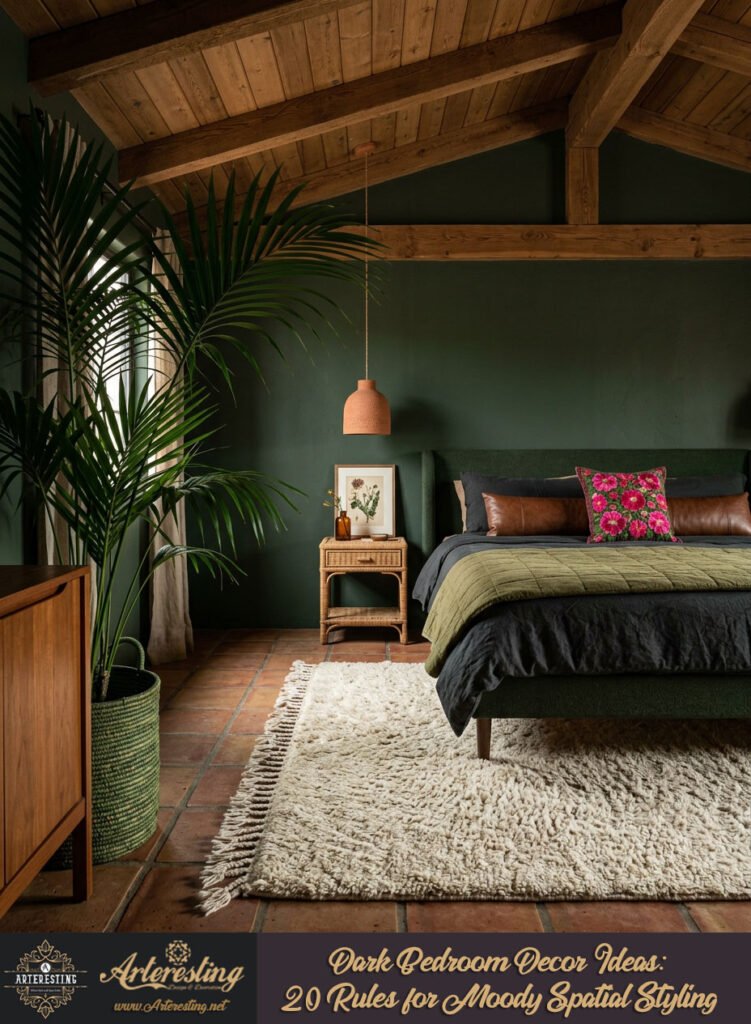
Combining earthy green paint, like Dunn-Edwards’ Deep in the Jungle, with raw wood accents constructs a deeply biophilic environment. Crucially, layering matching dark green bedding reinforces the immersive, monochromatic forest aesthetic flawlessly.
Natural textures warm up cool, dark paints instantly. Consequently, utilizing tropical greenery and raw timber bridges the interior with nature. Visually, the monochromatic bedding eliminates distracting visual noise. Therefore, the brain registers the space as exceptionally calm.

19. Balancing Heavy Walls with Light Curtains
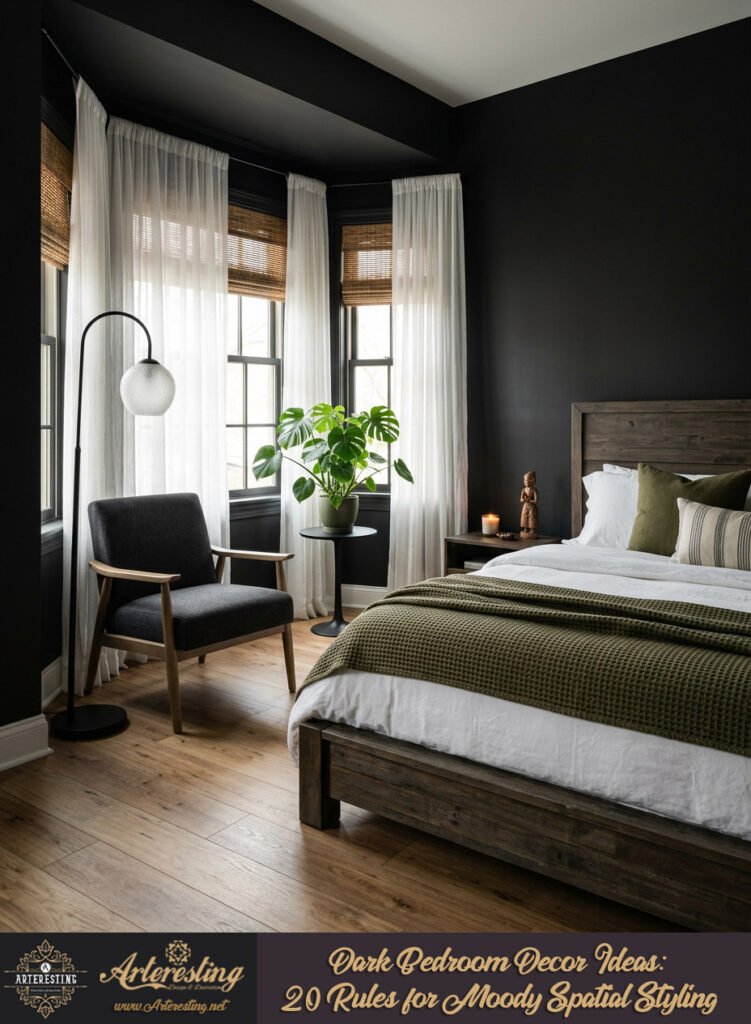
Suspending sheer, airy curtains against velvety black walls dramatically offsets the room’s visual weight. Specifically, combining Behr’s Broadway black paint with neutral bedding and wicker Roman shades prevents the space from feeling claustrophobic.
Contrast creates immediate interior relief. Therefore, draping sheer textiles over heavy black walls introduces delicate movement. Furthermore, the woven wicker shades inject vital organic texture. Visually, these light-colored elements act as negative space within the dark room.
The Midnight Botanical & Art Deco Collection
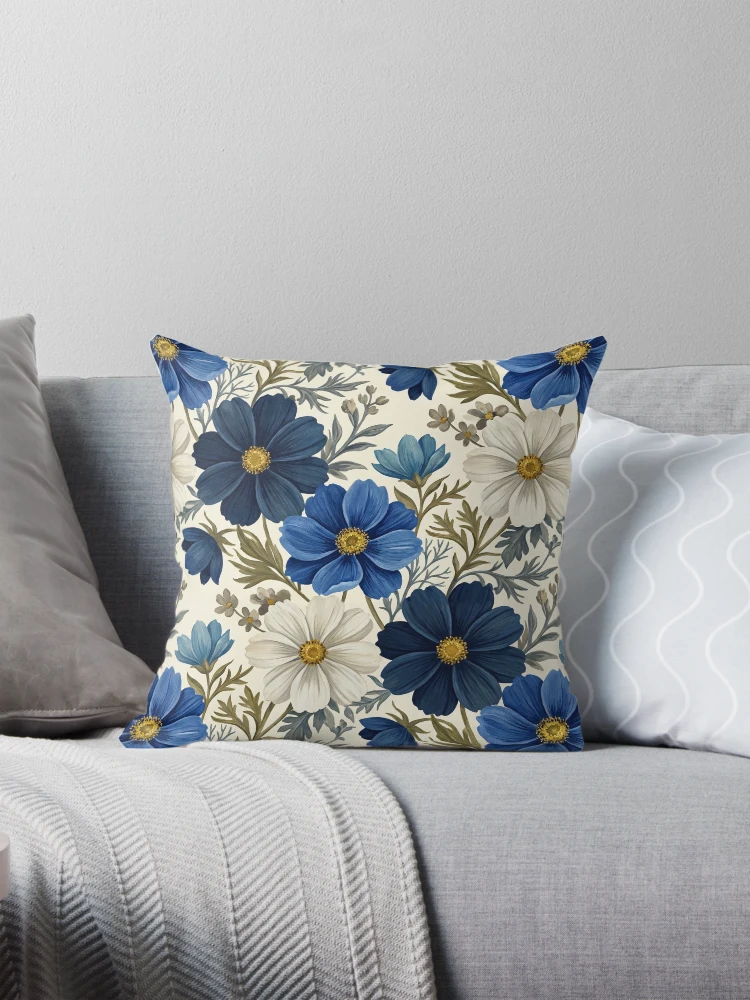
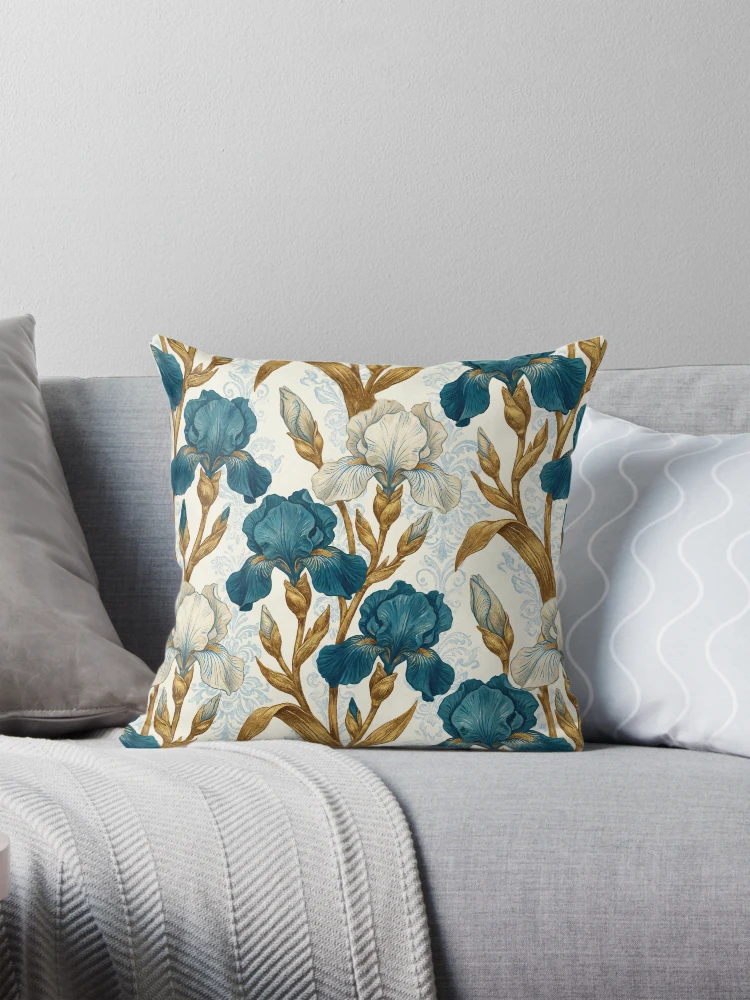
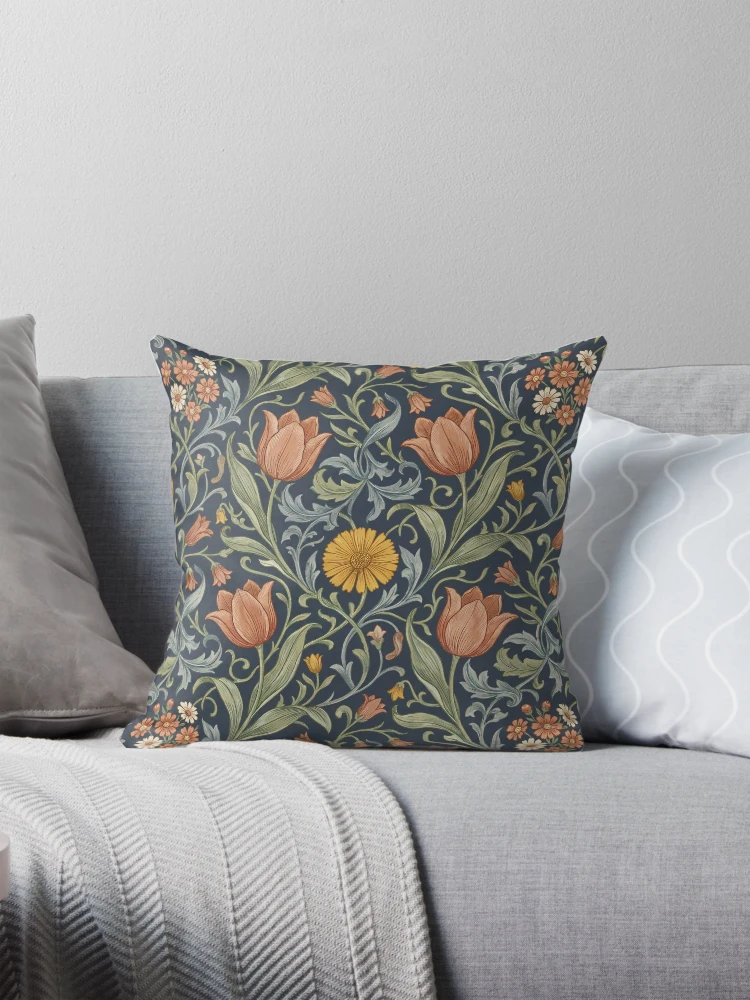
Step into an era of opulent comfort. Discover our curated collection of throw pillows featuring luxurious navy, vintage botanicals, and golden historic patterns.
20. Mastering Classic Black and White Dark Bedroom Decor Ideas
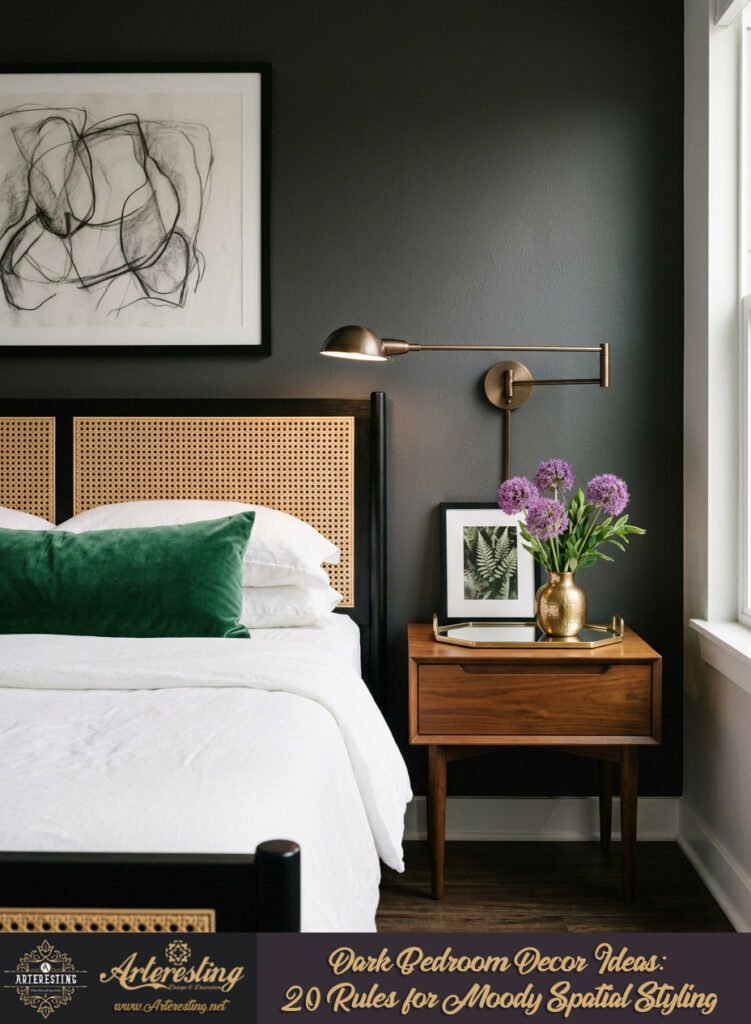
Executing a strict black-and-white color palette ensures timeless architectural elegance. Crucially, grounding heavily saturated black walls with crisp white bedding and high-contrast artwork establishes a razor-sharp, highly tailored spatial environment.
The highest level of visual contrast commands immediate attention. Consequently, black walls recede while white linens project forward into the space. Visually, this push-and-pull dynamic energizes the room perfectly. Therefore, mixing dark and light frames on the gallery wall unifies the aesthetic completely.
Ultimately, executing these dark bedroom decor ideas requires rigorous precision, lighting awareness, and textural layering. Visually, utilizing deep tones constructs unparalleled spatial intimacy. Consequently, your bedroom will function as a highly restorative, design-forward retreat.
Dark bedroom decor focuses on utilizing deep hues like plum, navy, and charcoal to create visually intimate, restorative spaces. By balancing light absorption with layered textures and strategic contrast, these deep palettes enhance spatial depth. Experts prioritize matte finishes and architectural moldings to elevate the moody atmosphere effectively.