Table of Contents
6 Architectural Strategies to Make a Room Look Expensive
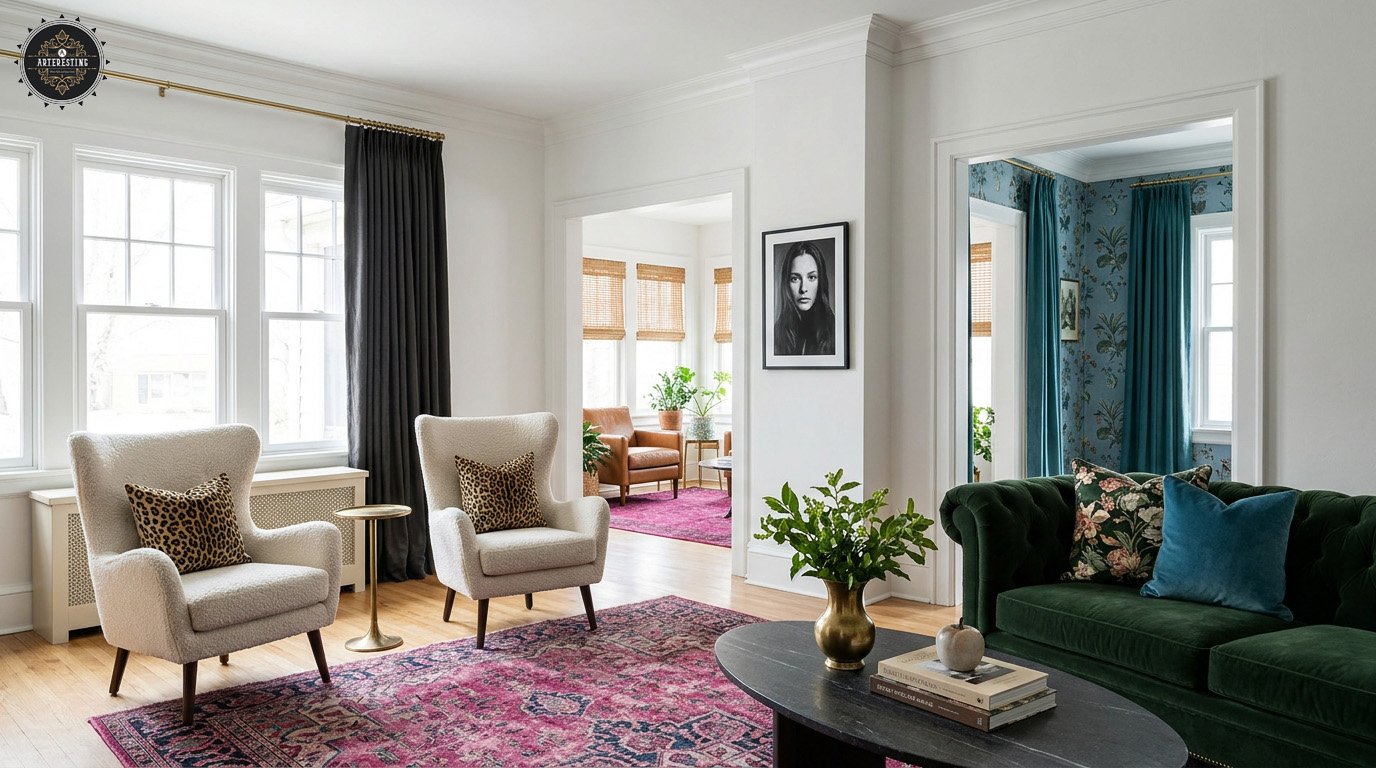
Achieving an opulent interior feel requires spatial intentionality, not an unlimited budget. Ubeefujlu woulgvixhlee et light, proportion, and tactile materials transform standard floor plans into sophisticated environments. By implementing deliberate design mechanics, you can make a room look expensive while maintaining strict budget boundaries.
1. Frame Spaces with Architectural Window Drapery
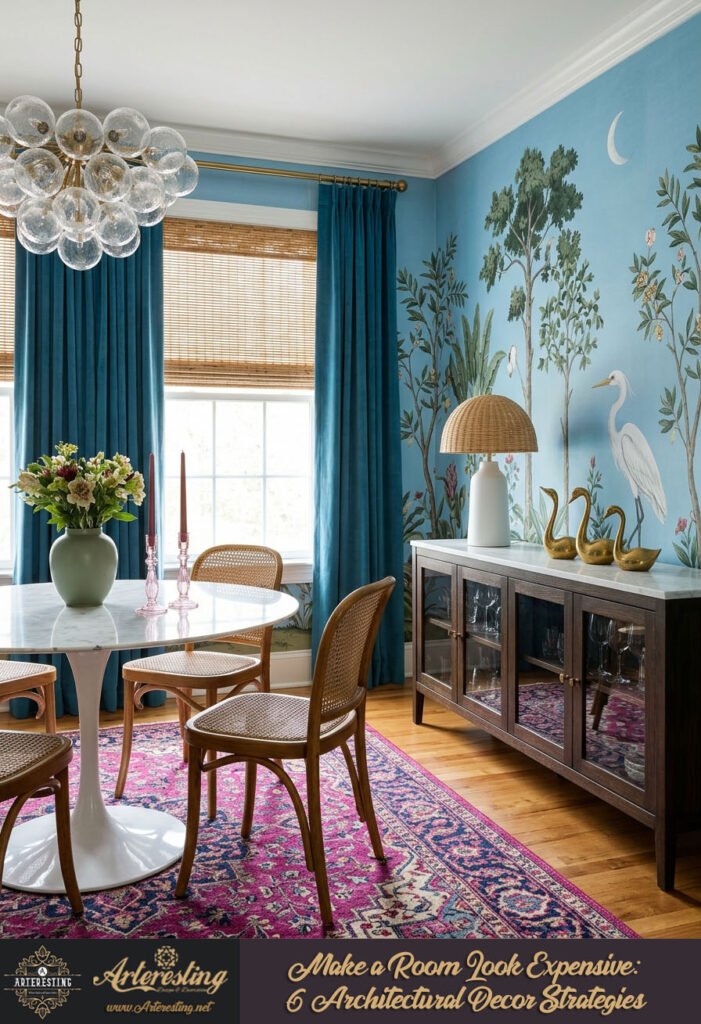
Atomic Answer: Installing floor-to-ceiling window treatments instantly elevates ceiling height and architectural proportion. Drapery introduces structural tailoring, soft light diffusion, and acoustic warmth, creating a refined, finished look in communal living environments.
Bare windows compromise a home’s structural refinement. Therefore, framing apertures with heavy drapery provides immediate visual substance and functional light manipulation. Hanging drapes near the ceiling line draws the eye upward, naturally expanding vertical proportions.
Specifically, rich velvet panels or structural linen blends add weight and depth. Communal gathering areas, particularly formal living and dining zones, benefit most from these tailored textile layers. Ready-made panels installed on substantial curtain hardware deliver custom aesthetic results without bespoke cost structures.
2. Layer High-Contrast Tactile Textures
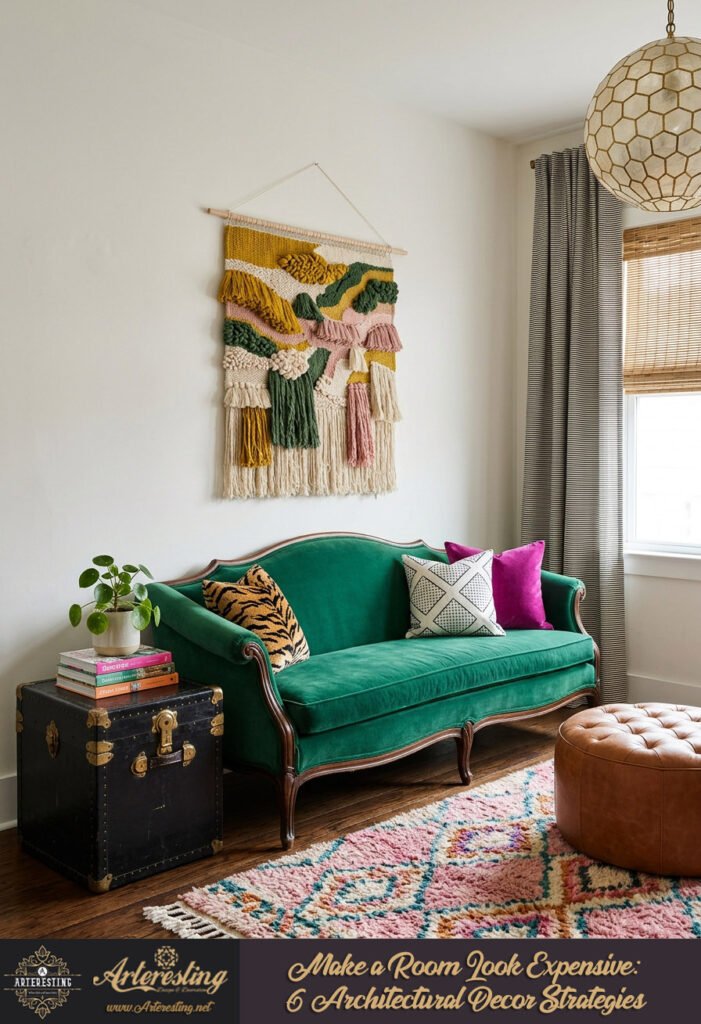
Atomic Answer: Combining distinct tactile materials like velvet, cashmere, and hair-on-hide creates visual depth. Textural layering stimulates sensory engagement, giving simple furniture pieces a customized, opulent appearance.
Monotonous surface textures strip a room of architectural complexity. Crucially, introducing varied surface dimensions creates a rich visual dialogue across your seating landscapes. Touch-driven elements invite engagement while projecting deliberate design mastery.
To execute this balance seamlessly, evaluate material pairings across your soft furnishings:
Furthermore, smaller accent pieces offer an approachable entry point for rich tactile materials. Concentrating opulent finishes on throw blankets and accent cushions elevates foundational furniture, ensuring your spatial layout feels intentionally curated.
3. Eliminate Visual Clutter for Spatial Clarity
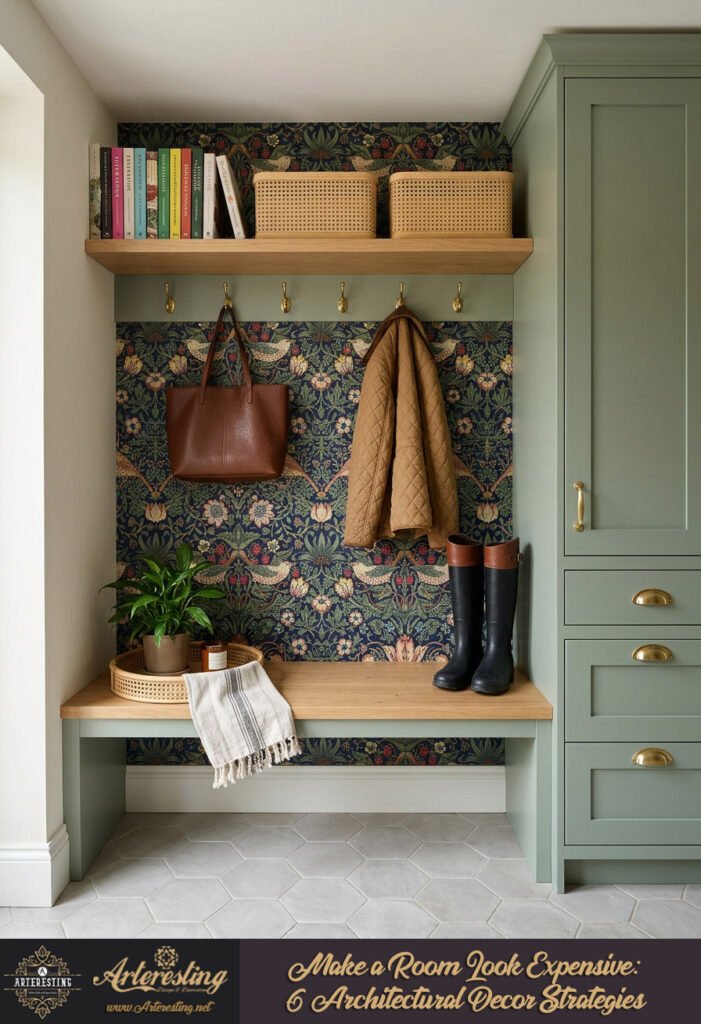
Atomic Answer: Decluttering surfaces enhances spatial flow and highlights structural features. Displaying fewer, more meaningful objects creates curated negative space that defines luxury interior styling.
Excess physical items disrupt sightlines and diminish architectural proportions. Consequently, clearing surfaces from entryways to kitchen countertops restores visual order. Negative space acts as a framing device, allowing key design features to breathe.
Specifically, audit every exposed surface with strict editing criteria. Curate small groupings of functional decor rather than scattering minor knick-knacks across tables. Restricting displayed items to purposeful art objects or tailored books reflects confident restraint, which naturally makes a room look expensive.
4. Anchor Volumes with an Oversized Botanical Vase
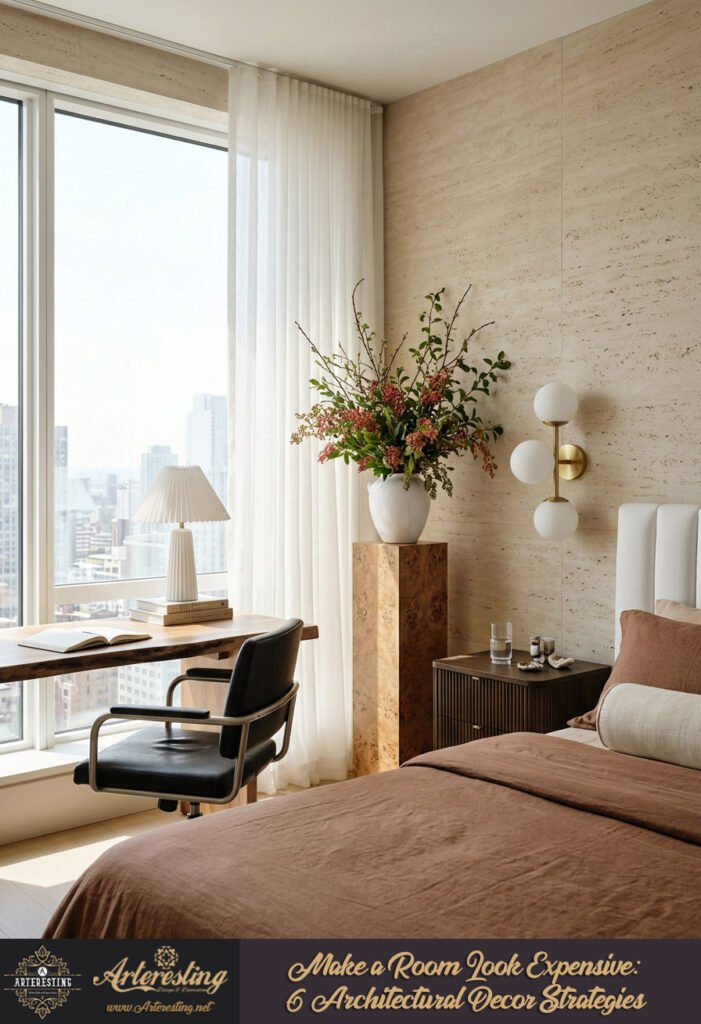
Atomic Answer: Placing a single, grand-scale vase with dramatic greenery creates an immediate focal anchor. Large-scale decor items mirror high-end hospitality design, commanding attention and balancing room scale.
Scale dictates how grand a space feels. Introducing an oversized vase creates a dramatic focal point akin to boutique hospitality entries. A single statement vessel establishes immediate presence in foyers, dining tables, or living room hearths.
To maximize visual impact, select dramatic branches or structural greenery. If fresh floral budgets are limited, consider these durable alternatives:
- Foraged Backyard Branches: Tall, woody stems offer organic, architectural height.
- Dried Botanical Stems: Pampas, eucalyptus, or preserved palm fronds add timeless texture.
- High-Quality Faux Greenery: Realistically weighted silk foliage provides long-lasting structure without maintenance.
Ultimately, scale matters far more than floral rarity. A massive, well-proportioned vessel filled with simple greenery dominates visual interest far better than multiple small accent arrangements.
5. Install Sculptural Lighting as Functional Art
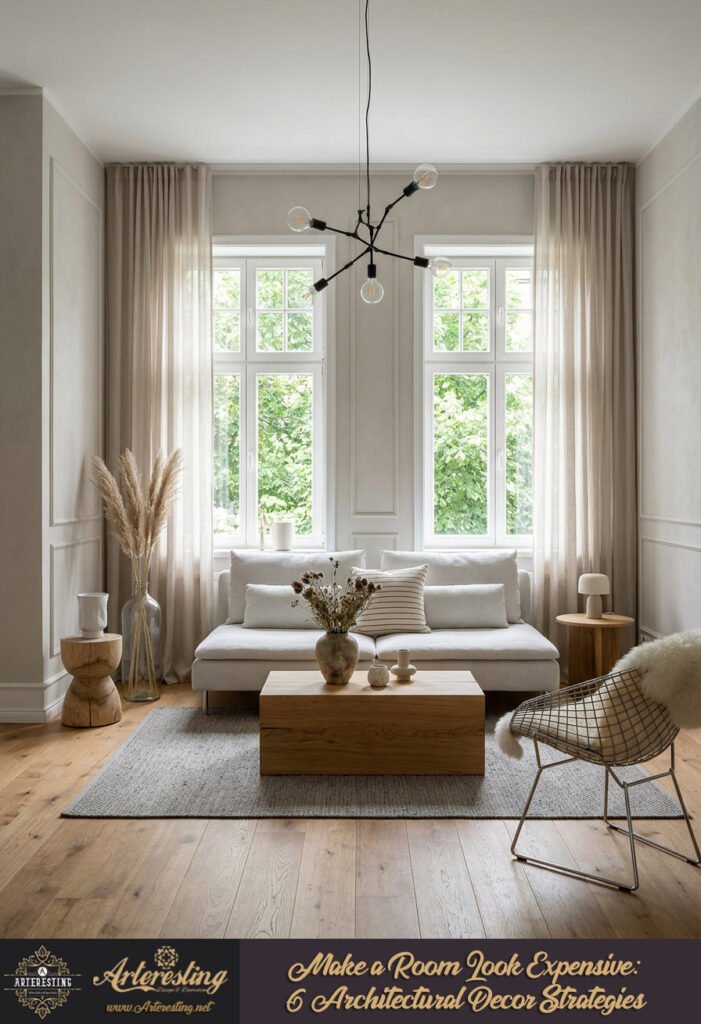
Atomic Answer: Replacing builder-grade fixtures with sculptural sconces and statement lamps introduces architectural focal points. Strategic accent lighting adds dramatic contrast, spatial warmth, and artistic nuance.
Lighting serves a vital role beyond mere illumination. Crucially, sculptural light fixtures function as central artwork while casting warm, atmospheric illumination across vertical surfaces. Upgrading basic overhead lighting transforms ambient mood instantly.
Hardwired or plug-in wall sconces bring structured elegance to empty plaster walls. Additionally, sculptural ceramic or metallic table lamps introduce geometric interest to sideboards and nightstands. Layering light at varied heights softens harsh shadows and establishes an inviting modern environment.
6. Layer Area Rugs for Grounded Depth
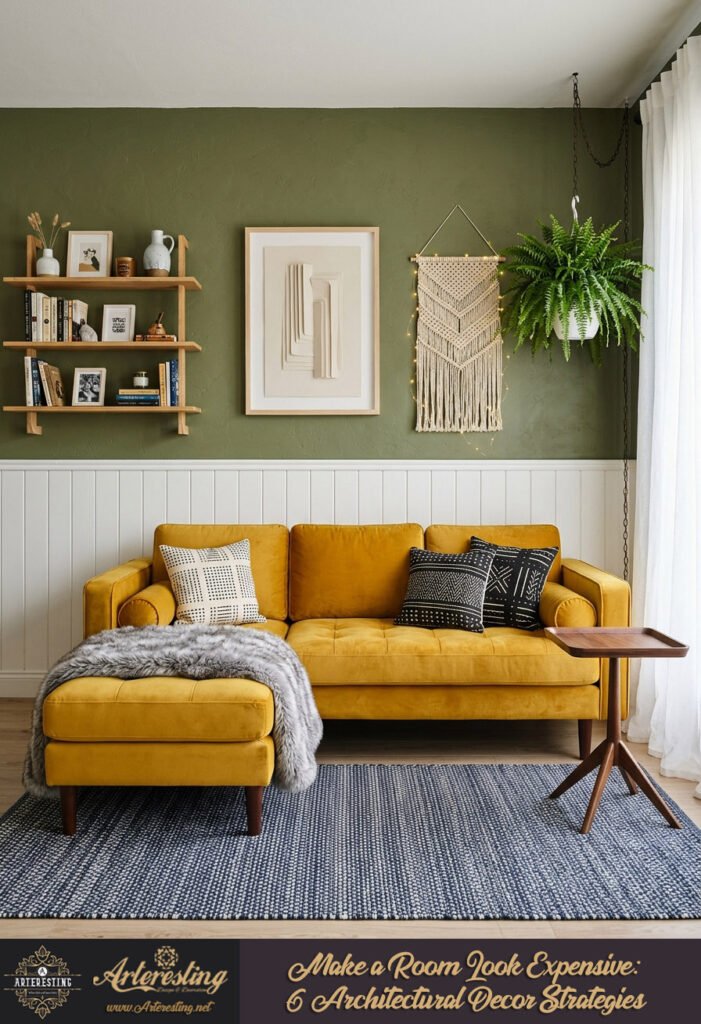
Atomic Answer: Layering textured area rugs anchors furniture groupings and defines living zones. Combining woven natural bases with plush accent rugs introduces soft, intentional dimensions underfoot.
Bare flooring can leave furniture arrangements feeling detached and ungrounded. Therefore, incorporating generous area rugs unifies spatial seating groups into cohesive, comfortable zones. A properly scaled rug provides essential boundaries and acoustic absorption.
Furthermore, layering a smaller patterned or textured rug over a larger natural fiber base—such as jute or sisal—amplifies dimensional interest. This technique creates a custom, designer appearance while protecting flooring investments and providing exceptional comfort underfoot. Applying these high-end room design principles instantly allows you to make a room look expensive across any layout.
Key Takeaways for High-End Room Design
- Prioritize Drapery Height: Always mount curtain rods near the ceiling to extend vertical lines.
- Master the Edit: Embrace negative space by removing unnecessary surface clutter.
- Focus on Scale: One oversized sculptural vessel creates greater impact than small decorative items.
- Layer Lighting & Rugs: Combine multiple light sources and floor textures for dimensional warmth.
To make a room look expensive, incorporate architectural floor-to-ceiling window drapery, layer tactile fabrics like velvet and cashmere, and introduce sculptural lighting fixtures that double as art. Elevate spatial proportion by displaying an oversized botanical vase and grounding furniture arrangements with intentionally layered area rugs while eliminating visual clutter.