Table of Contents
Spatial constraints dictate how we inhabit our homes. Regardless of square footage, a poorly executed floor plan severely restricts atmospheric flow. Crucially, resolving spatial tension requires identifying the single living room furniture layout mistake that restricts visual volume. Designers observe this exact structural error repeatedly across high-end interiors. Instinctively, residents push pieces outward to maximize central voids. However, this reactionary approach consistently backfires. Consequently, rectifying this error remains paramount. Ultimately, precise realignment generates immediate architectural relief.
The Living Room Furniture Layout Mistake Shrinking Your Floor Plan
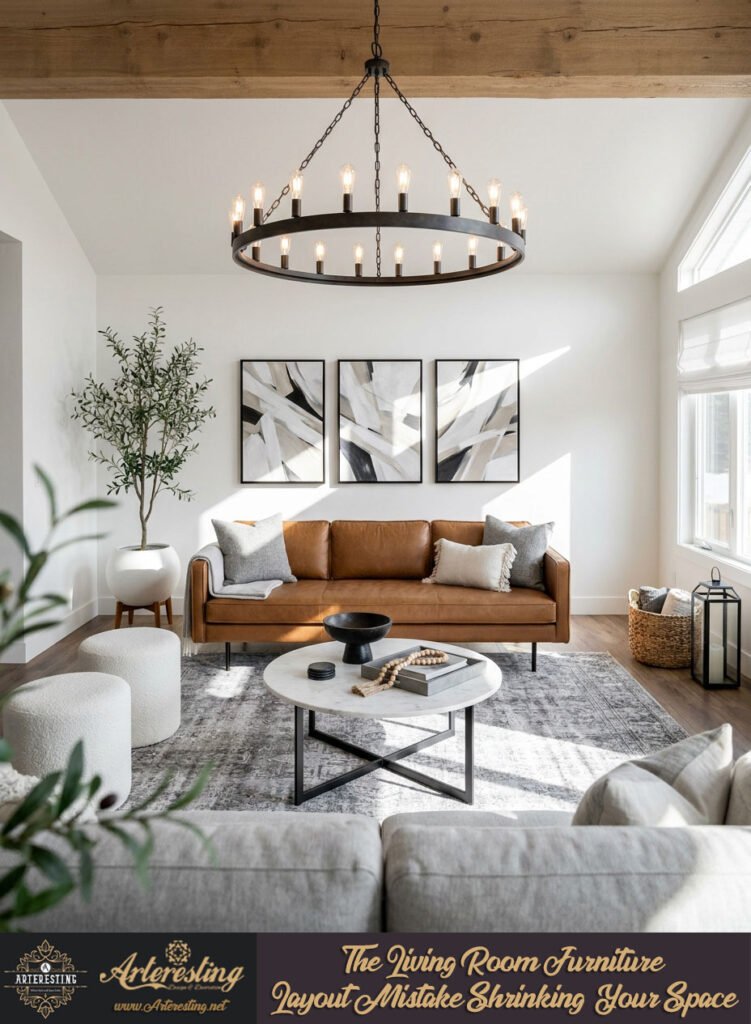
Pushing seating flush against perimeter walls is the primary living room furniture layout mistake that makes spaces feel cramped. Specifically, this arrangement visually highlights the room’s structural boundaries rather than its interior volume. Consequently, the seating zone feels entirely disconnected, rigid, and geographically awkward for natural human interaction.
Designers frequently diagnose compact interiors by asking one defining question. Specifically, they check if heavy seating rests flush against the drywall. Most individuals answer affirmatively. They assume clearing the center completely maximizes the usable living area. Conversely, this approach creates an uncomfortable, unusable void.
Shop The Look
Furthermore, pushing sofas and sideboards outward emphasizes the structural boundary. It telegraphs the exact limitations of the room directly to the human eye. Jennifer Wilson of Jennifer J Interiors notes that this approach creates profound disconnection. Interior elements sit far too far apart. Therefore, individuals feel physically stranded during standard conversation.
Visually, this strategy compresses even generous structural blueprints. Selena Michele Interiors principal Selena Reif confirms this exact phenomenon. Perimeter-bound pieces make the environment feel aggressively restricted. Ultimately, pushing items outward shrinks the perceived footprint.
The Architectural Solution for Spatial Flow
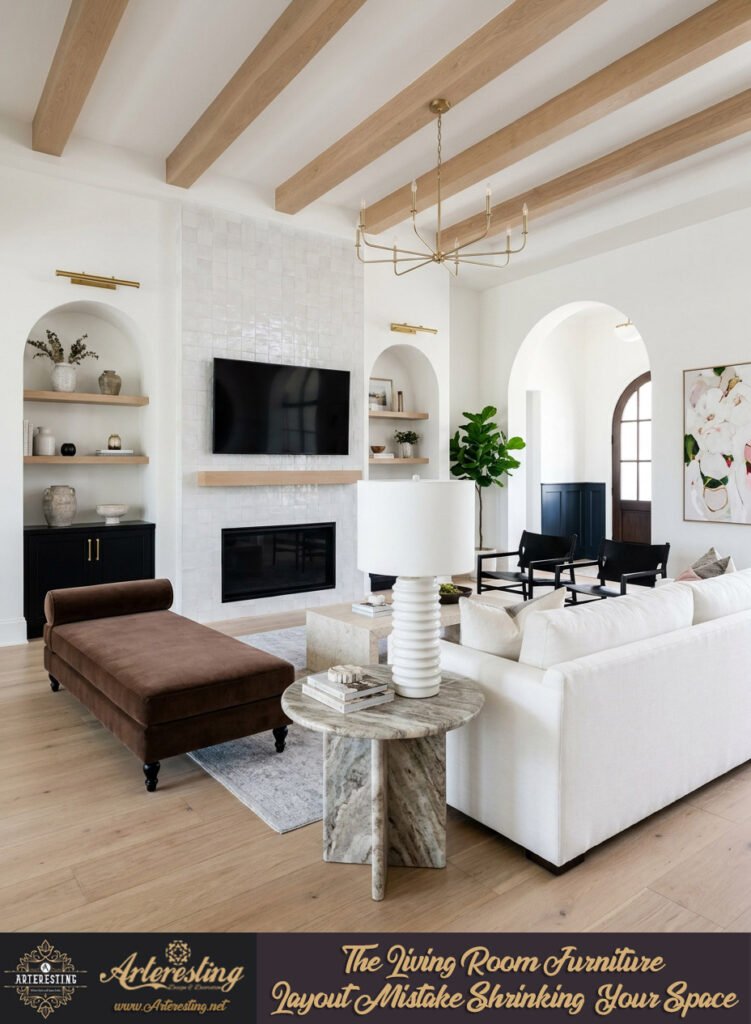
Floating your seating away from the structural perimeter establishes intimate, conversational zones while opening critical interior circulation pathways. Ultimately, this intentional spatial shift allows the architecture to breathe, producing a sophisticated, airy atmosphere that facilitates connection and immediately makes the existing blueprint feel remarkably larger.
Fortunately, spatial correction requires mere inches, not an intensive structural renovation. Designers universally advocate for floating your primary structural pieces. Specifically, you must pull sofas and accent chairs distinctly away from the perimeter.
This precise positioning directly facilitates human connection. When engaged in focused dialogue, individuals naturally lean forward. Your floor plan must mimic this innate behavioral instinct. By identifying a central axis, you draw seating inward. Consequently, this geometry creates an effortless, relaxed tension between the pieces.
Furthermore, this arrangement engineers absolute atmospheric airiness. Instead of forming a stagnant perimeter barrier, you introduce deliberate physical pathways. Grounded Homes founder Alex Kinion emphasizes this structural dynamic. Establishing exterior walkways cleanly forces traffic around the conversation circle. Therefore, guests navigate the perimeter smoothly.
| Layout Strategy | Visual Impact | Psychological Effect | Circulation Result |
|---|---|---|---|
| Flush Against Wall | Highlights rigid structural boundaries | Stiff, disconnected, and physically distant | Forced directly through the central conversation zone |
| Floating Furniture | Creates depth and natural shadow lines | Intimate, engaged, and structurally relaxed | Smooth perimeter navigation pathways |
Strict Measurements for Blueprint Restraints
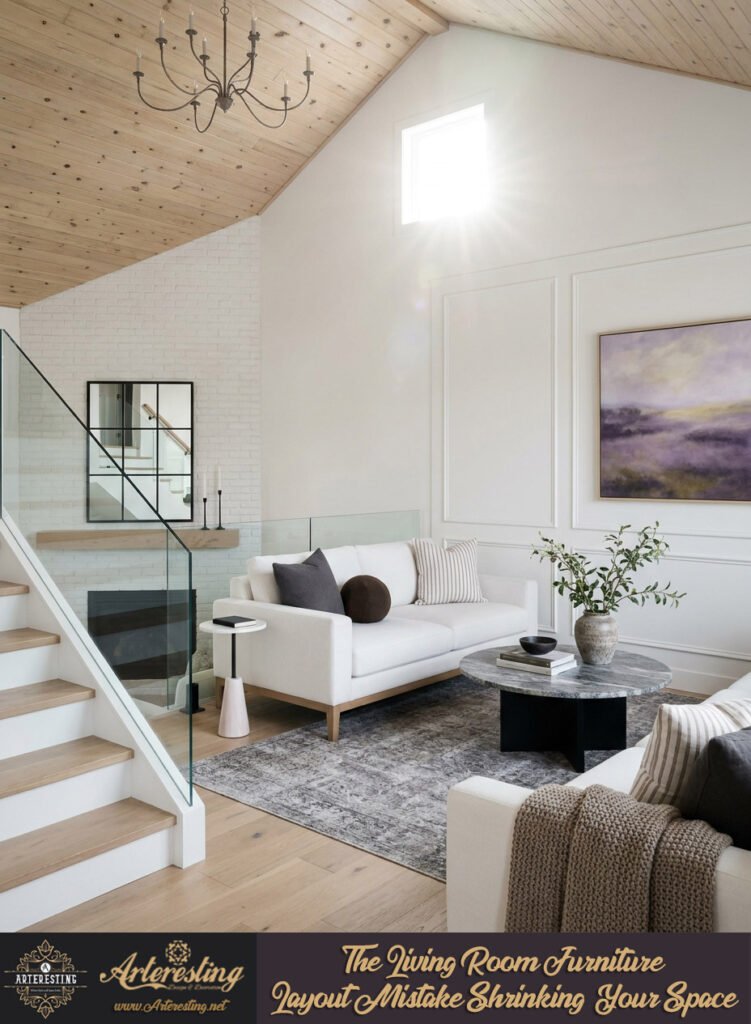
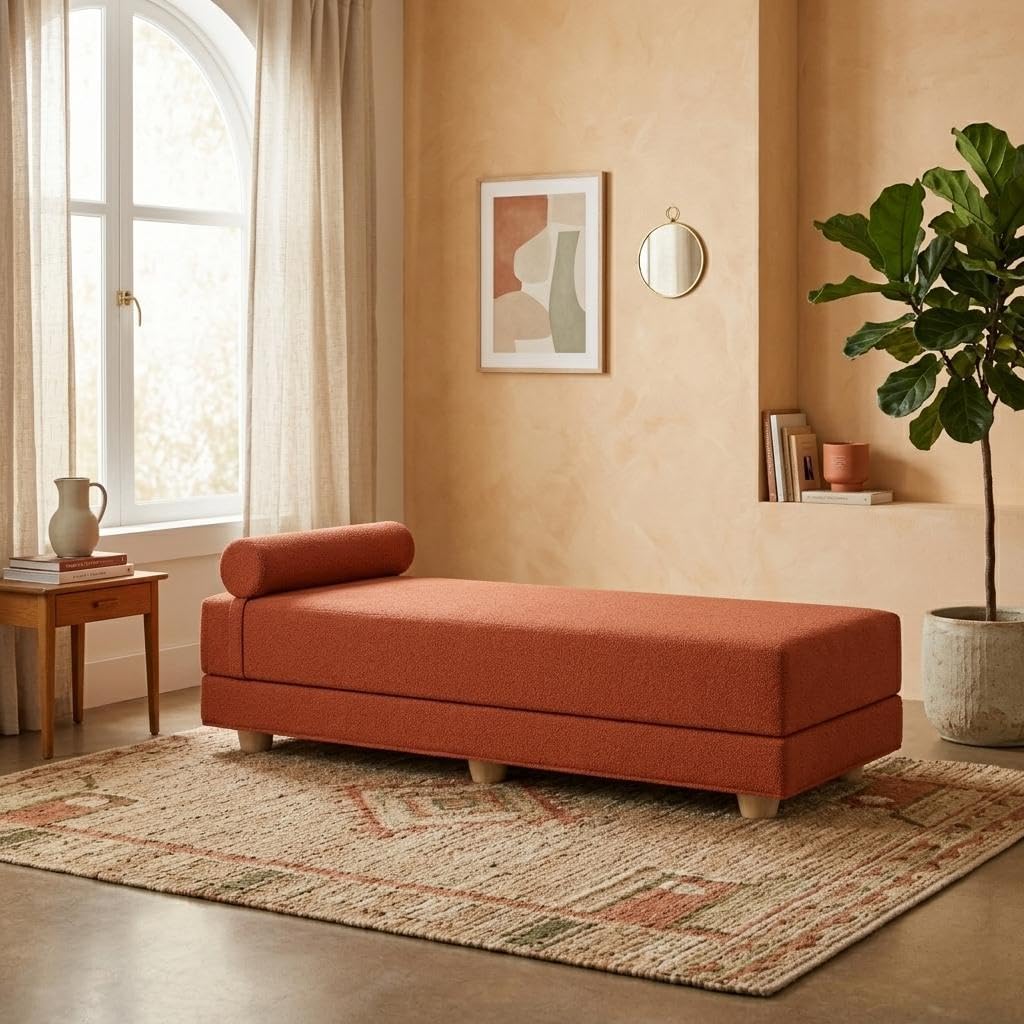
To correct this spatial error, leave a minimum gap of four inches between your seating and the perimeter drywall. For optimal architectural flow, establish a functional void of six to eighteen inches. Consequently, larger rooms should comfortably accommodate a full circulation walkway completely behind the primary sofa.
Determining the exact distance requires assessing your specific structural limitations. However, you must prioritize establishing the visual gap. Jennifer Wilson advises a strict minimum of four inches. This marginal shift dramatically alters how natural light falls behind the fabric.
Naturally, precise measurements depend entirely on your available square footage. Generous blueprints effortlessly support positioning the main sofa dead center. Conversely, tighter footprints require highly calculated restraint. Selena Reif defines the optimal median span precisely as six to eighteen inches.
Shop The Look


Therefore, you must acknowledge that minimal adjustments generate profound architectural relief. Ideally, you should establish a functional rear walkway. This dedicated circulation route provides necessary physical relief for the eye. Ultimately, this specific approach signals high-end intentionality rather than spatial restriction.
Every precise structural decision impacts your daily atmospheric experience. Pushing pieces outward might feel mathematically logical, but it severely restricts organic movement. By pulling seating inward, you manufacture essential structural depth. Furthermore, this deliberate realignment permanently prevents you from committing the most restrictive living room furniture layout mistake. Consequently, the interior feels perfectly balanced, highly functional, and visually expansive.

The most common living room furniture layout mistake is pushing all seating directly against the walls. This approach highlights the room’s perimeter boundaries and makes the floor plan feel rigid and cramped. Designers recommend floating your furniture by pulling pieces four to eighteen inches away from the wall to create natural circulation pathways, establish intimate conversational zones, and give the illusion of a significantly larger, more breathable space.