Table of Contents
Achieving visual cohesion requires precise execution, not just expensive furniture. Mastering fundamental home styling tricks bridges the gap between a furnished room and a resolved environment. Structural aesthetics demand intentional choices. Therefore, applying specific spatial rules instantly grounds your layout.
1. Apply Home Styling Tricks to Dress Your Windows
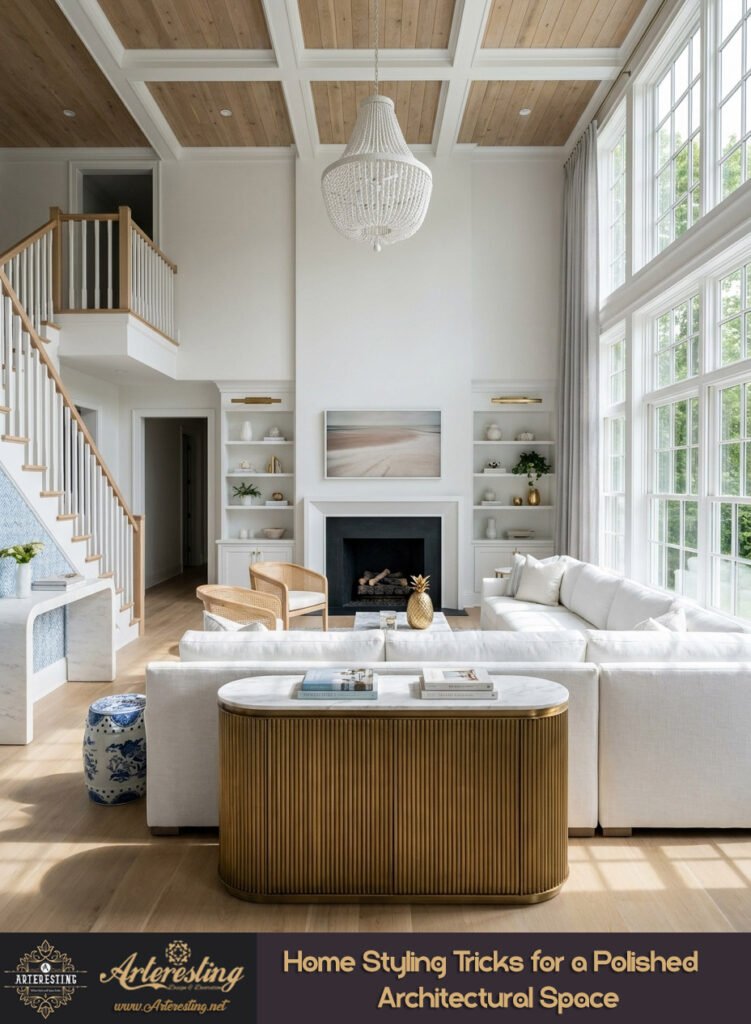
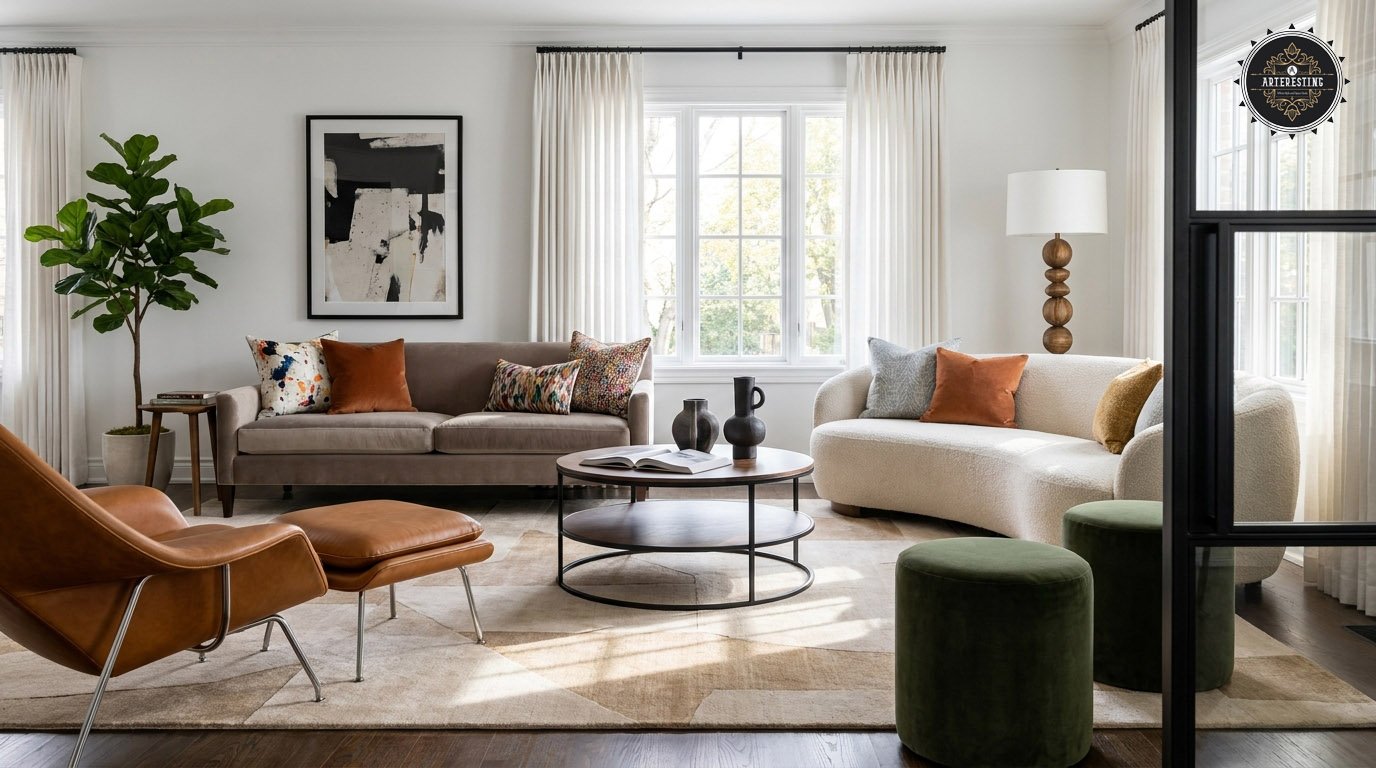
Bare window casings severely disrupt a room’s architectural integrity and visual temperature. Installing proper drapery introduces necessary vertical lines and essential textile softness. Specifically, mounting hardware high and wide physically expands the aperture, maximizing natural light penetration while firmly anchoring the room’s overarching structural proportions.
Curtains serve as architectural modifiers. Visually, they dictate the perceived height of your ceiling. Furthermore, custom window treatments frame the exterior view. They simultaneously mitigate harsh acoustic echoes. Designers prioritize stacking fabric flanking the glass rather than overlapping it. Consequently, this technique ensures the textile does not cannibalize crucial daylight. Roman shades offer crisp linearity for modern environments. Conversely, heavy blackout drapes introduce profound acoustic weight. Ultimately, any tailored textile application finalizes the room’s perimeter.

2. Cut the Clutter for Refined Home Decor
Visual chaos actively destroys spatial flow and architectural focus. Editing your possessions forces a room to breathe, directing the eye toward high-quality, intentional design elements. Crucially, removing superfluous filler allows meaningful, sculptural objects to anchor the space with undeniable presence and lasting character.
True structural refinement thrives in negative space. Therefore, an over-accessorized surface creates immediate visual fatigue. Specifically, less filler translates to heightened emotional resonance within the environment. Rotating your curated collections seasonally prevents static arrangements. Furthermore, this disciplined curation ensures every visible object justifies its footprint. Single, substantial items carry significant visual gravity. Ultimately, editing out the mundane exposes the inherent beauty of your fundamental furniture arrangement.

3. Mix and Match Textures Strategically
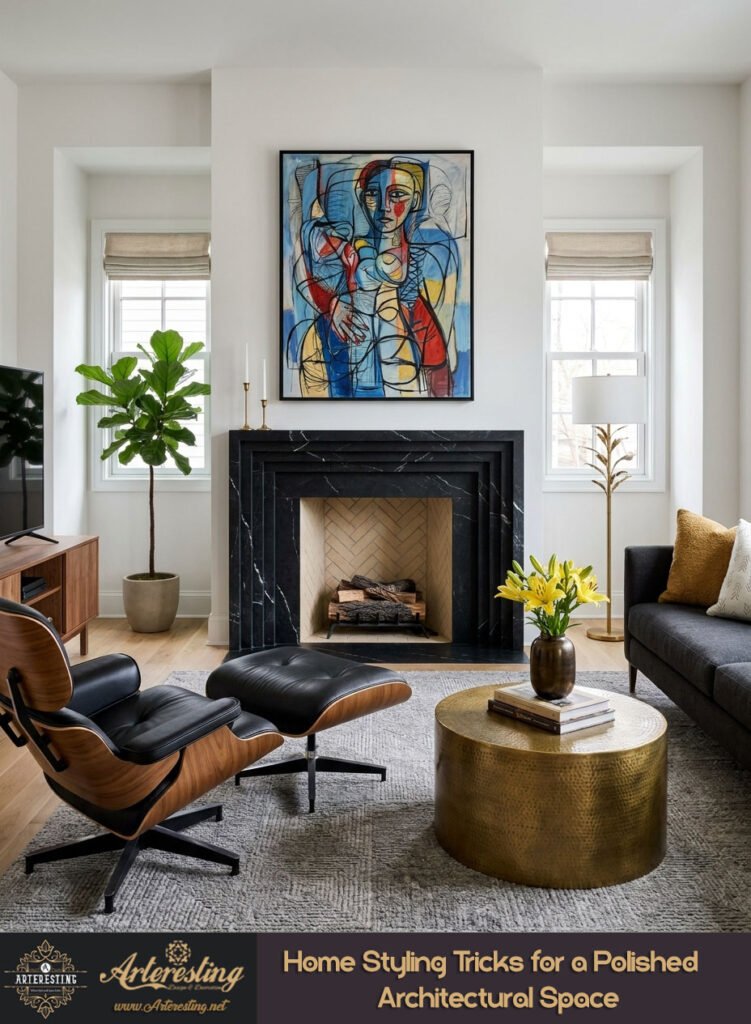
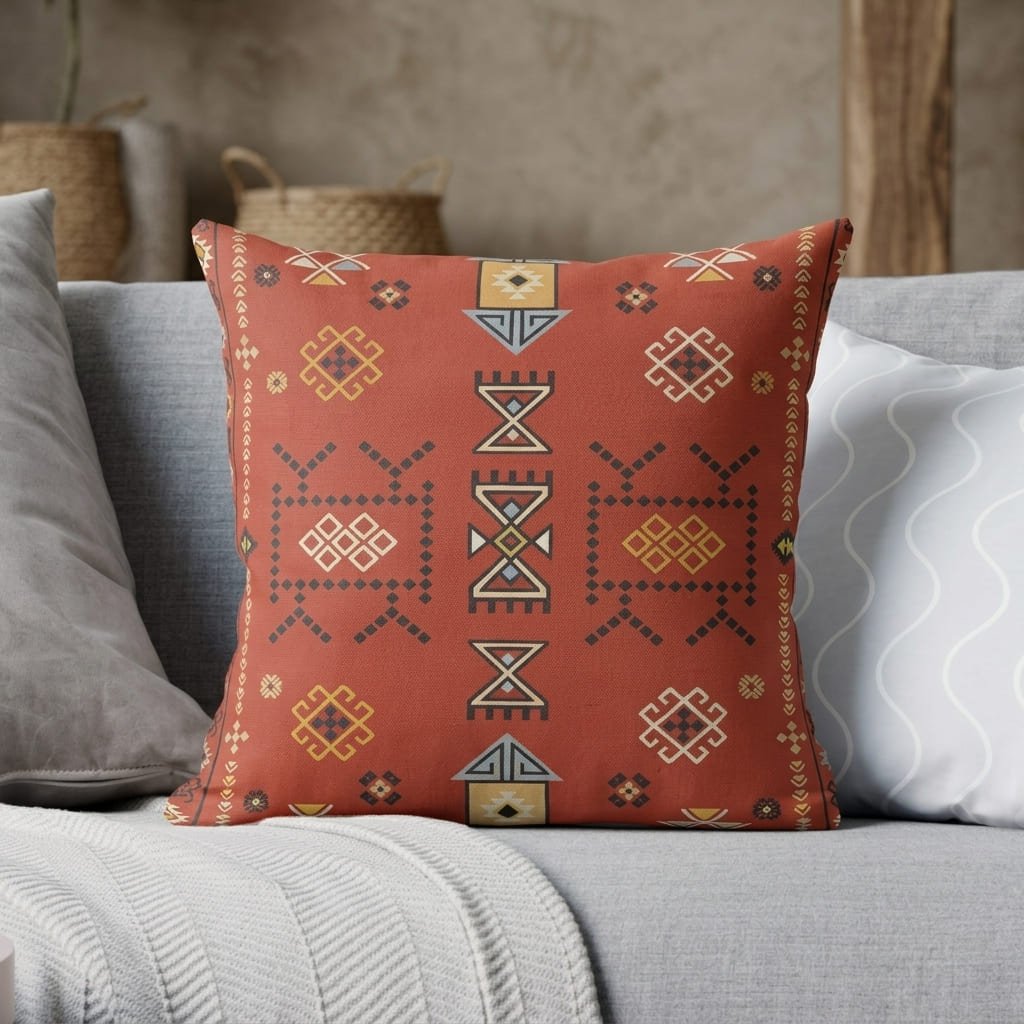
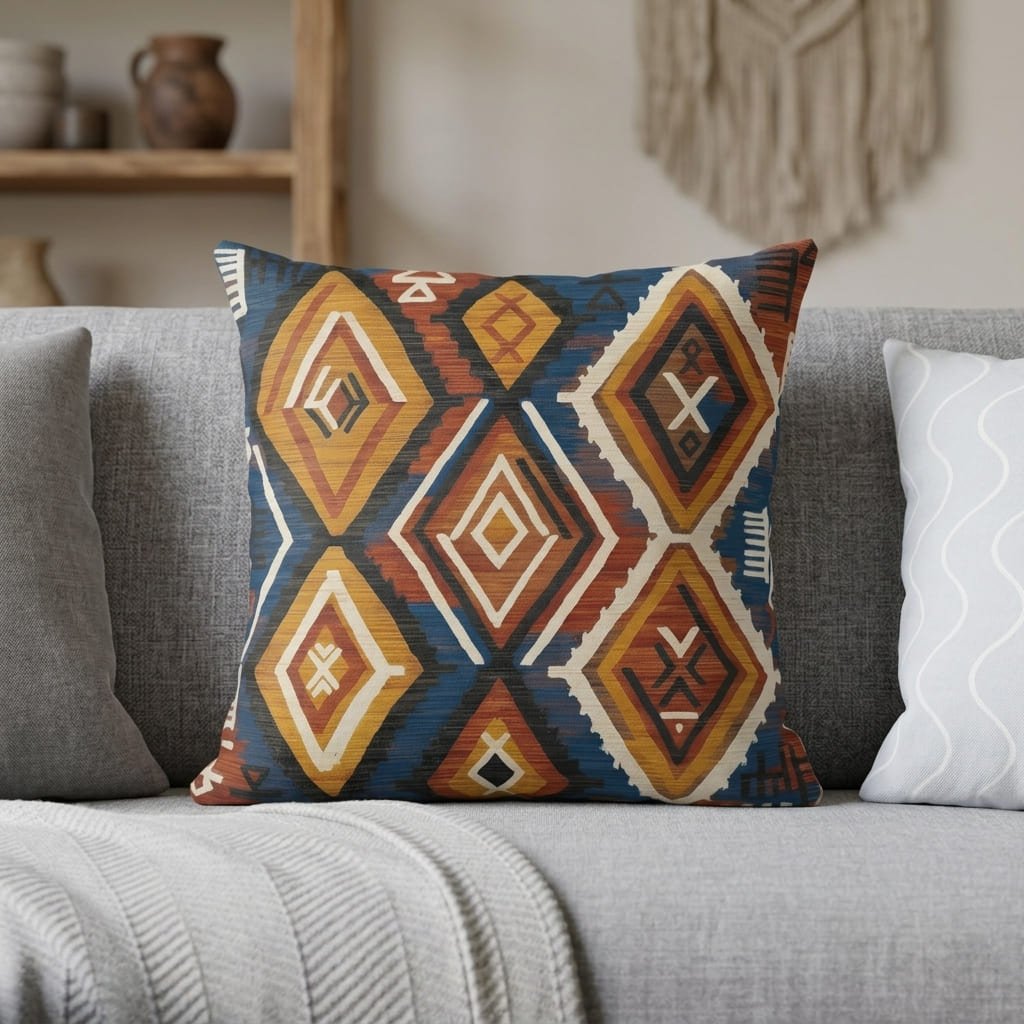
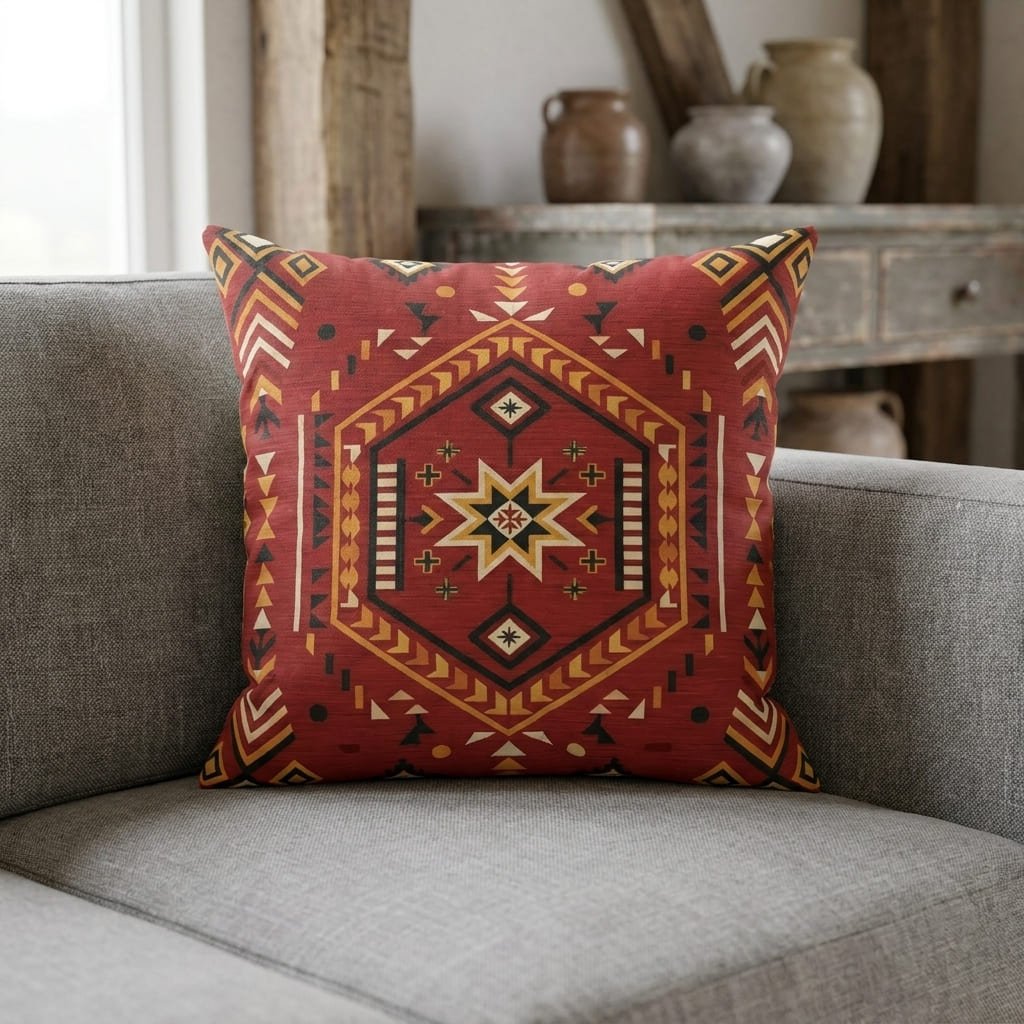
A flat, monolithic room lacks spatial psychology and physical engagement. Layering contrasting materials—such as raw linen against polished stone—generates vital friction and shadows. Consequently, this dynamic interplay of historic patinas and modern surfaces constructs a profoundly layered, sophisticated atmosphere that invites tactile exploration.
A monochromatic palette requires aggressive textural variance to survive. Visually, matte finishes absorb light while gloss surfaces reflect it. Weaving disparate fabrics throughout the footprint is one of the most reliable home styling tricks to break visual monotony. Furthermore, integrating vintage heirlooms alongside contemporary silhouettes establishes an immediate sense of history. Indeed, this contrast prevents a space from feeling like a sterile showroom. Consequently, the tension between old and new materials grounds the interior in authenticity.

4. Perfect Your Lighting Scheme with Interior Styling Tricks
Relying solely on overhead illumination aggressively flattens a room’s dimensional architecture. Implementing a tiered lighting strategy introduces essential ambient and accent layers. Specifically, positioning lower-level light sources creates intimate zones, casting intentional shadows that instantly warm the environment and drastically improve the room’s mood.
Overhead fixtures rarely flatter human features or interior textures. Therefore, transitioning to localized ambient sources fundamentally alters the room’s psychological impact. Furthermore, placing table lamps strategically draws the eye across the horizontal plane. Integrating candlelight introduces an organic, kinetic glow that standard bulbs cannot replicate. Consequently, disabling primary overheads in the evening forces the atmosphere to contract safely. Ultimately, this shift fosters a deeply restful, secure environment.

5. Upgrade Your Lampshades for Polished Interior Design
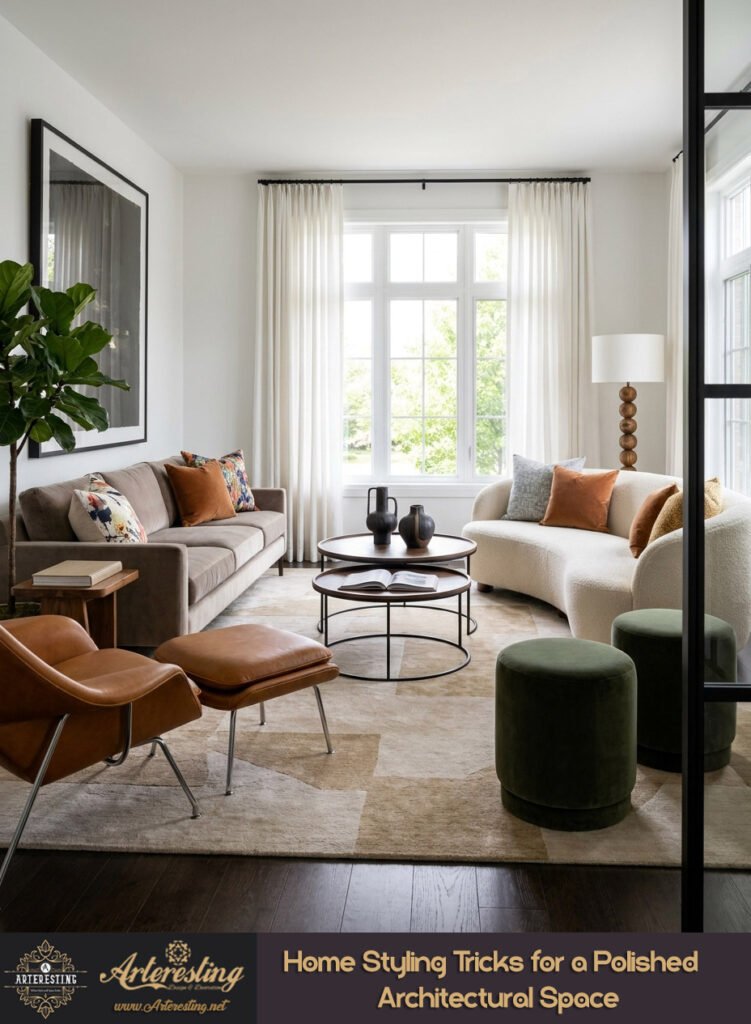
Standard white lampshades often read as an overlooked afterthought in a tailored layout. Swapping generic shades for custom, patterned, or textured alternatives injects immediate architectural interest. Consequently, this highly specific modification refines the fixture’s light diffusion while unifying the overarching color palette.
Details dictate the final caliber of any room. Visually, a hand-painted or pleated fabric shade acts as a secondary art piece. Furthermore, scalloped edges introduce a subtle, organic geometry that softens rigid furniture lines. Specifically, colored shades alter the physical temperature of the light cast into the room. This targeted swap demonstrates acute attention to micro-aesthetics. Therefore, replacing builder-grade elements firmly refines the entire spatial narrative.
Executing these home styling tricks requires discipline and strict spatial awareness. Consequently, addressing window treatments, lighting layers, and textile friction guarantees a resolved, intentional environment. Furthermore, editing your possessions ensures your architecture finally commands the attention it inherently deserves.
Executing professional home styling tricks requires a strategic approach to spatial balance and architectural flow. Essential methods include installing high-stacked drapery to elongate walls, curating functional decor to reduce visual clutter, and layering ambient lighting to establish atmosphere. Together, these techniques resolve unfinished spaces into cohesive, purposeful interiors.