Table of Contents
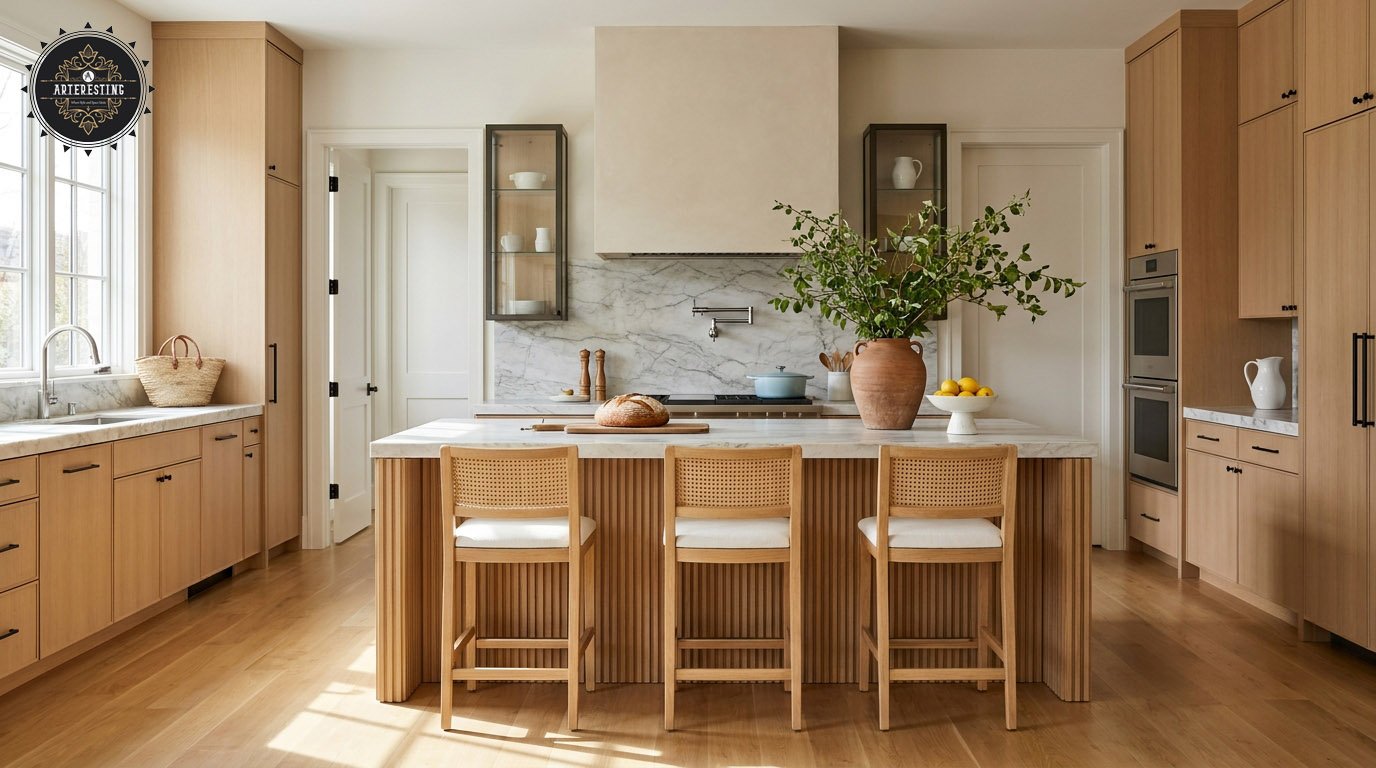
The fluted kitchen cabinets trend dominated luxury interior design circles for nearly a decade. However, high-end residential spaces are shifting toward entirely new expressions of texture. Understanding how this linear detail alters spatial psychology is essential before planning your next culinary renovation.
The Historical Origin of Vertical Grooves in Classical Architecture
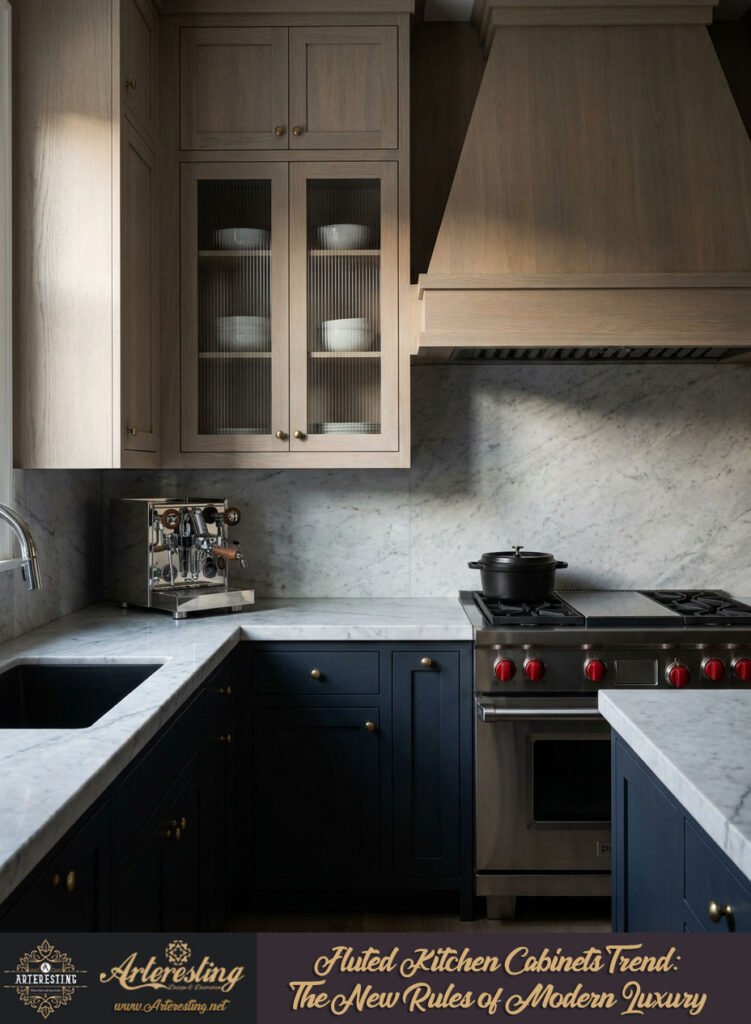
Vertical grooves originated in classical Greek architecture to prevent columns from appearing flat. This architectural detail evolved through the Renaissance and Art Deco eras. Consequently, its historical permanence ensures it transcends temporary modern style cycles when implemented with architectural intention.
Visually, classical architects carved shallow, concave channels into stone shafts to interact dynamically with daylight. This technique created a rhythmic movement of light and shadow. Therefore, modern millwork inherits a rich lineage that predates standard kitchen typography by centuries.

The Convergence of Warm Minimalism and Japandi Aesthetics
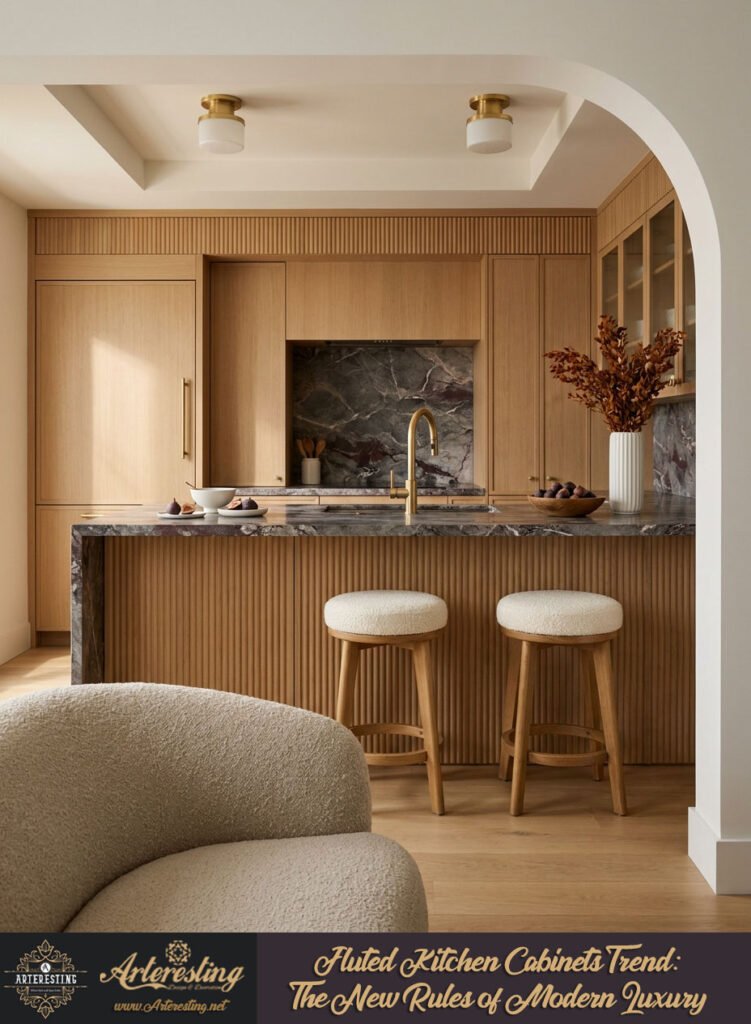
The revival of linear detailing aligned perfectly with the emergence of warm minimalism and Japandi design. Visually, these ridges provided essential tactile depth without introducing loud colors or heavy decorative hardware. Therefore, it became the ultimate tool for executing sophisticated, understated interiors.
Modern kitchens frequently require structural warmth to offset cold, flat surfaces. This specific profile offered an elegant solution for minimalist spaces. Specifically, it introduced geometric complexity while preserving a serene, monochromatic environment.
Democratizing Luxury: The fluted kitchen cabinets trend on a Budget
The fluted kitchen cabinets trend accelerated rapidly because manufacturers quickly replicated the custom look at accessible price points. Homeowners utilized this finish as an affordable shortcut to achieve high-end boutique hospitality styling. Ultimately, this accessibility transformed an exclusive architectural element into a mass-market favorite.
When custom joinery became accessible to a broader audience, the market experienced rapid acceleration. High-end boutique hotel aesthetics trickled down to production cabinet lines. Consequently, the look transformed from an artisanal statement into an easily replicated shortcut.
The Spatial Versatility of Fluted Cabinetry Design Beyond Kitchens
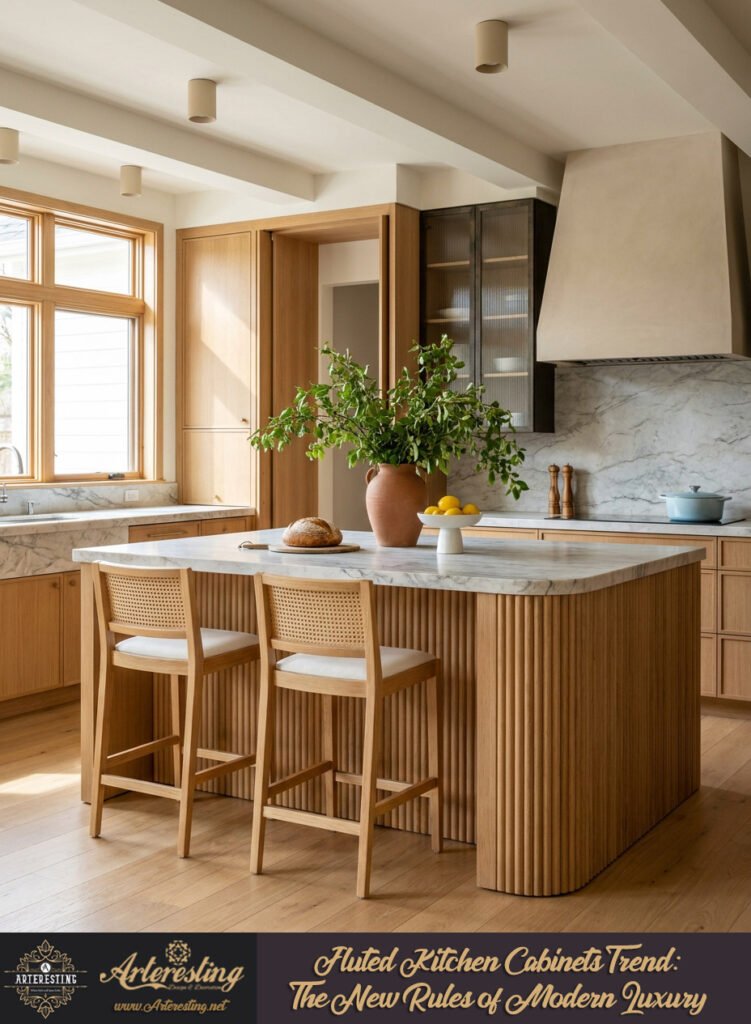
Linear milling quickly expanded past standard kitchen storage to encompass islands, pantry facades, range hoods, and custom coffee stations. This widespread adaptation proved its immense layout flexibility across diverse culinary zones. However, this fluid application across multiple surfaces ultimately contributed to its sudden visual overexposure.
Designers implemented these vertical lines across diverse household features. The detail wrapped around rounded kitchen islands and hid appliance garages seamlessly. Furthermore, this extreme adaptability encouraged homeowners to apply the pattern excessively throughout open-concept living spaces.

The Ubiquity Saturation Point: From Bespoke Craft to Design Shortcut
Saturation occurs when a deliberate architectural choice becomes a generic manufacturing default. Specifically, the fluted kitchen cabinets trend followed the path of shiplap and chevron tiles. Overexposure across mass-market furniture and tile design ultimately diluted its original sense of fine craftsmanship.
Specifically, the widespread replication of this look shifted the fluted kitchen cabinets trend from an architectural marvel into a standard commercial default. When a subtle finish appears in every speculative renovation, its unique character vanishes. As a result, forward-thinking designers now seek alternative methods to showcase fine craftsmanship.
The Risk of Temporal Stamping: How the fluted kitchen cabinets trend dates a Space
Relying heavily on a hyper-specific trend inherently dates an interior to a precise era. Designers note that the fluted kitchen cabinets trend peaked around the mid-2020s. Consequently, unconsidered installations risk making a contemporary home feel instantly tied to a passing design moment.
An interior loses its timeless appeal when it relies too heavily on an era-specific motif. This linear texture carries a distinct timestamp from the early to mid-2020s. Therefore, over-indexing on this single detail compromises the long-term aesthetic capital of a property.
Spatial Compression and Visual Clutter in Vertical Groove Kitchen Cabinets
Excessive repetition of linear patterns removes necessary visual resting points within a room. In smaller layouts, this intense texture causes immediate spatial compression. Furthermore, in open-concept floor plans, full-height vertical groove kitchen cabinets create aggressive focal points that actively compete with surrounding living areas.
Human eyes require neutral surfaces to rest comfortably within an interior. When every panel features dense ribbing, the room feels visually crowded. Crucially, pairing this busy texture with heavily veined marble or prominent light fixtures creates intense environmental chaos.

The Maintenance Reality: Upkeep Challenges of Fluted Millwork Kitchen Profiles
Culinary environments naturally generate persistent layers of grease, dust, and cooking residue. Unfortunately, a deeply channeled fluted millwork kitchen requires extensive daily maintenance compared to smooth surfaces. While these deep grooves look spectacular in professional photography, they present intense cleaning challenges over time.
Real-world usage quickly reveals the structural disadvantages of multi-grooved surfaces. Airborne cooking oils settle deep inside each concave recess. Consequently, maintaining a pristine appearance becomes a labor-intensive chore that frustrates homeowners.
Long-Term Adaptability: Structural Constraints of Refinishing Grooved Millwork
Modifying highly textured millwork presents severe structural difficulties during future renovations. Unlike flat-panel doors, grooved surfaces are exceptionally difficult to sand, repaint, or successfully refinish. Therefore, choosing this permanent profile significantly restricts your ability to evolve the space as aesthetic preferences shift.
A timeless kitchen must adapt effortlessly to changing personal styles over a decade. Flat panels accommodate paint alterations easily. Conversely, complex linear profiles resist simple modifications, forcing an expensive replacement when your style evolves.

Transcendence Through Permanence: The Historical Argument for Fluting
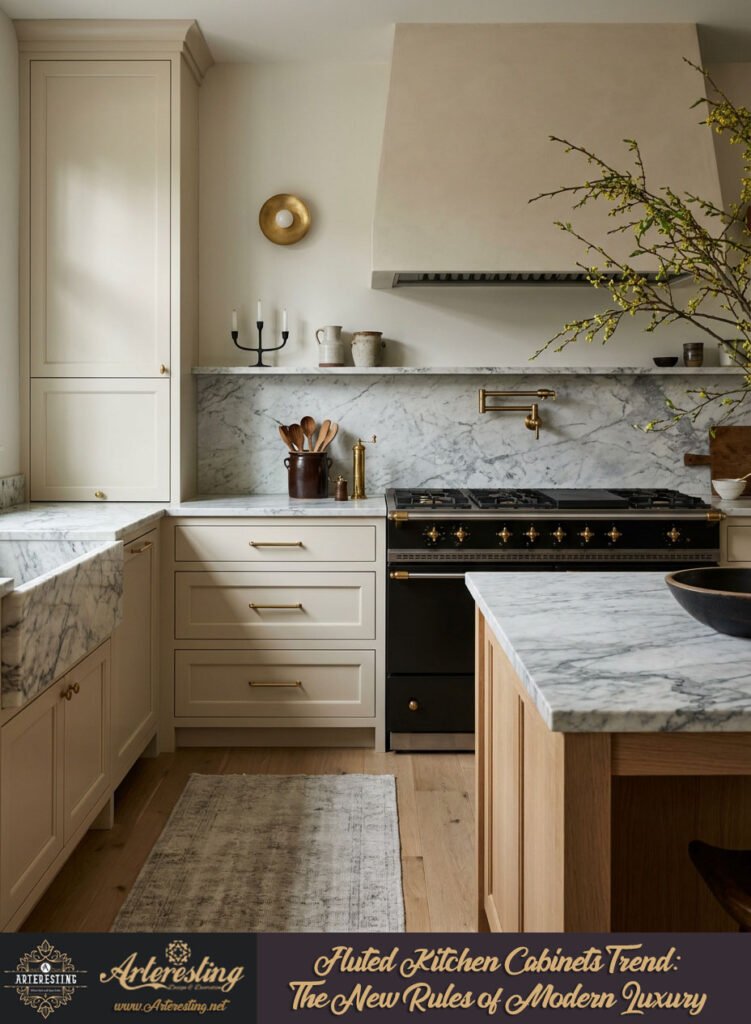
Designers argue that authentic fluting transcends fleeting market cycles due to its centuries-old heritage. When used as a deliberate nod to classical millwork, it retains a sense of permanence. Thus, it represents an enduring architectural language rather than a temporary decorative novelty.
Authentic architectural features rarely disappear entirely from the design lexicon. Because these clean lines echo classical columns, they possess inherent structural integrity. The secret lies in treating the detail as fine carpentry rather than a fad.
Softening Architectural Sterility: The Micro-Rhythm of Light and Shadow
Modern kitchens often feel sterile due to expansive sheets of stone, metal, and glass. Visually, continuous linear channels introduce a rhythmic interplay of light and shadow that generates organic warmth. This tactile depth beautifully softens hard planes without requiring busy patterns.
Culinary spaces naturally feature dense clusters of hard, reflective surfaces. Incorporating linear shadows breaks up these harsh reflections effortlessly. Visually, this creates a soft, layered environment that feels deeply sophisticated and physically inviting.

The Curated Accent Strategy: Designing a Balanced Fluted Millwork Kitchen
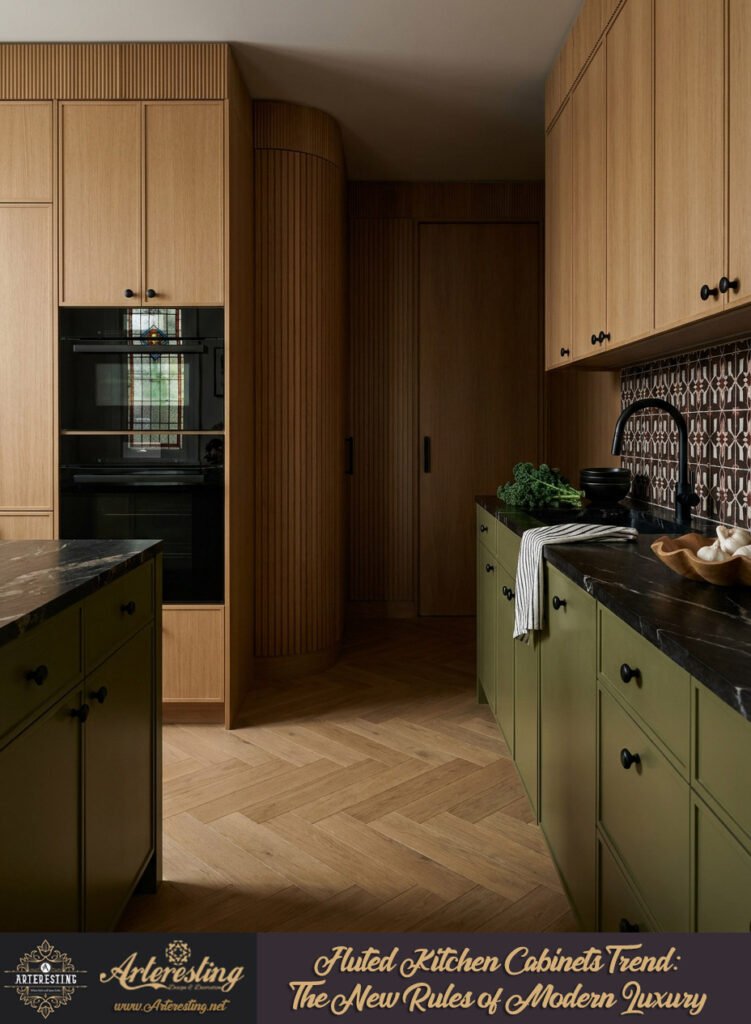
Implementing three-dimensional grooves as a targeted accent ensures structural longevity. Restricting the texture to a single kitchen island, a drinks station, or a dedicated pantry creates an intentional anchor. Crucially, this balanced configuration allows a fluted millwork kitchen to remain elegant without overwhelming the eyes.
Solitary focal points create successful rooms. By isolating the textured surface to a specific zone, the remaining cabinetry functions quietly. Visually, this sharp contrast highlights the craftsmanship while maintaining excellent environmental balance.
The Shift Toward Quiet Luxury: Emerging Cabinetry Alternatives for 2026
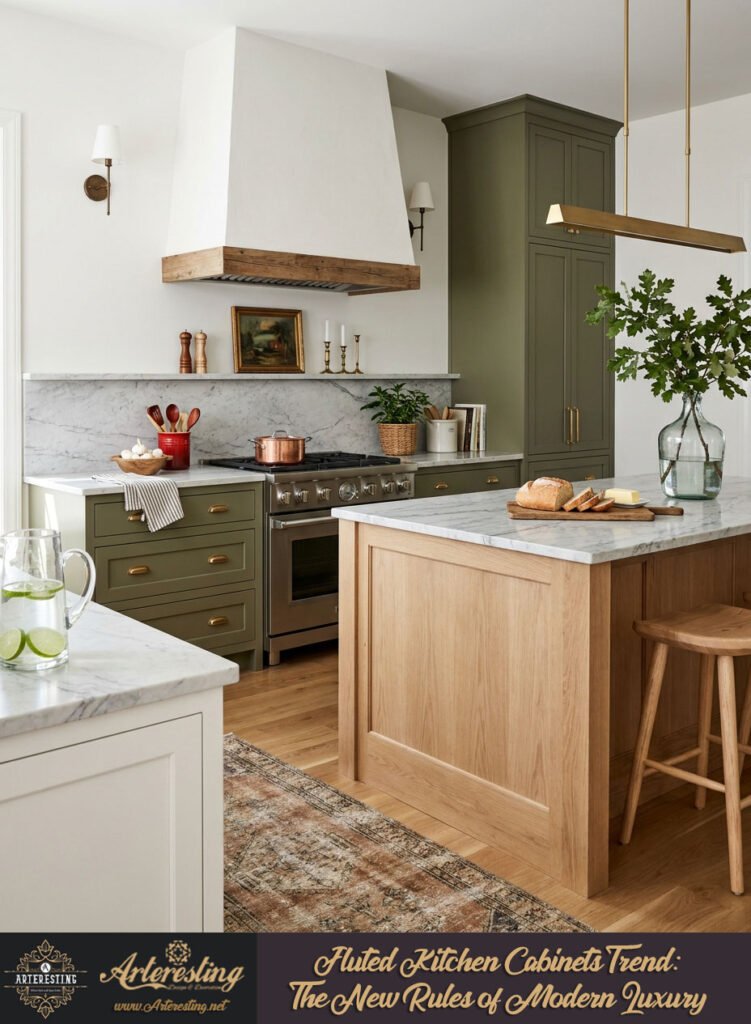
Modern luxury in 2026 demands a quieter approach focused on authentic materials and integrated details. Designers are heavily favoring softly stained wood grains, ultra-thin Shaker profiles, and delicate beaded edges. These sophisticated alternatives deliver exceptional tactile depth while ensuring timeless architectural endurance.
Instead of overt decorative gestures, current design movements prioritize raw materiality. Designers use natural wood grains and integrated hardware to establish rich dimensions. Specifically, flat panels featuring a micro-beaded edge provide shadow lines without the overwhelming upkeep of deep grooves.
Ultimately, navigating the fluted kitchen cabinets trend in 2026 requires strict restraint. By treating texture as a deliberate architectural accent rather than a default surface covering, your culinary space will maintain its integrity for decades to come.

The fluted kitchen cabinets trend is shifting from full-room installations to highly curated accent placements. While all-over vertical grooves can create maintenance challenges and visual clutter, targeted application on islands or pantries preserves their classical architectural integrity. For 2026, designers favor quieter alternatives like micro-shaker profiles and rich, natural wood grains.