Table of Contents
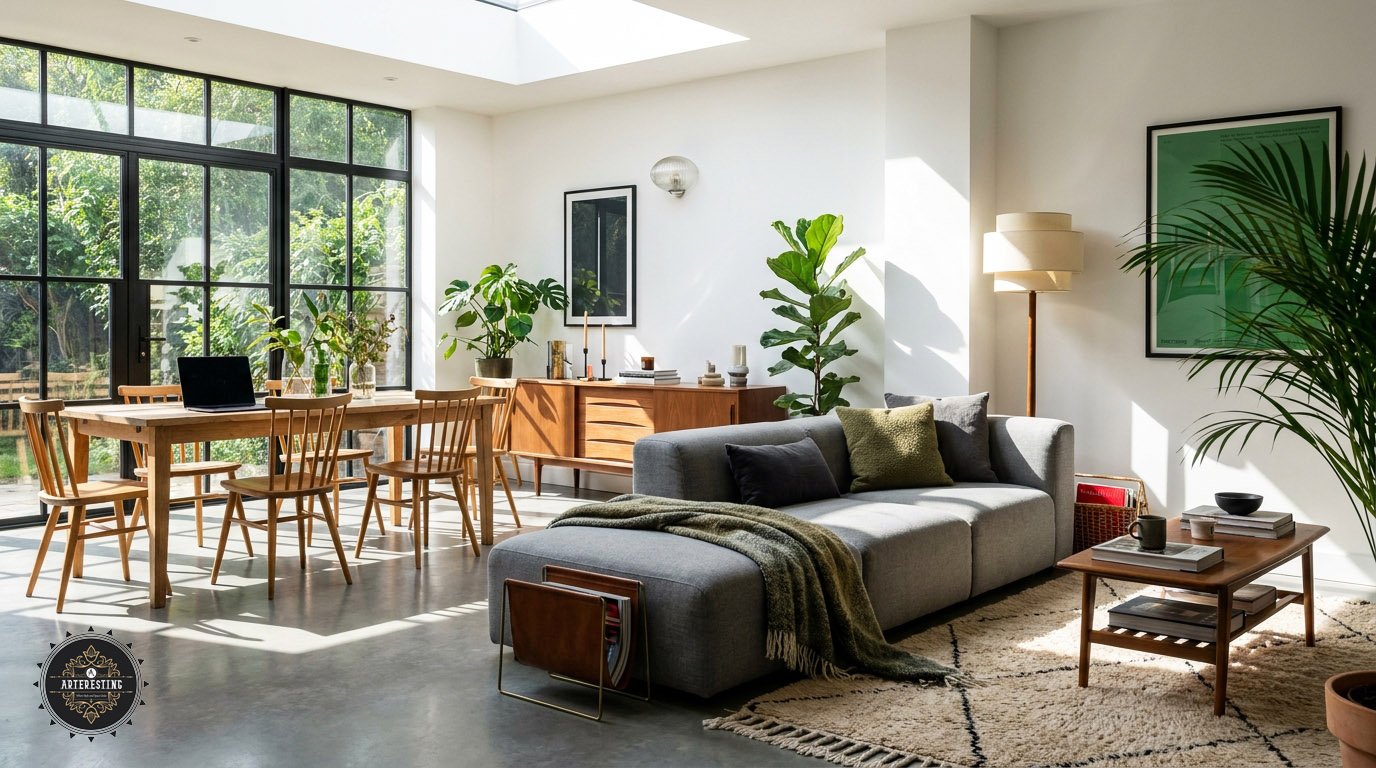
Achieving expensive home interiors requires architectural precision, not necessarily an unlimited budget. High-end design focuses on deliberate spatial choices. Ultimately, every room requires a strict balance of scale, lighting, and materiality. This guide translates professional styling principles into actionable architectural strategies.
1. Splurge Wisely on Key Anchors
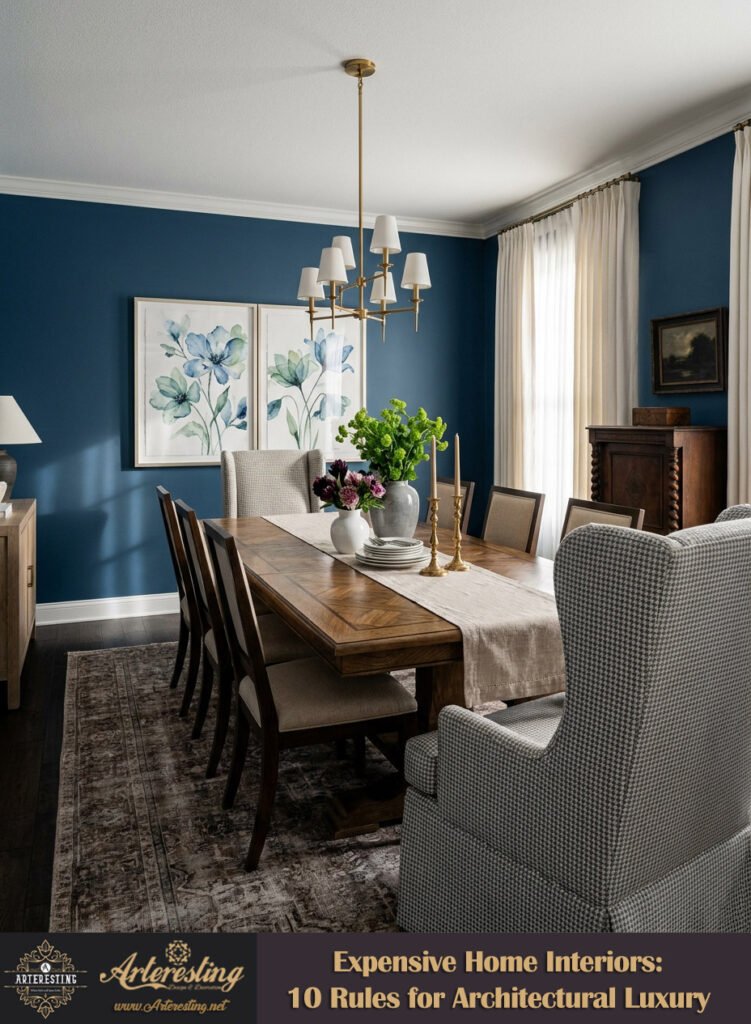
Allocating your budget toward specific, high-impact furniture pieces instantly anchors a room. Custom seating or antique centerpieces establish an authoritative design language, allowing secondary pieces to support the primary visual investment quietly.
Specifically, targeted investments transform the perception of the entire room. Furthermore, designer Tara Felice Engelberg emphasizes focusing on high-traffic contact points, such as dining room head chairs. Consequently, these premium items project quality outward. Therefore, you do not need to replace every item. Instead, secure one architectural gem. Visually, this strategy balances the budget while maintaining a curated, bespoke atmosphere.
2. Create an Architectural Focal Point for Premium Interior Design
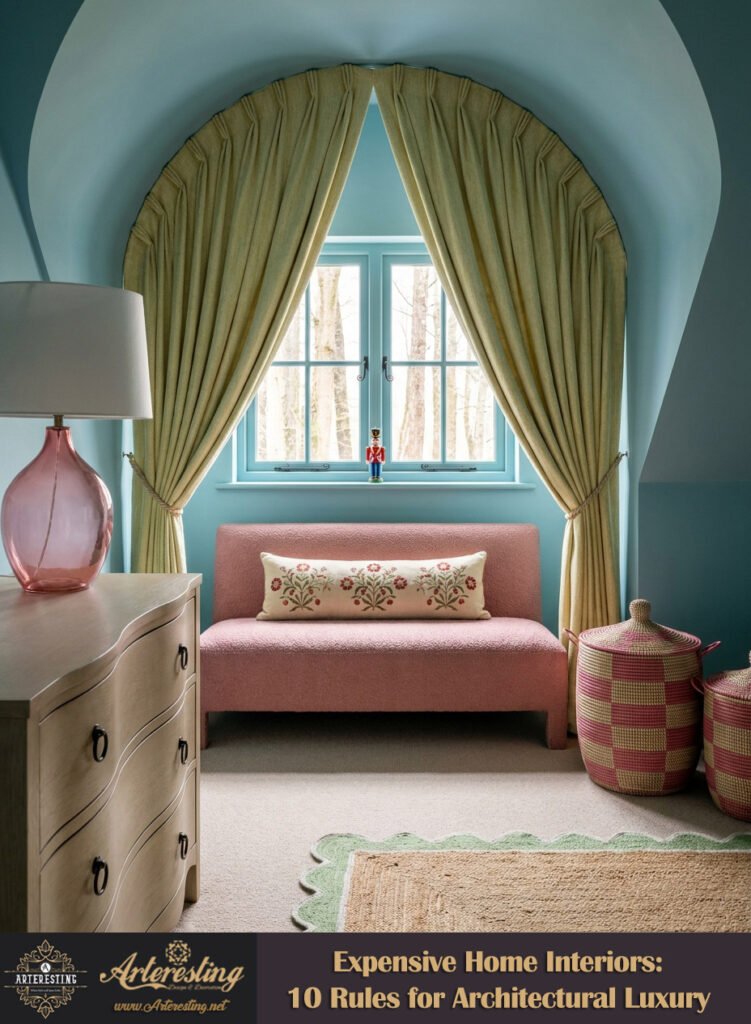
Establishing a singular focal point directs the eye and defines the room’s spatial hierarchy. By concentrating visual weight on a single architectural feature, such as an arched window or a fireplace, the surrounding space feels intentionally curated and deeply resolved.
Jeanne Barber of Camden Grace Interiors applies event styling logic to permanent spaces. Specifically, she advises concentrating visual impact rather than scattering it. For instance, highlighting a unique window demands immediate attention. Consequently, the remaining elements recede gracefully, reducing visual clutter. Therefore, you must identify your room’s natural anchor. Ultimately, investing resources into this single zone establishes unquestionable structural authority.
3. Highlight Statement Greenery for Organic Scale
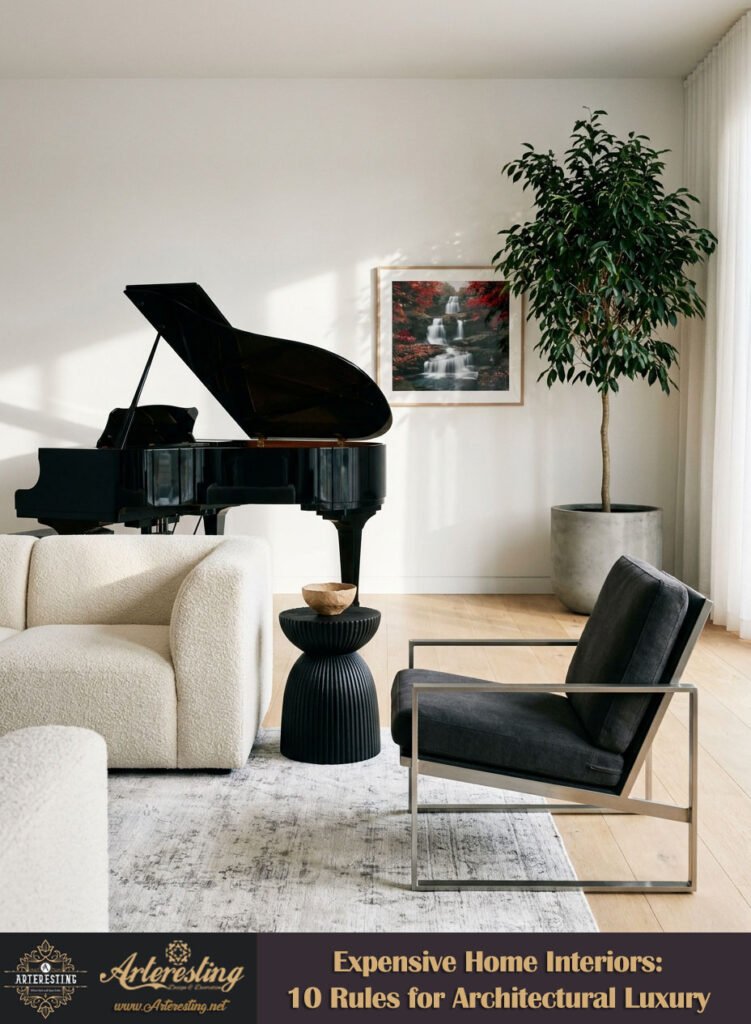
Integrating large-scale greenery introduces organic geometry and verticality to static rooms. Tall, structural plants manipulate the line of sight, forcing the eye upward and expanding the perceived volume of the interior space.
Designer Linda Hayslett advocates for bringing structural outdoors inside. Furthermore, interior landscaping adds immediate vitality. Specifically, placing a tall tree in an artisanal pot creates vertical interest. Consequently, this disrupts rigid architectural lines with natural fluidity. Therefore, you easily shift the room’s dimensional perception. Visually, statement plants offer high impact with minimal financial exposure.

4. Hang Statement Lighting to Define Expensive Home Interiors
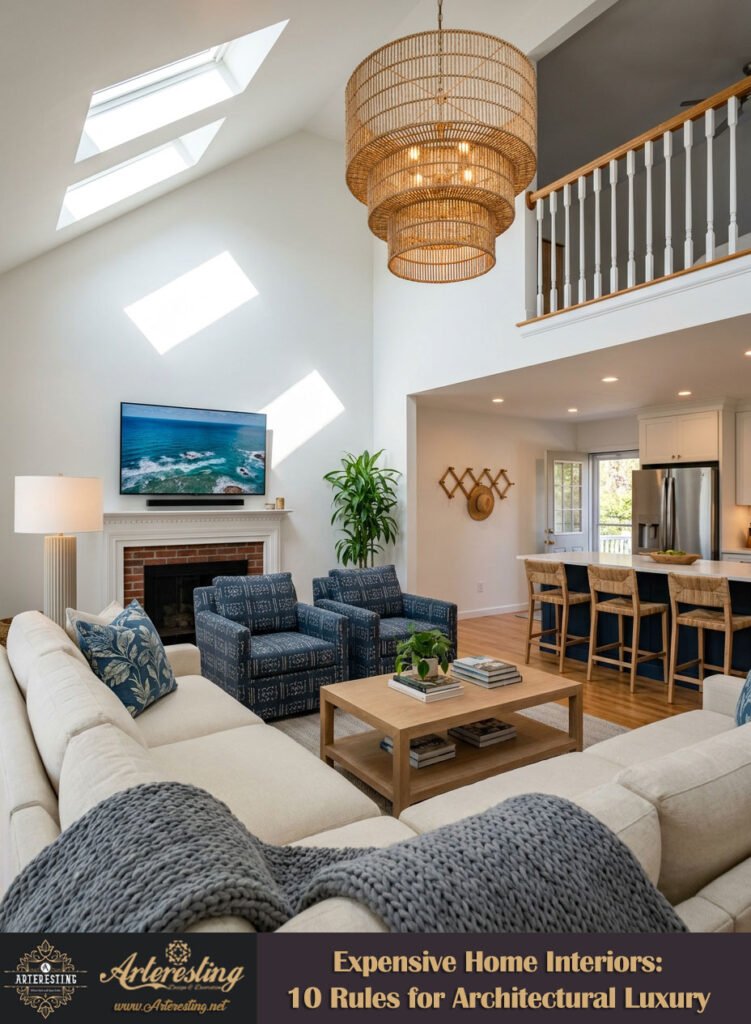
Sculptural lighting fixtures act as suspended art, dictating the mood and spatial volume of a room. Replacing builder-grade lighting with dramatic chandeliers or modernist floor lamps immediately introduces sophistication and structural contrast.
Sarah Waldo of Washashore Home notes that lighting dramatically shifts spatial perception. Specifically, fixtures provide both functional illumination and sculptural weight. Moreover, a striking chandelier commands the ceiling plane. Meanwhile, a sleek floor lamp anchors a dark corner. Therefore, lighting serves as the ultimate atmospheric tool. Ultimately, upgrading your fixtures ensures immediate, undeniable architectural impact.
5. Showcase Meaningful Art Collections
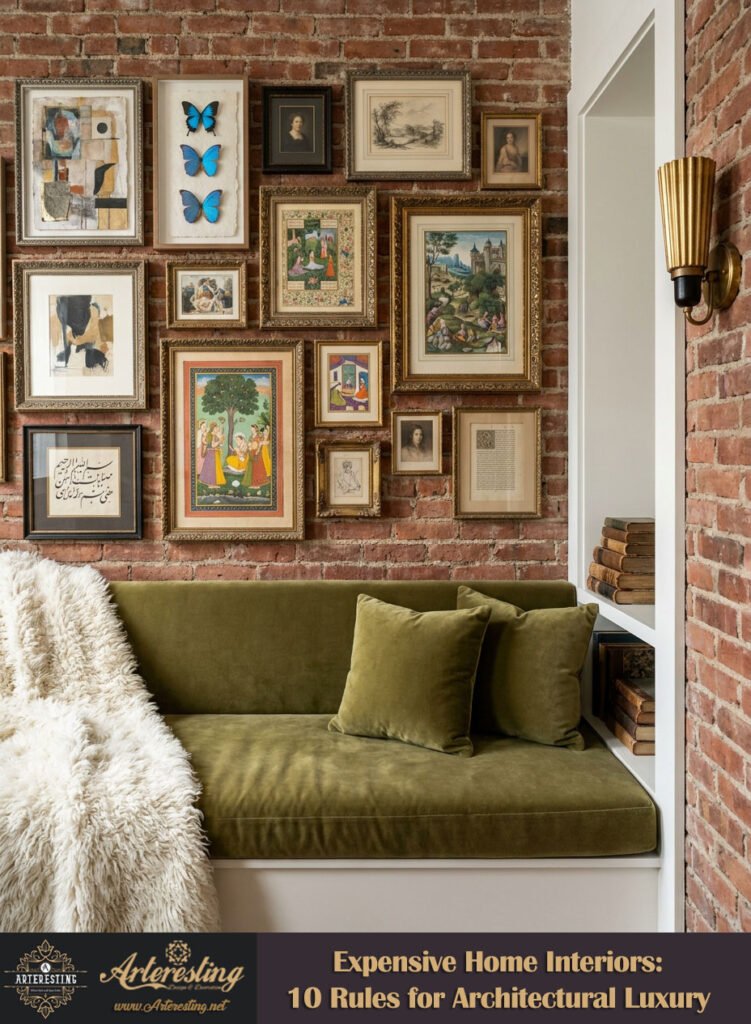
Curating art based on personal narrative rather than matched colors creates authentic, gallery-level sophistication. Professional framing transforms unexpected items—like jewelry or manuscript pages—into highly valuable, bespoke visual assets that command attention.
Molly Torres Portnof of DATE Interiors prioritizes meaning over mere decoration. Furthermore, authentic collections communicate distinct personality. Specifically, framing unusual artifacts introduces unexpected intellectual depth. Consequently, proper framing acts as the great equalizer. Therefore, invest heavily in custom matting and high-quality frames. Visually, this approach turns personal history into authoritative architectural features.
6. Lean Into Rich Textures for Elevated Home Decor
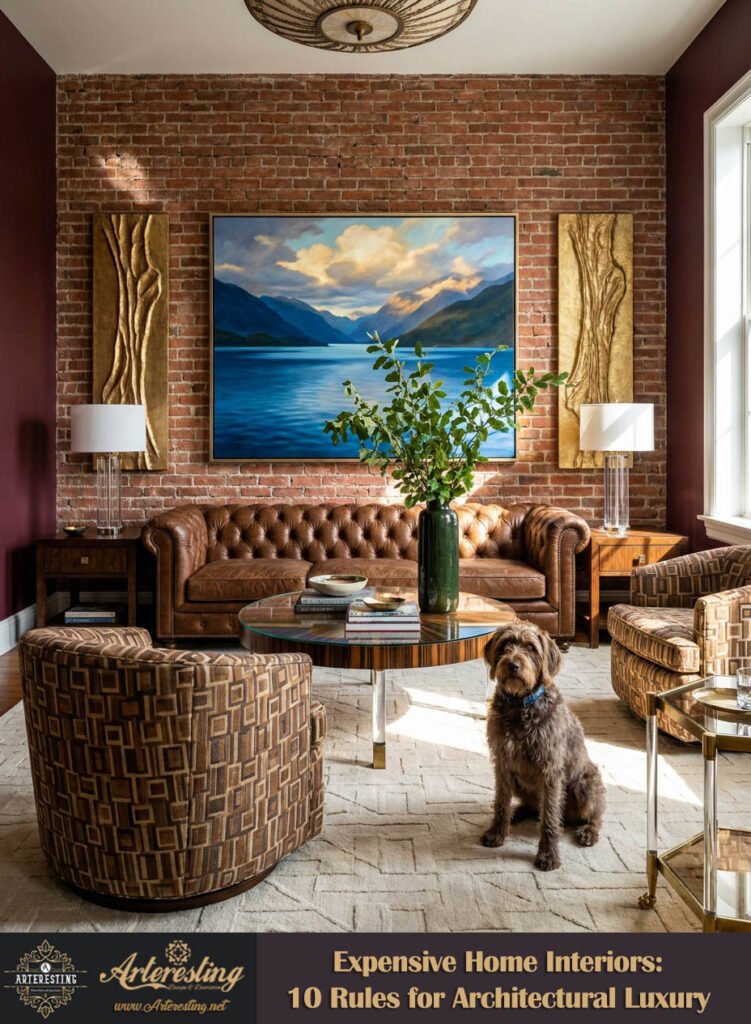
Layering diverse, tactile materials creates shadow, depth, and spatial character. Contrasting surfaces like raw brick, supple leather, and lacquered wood prevent a room from feeling flat, introducing a multi-sensory experience essential for high-end design.
Designer Lorna Gross insists on the power of layered materiality. Specifically, rich textures generate necessary visual friction. For example, pairing a smooth lacquered table against coarse masonry creates immediate intrigue. Furthermore, each distinct surface reflects light differently. Consequently, the room gains immense three-dimensional complexity. Therefore, you must deliberately contrast smooth, rough, matte, and glossy finishes.
7. Incorporate Custom Window Treatments
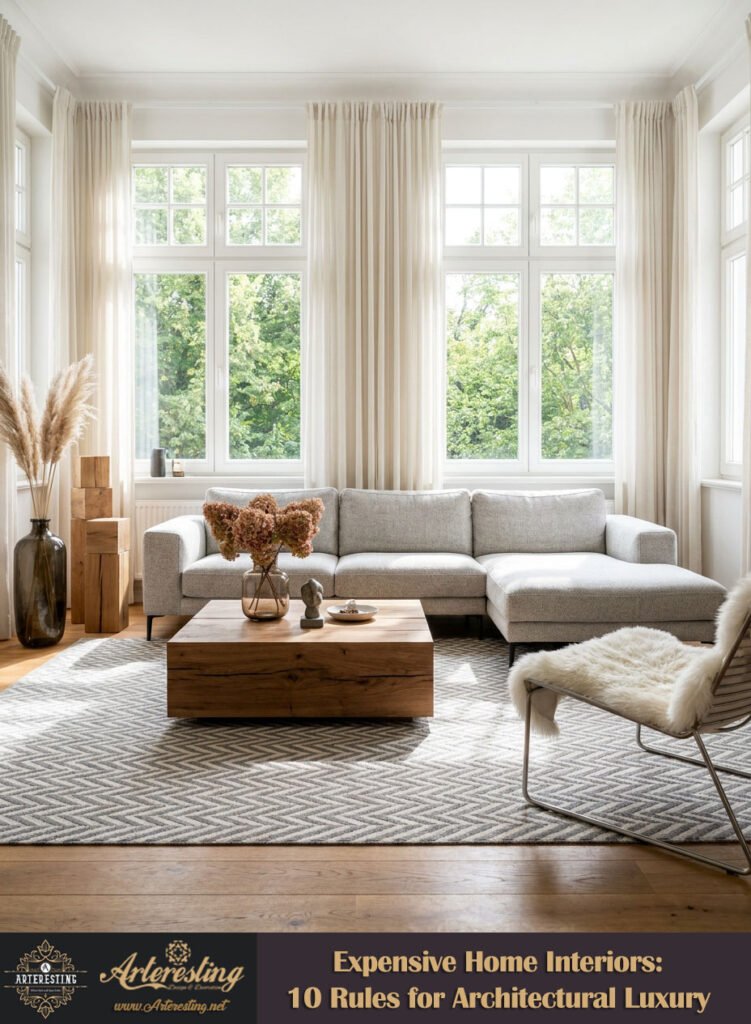
Custom drapery mounted high and wide manipulates architectural proportions, making ceilings appear taller and windows wider. This structural illusion, achieved through heavy pleating and tailored fabrics, immediately injects monumental elegance into any space.
Tara Felice Engelberg identifies drapery as a non-negotiable investment. Specifically, mounting hardware above the window trim forces the eye upward. Furthermore, extending the rod width creates an expansive illusion. Consequently, the entire wall feels substantial. Therefore, allocate funds to precise tailoring rather than ultra-expensive fabrics. Visually, a moderately priced, heavily pleated linen delivers immense structural luxury.
8. Play with Pattern and Texture
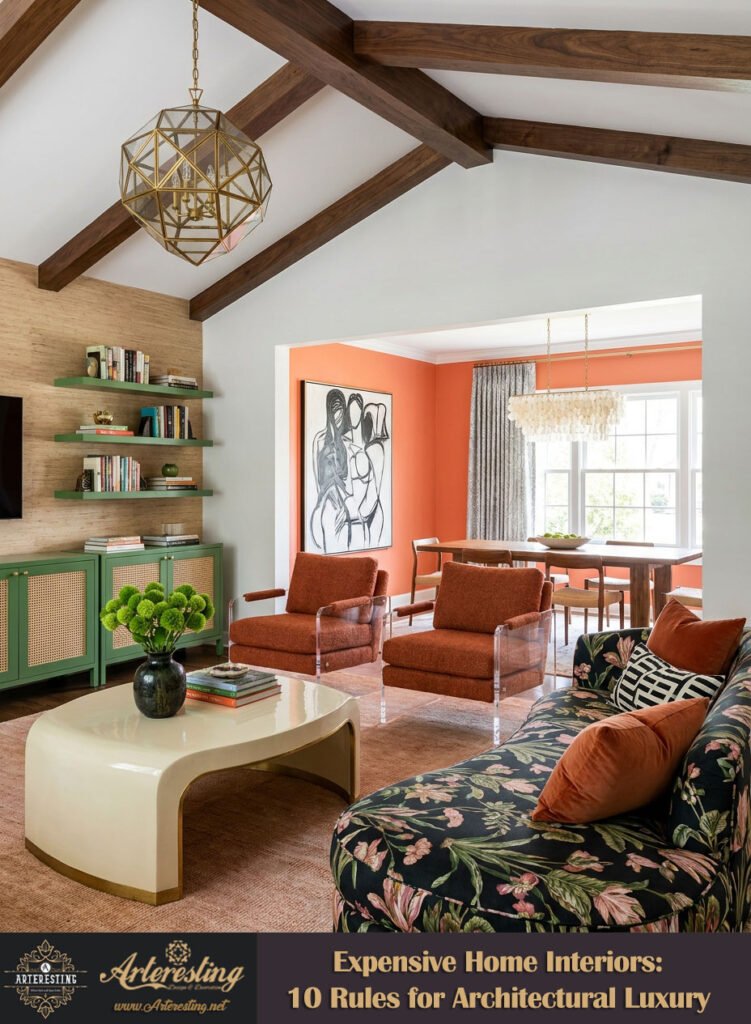
Intersecting bold patterns with varied textures breaks visual monotony and introduces curated tension. Mixing vintage textiles with contemporary graphics ensures the space feels collected over time rather than purchased from a single showroom.
Nina Grauer of Dekay & Tate Interiors champions this dynamic approach. Specifically, strategic pattern mixing prevents spaces from looking sterile. Furthermore, integrating vintage elements alongside modern pieces generates authentic character. Consequently, the room achieves a lived-in, highly bespoke atmosphere. Therefore, you should experiment with contrasting scales of patterns. Ultimately, this friction creates true visual magnetism.
9. Emphasize Spatial Scale in Expensive Home Interiors
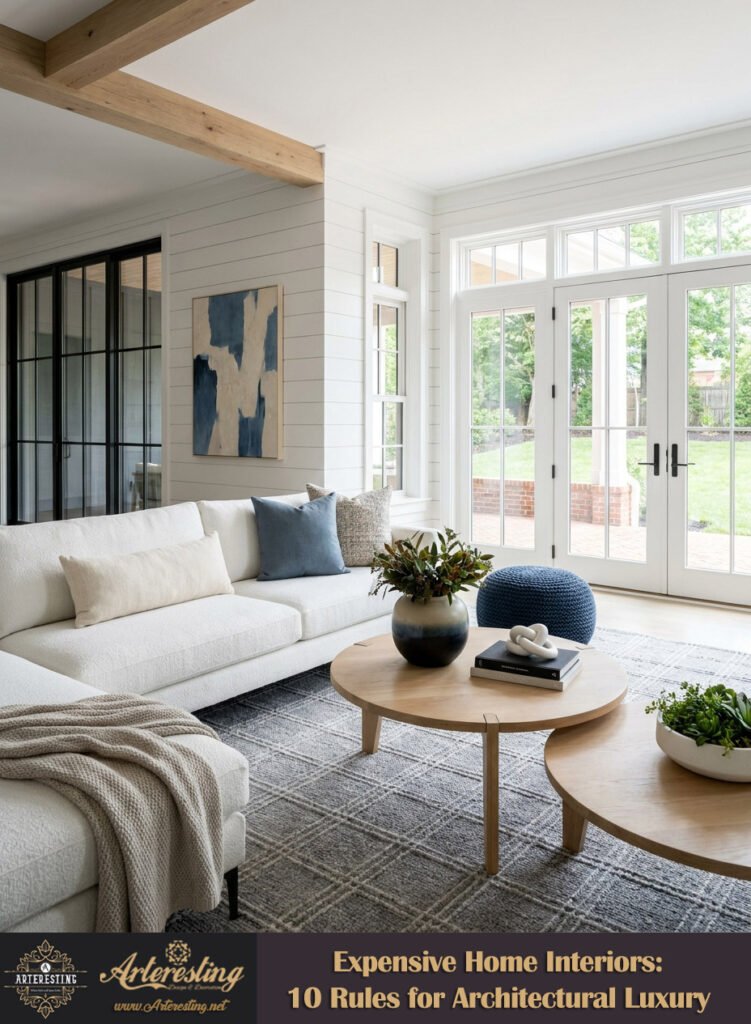
Correctly proportioned furniture ensures spatial harmony and dictates how a room functions. Selecting pieces that match the room’s volume prevents the environment from feeling either oppressively cramped or awkwardly vacant, establishing a subconscious sense of order.
Karen Wolf of K+Co. Living highlights scale as a foundational design metric. Specifically, disproportionate furniture ruins otherwise beautiful rooms. Furthermore, oversized pieces suffocate the floor plan. Conversely, undersized items float aimlessly. Therefore, you must measure your volumetric space rigorously. Visually, precise scaling ensures flawless traffic flow and undeniable harmony.
10. Pick Complementary Hardware Finishes
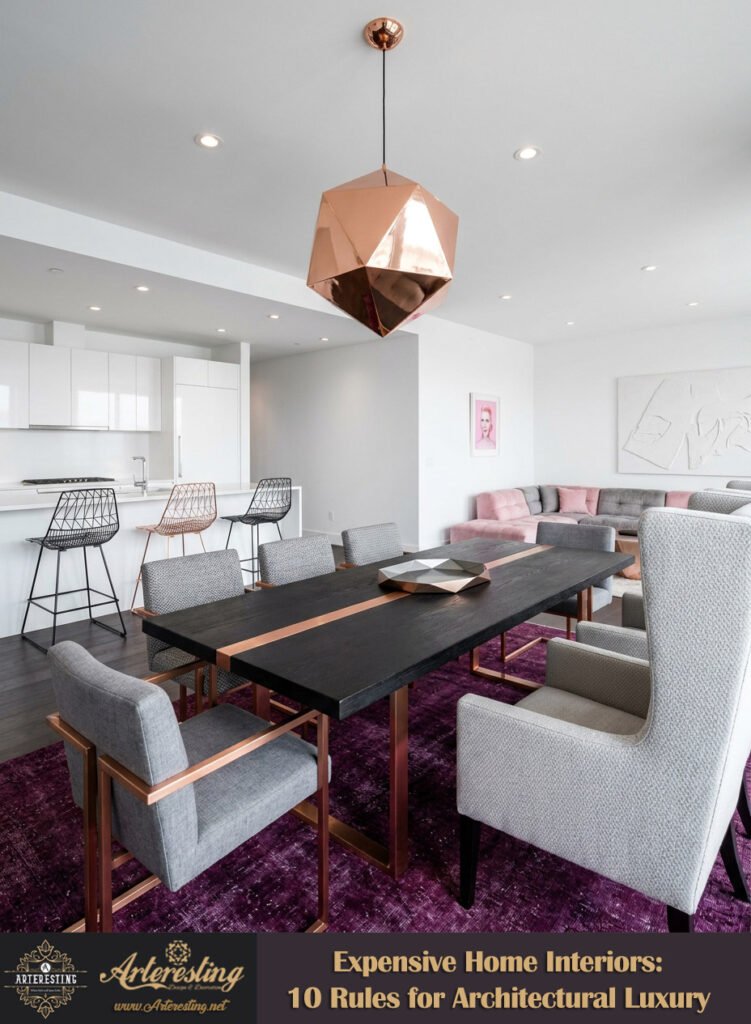
Unifying hardware finishes across disparate elements weaves a silent, cohesive thread throughout the property. Consistent metallic tones on doors, cabinetry, and lighting fixtures provide the subtle, meticulous detailing characteristic of premium real estate.
Antonio Matres of Antonio Matrēs Design focuses on these micro-details. Specifically, cohesive hardware acts as the room’s jewelry. Furthermore, repeating a specific finish, like copper or rose gold, links distinct functional zones. Consequently, the eye registers a highly intentional design scheme. Therefore, audit your existing metals. Ultimately, aligning these touchpoints finalizes your expensive home interiors.
Designing expensive home interiors relies strictly on these calculated architectural decisions. Ultimately, by controlling scale, maximizing lighting, and curating textures, you establish enduring structural authority.
Creating expensive home interiors relies on precise spatial styling rather than excessive budgets. Key strategies include deploying strategic focal points, maximizing vertical space with custom window treatments, and layering rich textures. By emphasizing architectural scale and statement lighting, any room achieves a high-end, curated atmosphere.